
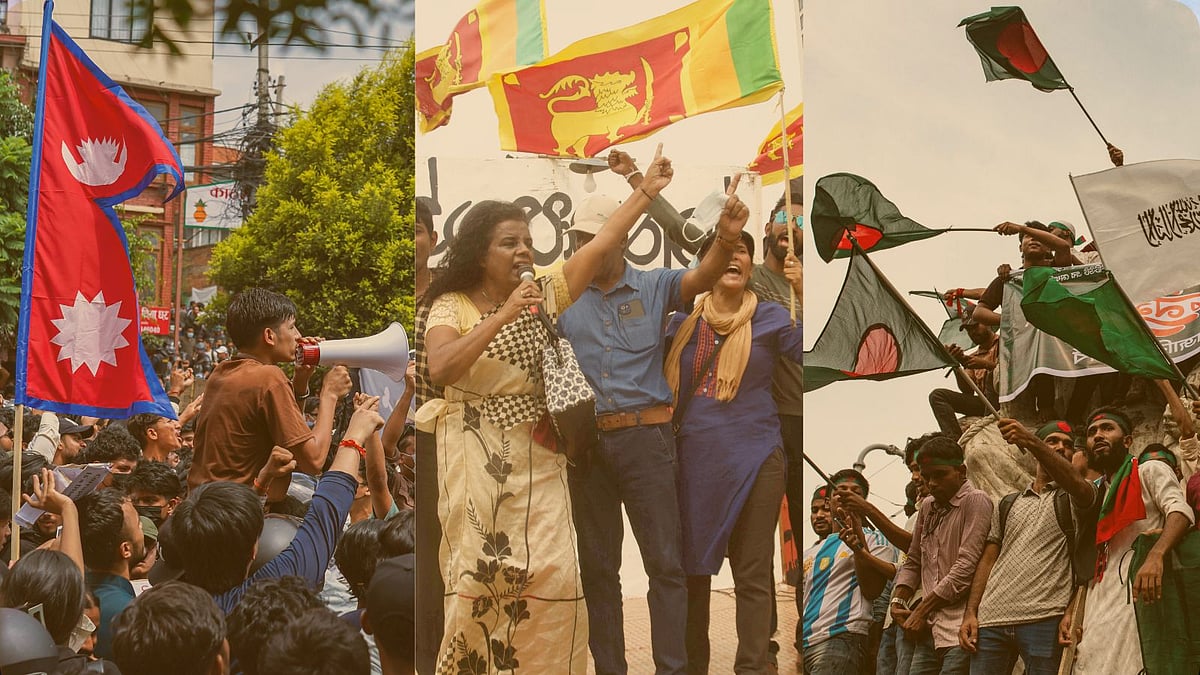
ABOUT 15 YEARS AGO, three Southasian nations underwent political transitions. In 2008, Nepal became a federal republic, ending 250 years of monarchy. Bangladesh resumed its status as a multi-party democracy after a two-year interregnum. In 2009, Sri Lanka saw the end of a 26-year-long civil war. But the optimism that came with these developments did not last, and the politics of all three countries came to be marked by corruption, nepotism and impunity in different forms, resulting in civilian disaffection, unrest and ultimately, between 2022 and now, the unseating of governments in power.
After Gen Z-led protests in Nepal in early September 2025, with heavy-handed measures by security forces leading to the deaths of 19 Nepali youth and a mass uprising that saw the burning of Nepal’s parliament. The country’s prime minister, K P Sharma Oli, was also forced to resign. Last year, Sheikh Hasina faced a similar fate as Bangladesh’s prime minister after nationwide protests against the authoritarianism of her Awami League government, and she fled to India in August 2024. At least 1400 people had been killed in the previous weeks as security forces clashed with protesters across the country. In 2022, Sri Lanka’s president, Gotabaya Rajapaksa, fled the country after a massive, months-long protest movement against corruption and economic mismanagement, at the end of which crowds overran the presidential palace.
In all three countries, the protests were led by young people, especially students. In all three cases, the protests began peacefully and were issue-based, but escalated after government heavy-handedness, resulting in the unanticipated toppling of the ruling regime. And all three movements are united not only by their negation of the established political status quo, but also by the absence of a clear blueprint for the future.
WHY ARE SOUTHASIAN YOUTH taking to the streets against their governments? The simplest answer would be the lack of economic opportunity. According to the World Bank, high fertility rates in Southasia in the past – even as these have declined more recently – have created a “youth bulge” – the largest in the region’s history. Analysts have been unsure whether to see this as an opportunity, with a “demographic dividend” to leverage for economic growth, or a demographic “time bomb” threatening explosions of discontent.