
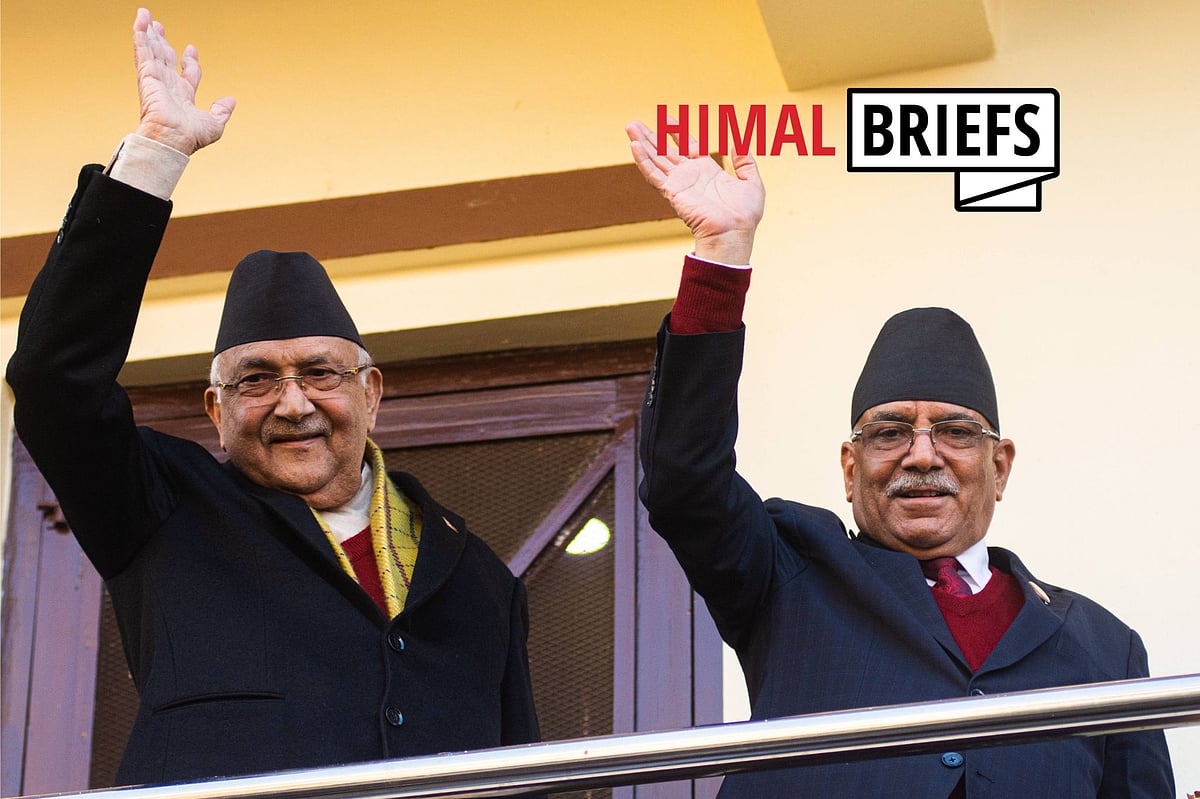
On 25 December, the former Maoist rebel leader Pushpa Kamal Dahal, a.k.a. 'Prachanda', showed why he is perhaps the most formidable survivor – and opportunist – in Nepali politics. Despite his party, the Communist Party of Nepal (Maoist Centre), winning only 32 seats in Nepal's recent general election, Dahal refused to budge from his demand to become prime minister. Earlier, Dahal had an arrangement with Sher Bahadur Deuba, the leader of the Nepali Congress: their two parties joined in an electoral alliance and the two were to rotate the prime ministerial post if the alliance won. But Deuba, after the Congress emerged as the largest party in Parliament, refused to hand the post to Dahal first. So Dahal walked out of the alliance, and instead set up a new alliance with the Communist Party of Nepal – Unified Marxist-Leninist (CPN-UML) under K P Oli, as well as several other parties. Dahal is now the prime minister at the head of the resulting coalition government, with a reported understanding that he will cede the post to Oli half-way through the government's stipulated five-year term. All in all, just another day in the wild, unpredictable and morally blank world of Nepali politics.
The big test will come in a month's time, when the new government has to face a floor test in Parliament. The election of a new president in February will require intricate manoeuvring as well. But in the near term, the key challenge facing Nepal's new prime minister will be negotiating the demands of a shaky coalition, some of whose members are his ideological opponents.
A deal between Oli and Dahal had been on the cards since the end of November, even before the election results were declared. But no one thought Dahal would take the option up. After all, just some two years ago, Dahal and Oli fell out after Oli refused to hand him the prime minister's position as the two had agreed. Oli dissolved Parliament in order to cling to power, and the unified Nepal Communist Party, formed via the merger of the two men's parties, had fractured. After the recent election, the Nepali Congress, the Maoists and assorted smaller parties in the incumbent coalition had already begun discussions on a power-sharing agreement. The only disagreement was over who was to become prime minister – Dahal or Deuba.
With Dahal's U-turn, the Nepali Congress has been left red-faced. But Dahal has what he wanted: he is now prime minister for a third time. Oli has emerged as the kingmaker, and perhaps the biggest victor in these elections. His party has been assured the president's and speaker's positions, and CPN-UML leaders are to hold many key ministerial positions.