
This story first appeared in Kalam Weekly. It has been republished with updates and edits.
Monday, 8 September, started out optimistic. A Gen Z protest against institutionalised corruption and nepotism, sparked by a recent ban on 26 social media apps, was planned for the morning all across Nepal, and spirits were high. Protests were planned in most major cities, including Kathmandu, Pokhara, Chitwan and Butwal.
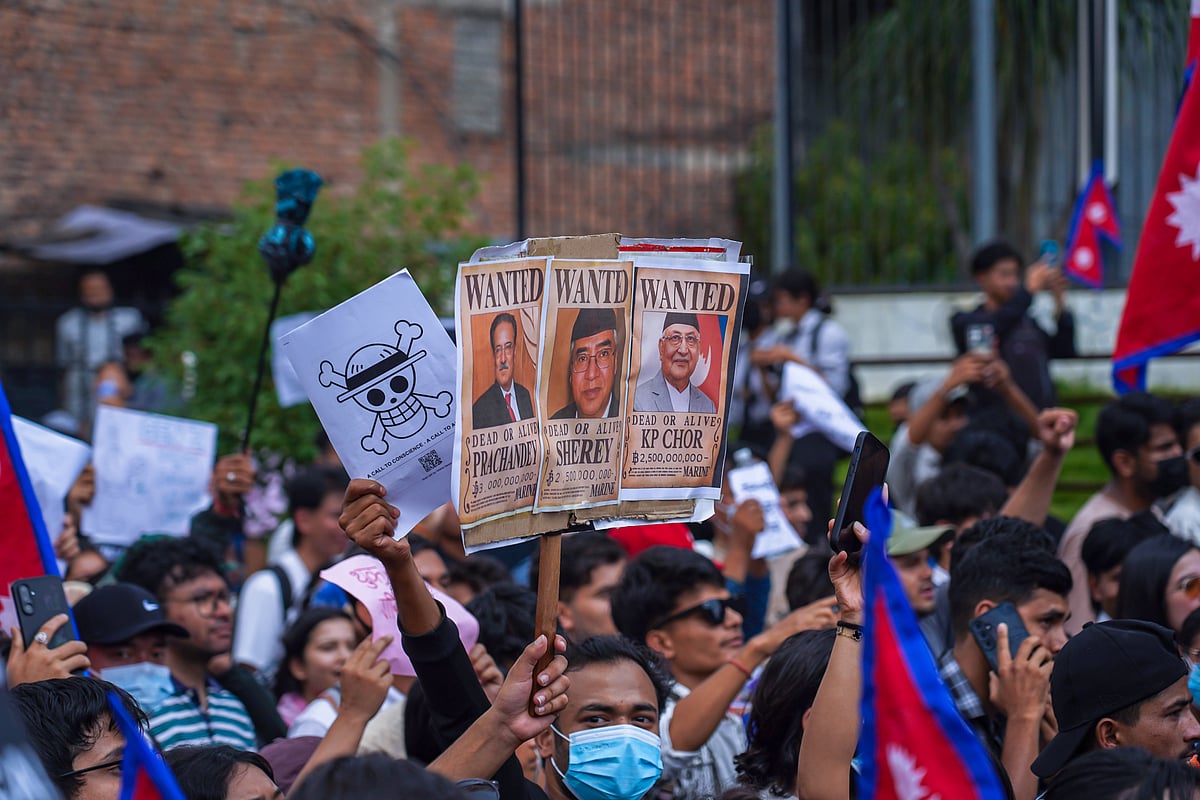
At Maitighar Mandala in Kathmandu, young Nepalis were out in force. Thousands of them, many in their school and college uniforms, had gathered to protest the dismal state of the country, where the powerful and their children live lavish lives of luxury while the rest languish in India, Malaysia, South Korea and West Asia, toiling for remittances to send back to their families.
The protest was a festive affair. There was music and dancing. Volunteers were handing out bottles of water, cleaning up trash, and even providing headache medication and oral rehydration solutions. Schoolkids in uniform marched with placards, chanting slogans against corruption. Even the police were more restrained than usual. When the crowd forced its way past barricades near the parliament building, police retreated instead of baton-charging like they would have done otherwise. A few tear-gas shells and a water cannon were deployed, but nothing too major. Selfies were taken, slogans were chanted, and, for a while, everything was as it should be.