
Nepalis don’t often pay attention to the politics of their Southasian neighbours beyond India. But when Sri Lankans rose up in 2022 to boot out the Rajapaksa regime, they took notice. Then came Bangladesh and its July Revolution last year, with Sheikh Hasina and the entire political system around her in the public’s sights. Again, Nepal took note. In numerous conversations in Kathmandu, on both occasions, I heard the same refrain: our turn will come.
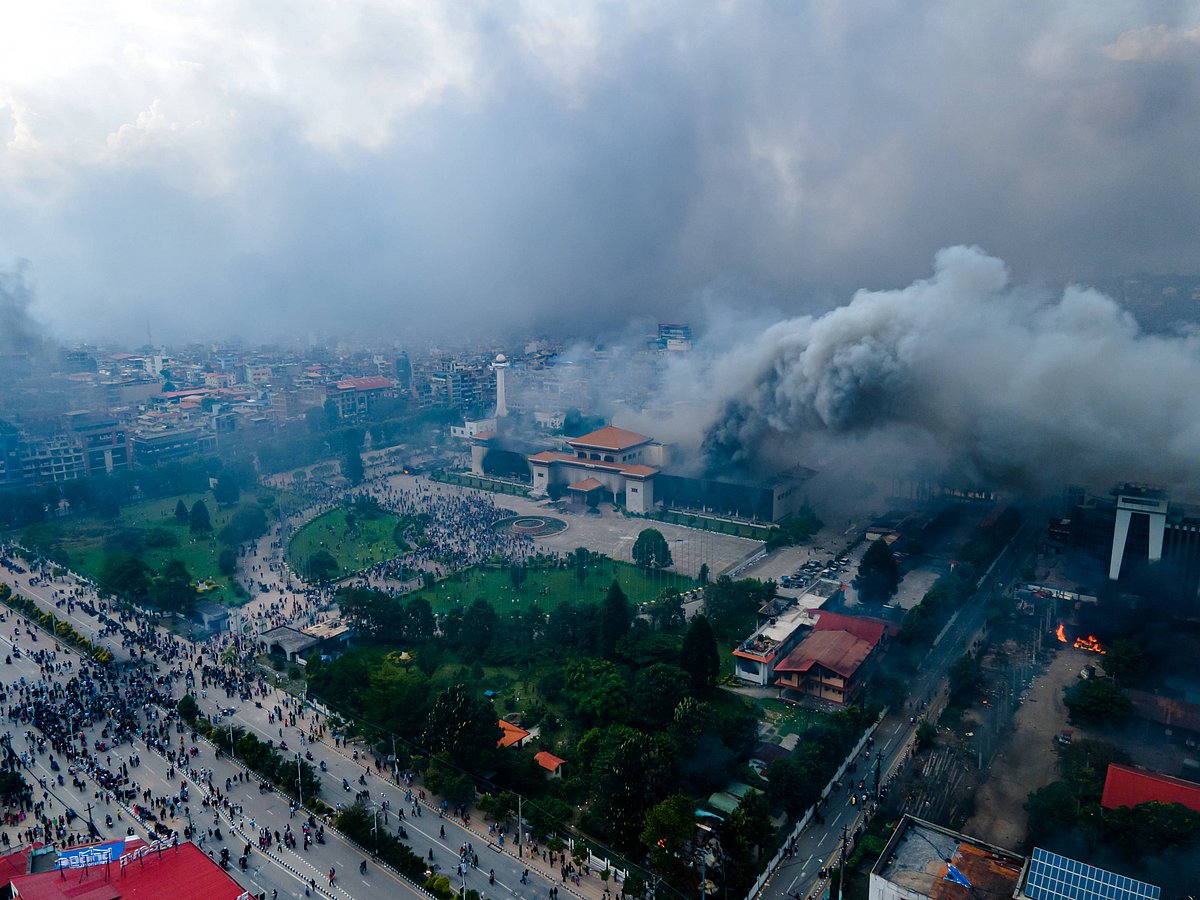
So here it is now. Young people, under the banner of “Gen Z protests”, took to the streets on 8 September – sick of a corrupt political system and political class, sick of seeing the same discredited old men taking turns to lead and loot the country, sick of seeing no future path but to leave for work abroad, which thousands do every single day. The peaceful protests suddenly veered into violence, and after police opened fire the death toll climbed to 19, with hospitals packed full of the injured. It was the single deadliest day of protest that Nepal has ever seen.
Also read: Nepal’s K P Oli government has murdered 19 people
On the morning of 9 September, sorrow and rage brought thousands out, defying curfews. Throughout the country, anything connected to the government and the political establishment was suddenly fair game. Party offices and politicians’ homes went up in smoke. By afternoon, heavy columns of soot rose from the bowl of the Kathmandu Valley. The country’s main airport was closed, with flights diverted away. At new ministerial quarters in the south of the capital, helicopters landed to ferry residents away to safety. Then, more gunfire, more sirens, explosions, even thicker plumes of smoke.