
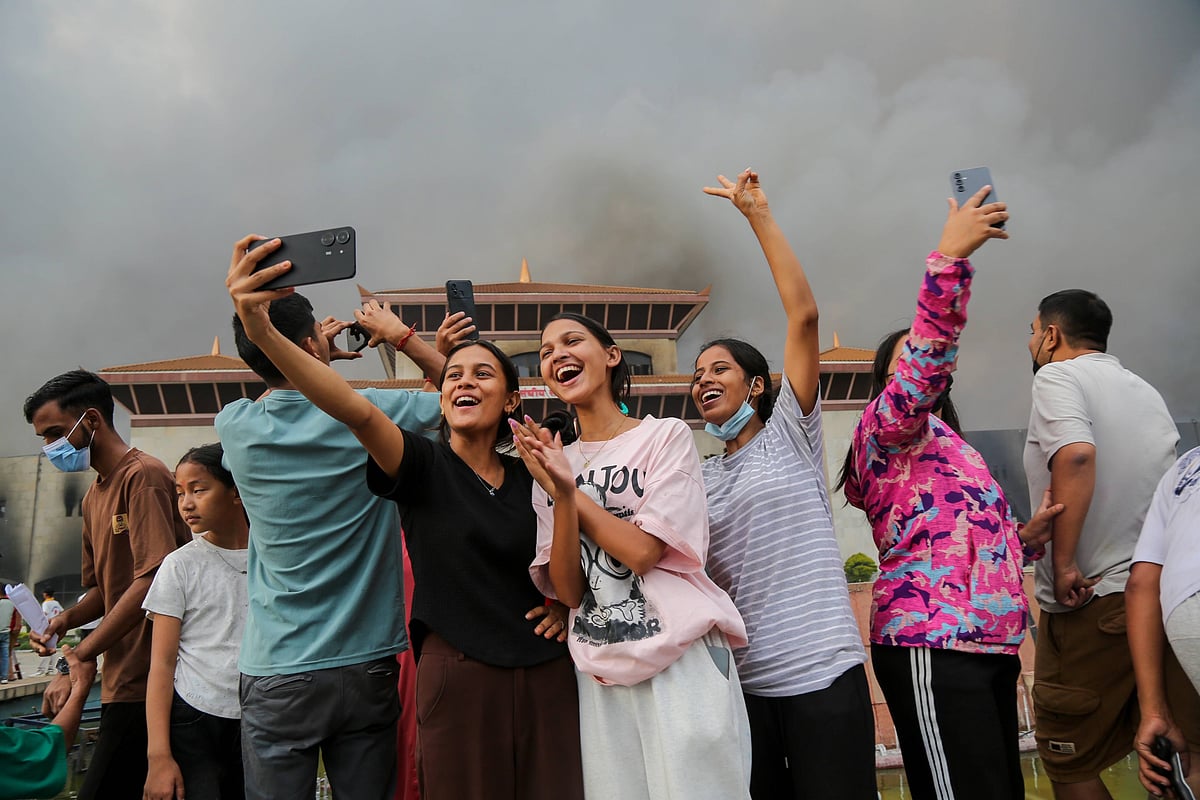
THE CHARRED REMAINS of police stations, super markets, minister’s homes, the federal parliament, the Supreme Court and much else stand as stark reminders of five of the most dramatic and consequential days in Nepal’s history. Between 8 and 12 September, at least 74 people were killed and hundreds more injured as protests and public outrage swept across the country. The killing of 19 demonstrators by security forces on Monday, 8 September, ignited a nationwide uprising that toppled not only the prime minister, K P Sharma Oli of the Communist Party of Nepal (Unified Marxist–Leninist), but also the political establishment he represented.
In the chaos, the main symbols and seats of every branch of the government – the federal parliament, Singha Durbar and the Supreme Court – were set ablaze. Even the media, often considered the “fourth estate,” was not spared: the headquarters of Nepal’s largest media house, Kantipur Media, also went up in flames. By Friday night, Nepal had a new leader: Sushila Karki, the country’s first female prime minister, sworn in as the head of an interim administration tasked with steering Nepal to a fresh election.
Also read: Nepal’s staggering journey from Gen Z protests to new government
Young protestors and activists, loosely organised under the banner of a “Gen Z” movement, have been central to these events. Nepal’s uprising is a case study in how the rising generation has built a parallel information ecosystem online, dismissing traditional media as compromised or slow and instead turning to influencers, independent journalists, digital collectives and each others’ personal feeds as sources of information and tools of mobilisation. Here, hashtags stood in for megaphones, memes became manifestos, and screens served as the public commons as much as – if not more than – the streets.