
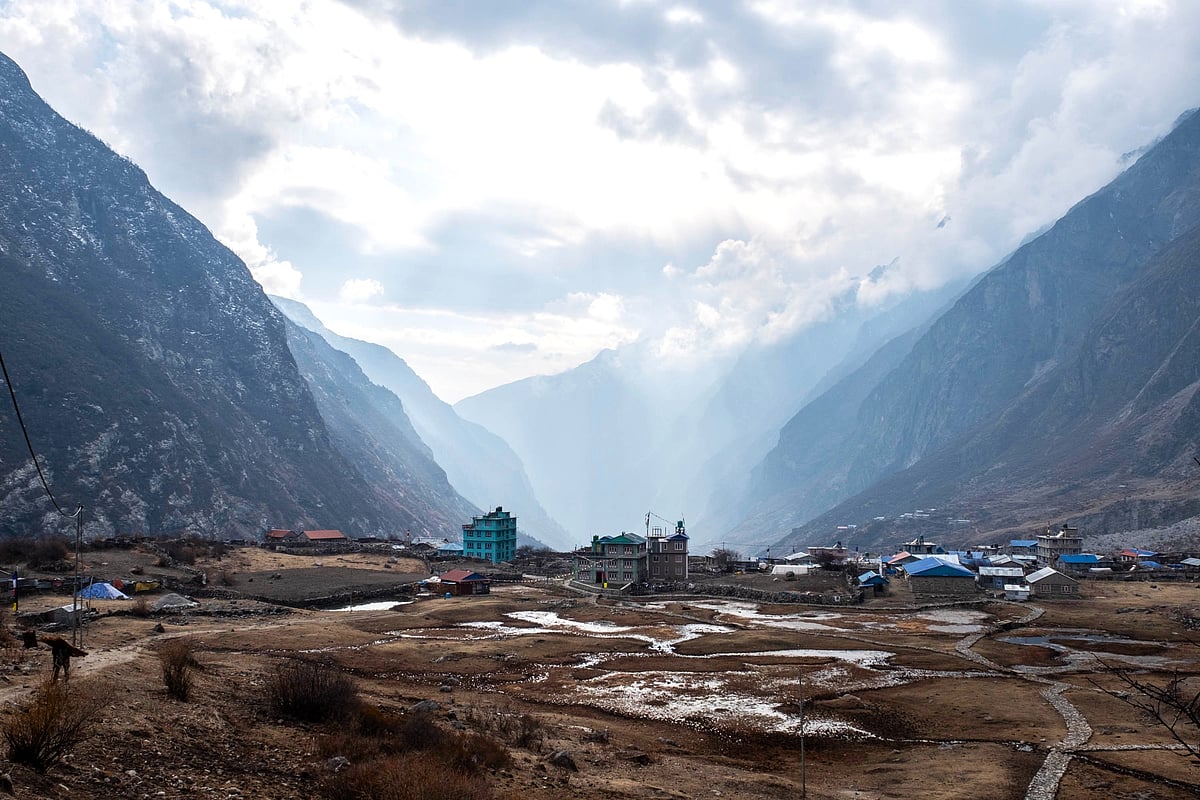
THE PEOPLE of the Langtang Valley, in northern Nepal, regard their home to be a beyul – a hidden land, blessed as a sacred refuge by Padmasambhava, the 8th-century sage credited with bringing Buddhism to Tibet. A beyul, Tibetan Buddhists believe, is home to an abundance of biodiversity and natural resources, guarded by a host of protective spirits and deities. Tibetans fleeing persecution in their homeland have long sought shelter in these holy mountain sanctuaries.
Namgo-dagam, or the “Heavenly Gate of Half-Moon Form”, is one of Nepal’s most important beyuls. It lies in the Langtang Valley, near the border with Tibet. It is flanked by the mighty Langtang Lirung, a 7234-metre peak that is also the yulha, or the “god of the place”, considered the protector of Langtang. Ancient beliefs prescribe that timely and proper worship of Lirung will keep the valley and its community safe from harm.
Yet it was from the bowels of this mountain that the deadly avalanche which devastated Langtang in 2015 was born. At 11.56 am on 25 April 2015, a 7.8-magnitude earthquake struck Nepal, its epicentre some 70 kilometres west of here. On Lirung’s southern slope, the earthquake set off the fracture of a hanging block of glacier. As it fell thousands of metres, it dislodged more snow and ice, and gathered up huge amounts of silt and soil. Within minutes, millions of tonnes of debris buried almost the whole of Langtang village, the main settlement in the valley.
The avalanche released an air-blast of such power that it swept away buildings that had escaped the crush and uprooted a nearby forest of mature trees. Over the following days and weeks, more rocks plunged down and more avalanches pounded the valley. The geography of Langtang was transformed. Officially, 306 people died: at least 175 of the 370 or so locals present in the valley at the time; 82 Nepalis from other areas; and 49 foreign tourists. The locals said the death toll was closer to 500.