
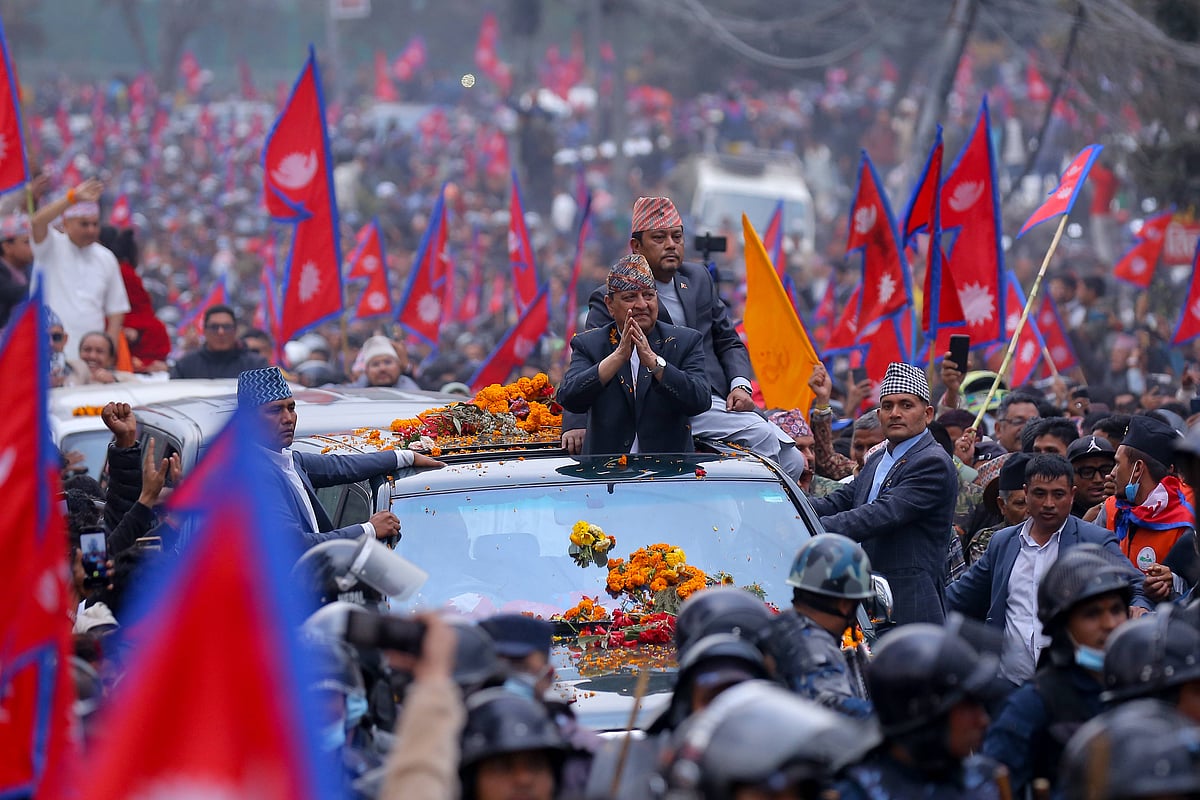
IN 1979, in the reign of Birendra Bir Bikram Shah, the Nepali monarchy instituted a few reforms to address popular demands for better political representation. A public referendum, now widely seen to have been rigged, delivered a verdict in favour of continuing the prevailing Panchayat system of rule, a partyless order of governing councils that left the king as the ultimate authority. In the aftermath, Birendra made a few concessions, such as allowing direct elections to the National Panchayat. The first of these was conducted in May 1981 – Nepal’s first general election, of a kind, since 1959.
In a 1983 assessment, the Unites States’ Central Intelligence Agency (CIA) reported that the “largely cosmetic” reforms had “only bought time for the monarchy”, and that the challenge lay in balancing “elite interests with aspirations of newly politicized groups eager to benefit from participation.” It was a prescient take. The reforms did not last the decade. In 1990, after mass protests, the Shah autocracy had to make way for a multi-party democracy and constitutional monarchy.
The CIA was also of the view that Birendra’s “liberalizing instincts are offset by a natural tendency – reinforced by conservative members of his family – to preserve his power.”
It thought Birendra’s queen, Aishwarya, and his brother Gyanendra were “hardliners” who would “certainly halt the reform process and reassert royal authority.” Gyanendra “may consider himself better qualified for the throne than his brother … has a greater ability to command, strike hard deals, and reward personal loyalty than the King. We believe he would relish the royal role.”