
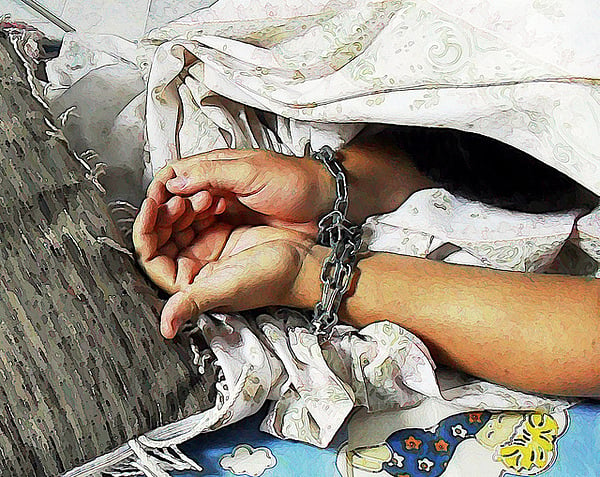
When conservative morality is armed with the law and prejudice is given legal validity, the state is transformed into a wet nurse cum security guard. The Trafficking of Persons (Prevention, Protection and Rehabilitation) Bill 2018, passed on 26 July in the lower house of the Indian Parliament, represents a growing trend of increased state surveillance and control, and a carceral approach to dealing with non-compliance with overbroad and vague laws laced with prudery.
Trafficking in persons, as defined by the United Nations, is "the recruitment, transportation, transfer, harbouring or receipt of persons" by coercion, deception or the abuse of power or position for the purpose of exploitation. Human trafficking is considered to be a form of modern-day slavery and is outlawed in most countries.
Following the ratification of the United Nations Convention for the Suppression of the Traffic in Persons and of the Exploitation of the Prostitution of Others in 1949, India enacted the Suppression of Immoral Traffic in Women and Girls Act 1956. However, nowhere was trafficking clearly defined in the law. The acronym of this law, SITA, seemingly deliberately modelled after Sita, the chaste wife of Rama from the epic Ramayana, reinforced the moralism already codified into law. Moving from suppression to prevention of 'immoral' trafficking took three decades, but the Immoral Traffic (Prevention) Act (ITPA), as the act was renamed in 1986, continued to prioritise morality over human rights, focusing its attention on raiding brothels and "rescuing and rehabilitating" sex workers, whether or not they wanted such intervention. Though sex work is not illegal per se in India – with some notable exceptions with respect to soliciting in public places – the ITPA views consensual adult sex work as a misnomer and approaches all women in sex work as victims in need of rescue. This ultimately criminalises even consenting adult sex workers by treating solicitation, brothel ownership and procurement as criminal activity.
Unfortunately, the 2018 trafficking bill has been drafted with this very mindset, and goes on to widen the scope to cover "aggravated" forms of trafficking, including trafficking for the purpose of forced labour, begging, trafficking by administering chemical substance or hormones for early sexual maturity among other things. It also includes in its ambit trafficking for the purpose of surrogacy, at a time when questions around commercial surrogacy and consent of surrogates have yet to be settled in Indian law.