
I only remember snatches of the conversation. "Bora ma baandheko" – Tied inside a sack – our neighbour relayed what she had heard from somewhere else. I remember the expression of fear and disgust on her face and her hand gestures as she showed how the victim's breasts had been sliced off. That was all I could see and hear before my seven-year-old self was whisked away by my mother.
It was 1986. A violent agitation raged in the hills of Darjeeling and Kalimpong, demanding separation from the state of West Bengal in eastern India. Living in Siliguri, in the plains just to the south of the hills, we were worried sick about our relatives living to the north. My mother's family was in Kurseong, near Darjeeling, and my father's in Kalimpong. Our only source of information was All India Radio's evening news bulletins, which we listened to on an old transistor radio set, and which mainly gave the government's version of events. For "real" stories, we were forced to rely on the unverified and unverifiable, accounts of neighbours who knew someone who knew someone who had seen something with their own eyes. It was from them that we came to know about midnight raids, detentions, disappearances, murders and the torture and atrocities inflicted by the syarpi – a corrupted pronunciation of "CRPF", the acronym for the Central Reserve Police Force, which was deployed in the hills to quell the agitation.
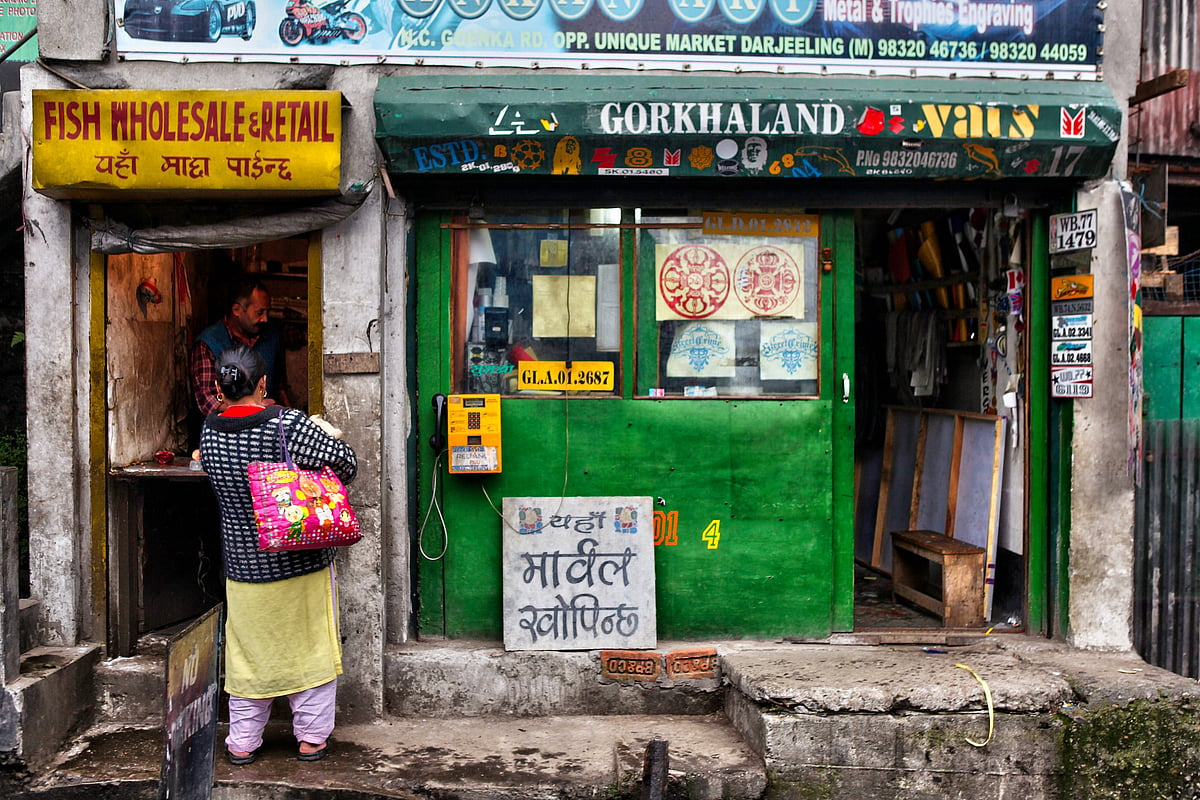
Chhyasi ko andolan – "the movement of '86", often simply Chhyasi ('86) – is the Nepali term for the agitation. The demand was for a separate state, Gorkhaland, for the Nepali speakers predominant in this part of the country. The new state, to be carved out of Bengali-dominated West Bengal, was to grant an undisputed Indian identity to the "Gorkhas", a term used by Indian Nepalis to distinguish themselves from the people of Nepal, which lies west of the Darjeeling and Kalimpong hills. My family was Indian Nepali, as was our neighbour who told us the horror story, and though we lived in a multicultural milieu on the outskirts of Siliguri, our sympathies lay with the people in the hills.
The demand, rooted in the desire of the Gorkhas to not be seen as "outsiders" or "foreigners" in India, had been a long-standing one. Under the leadership of Subhash Ghisingh, a Darjeeling-born former Gorkha soldier of the Indian Army, and his Gorkha National Liberation Front (GNLF), the Gorkhaland movement erupted into an armed rebellion, leading to a period of extreme violence and anarchy unprecedented in the history of the hills. The agitation officially ended on 22 August 1988 with the formation not of a separate state but an autonomous hill council within West Bengal. An uneasy peace returned.