
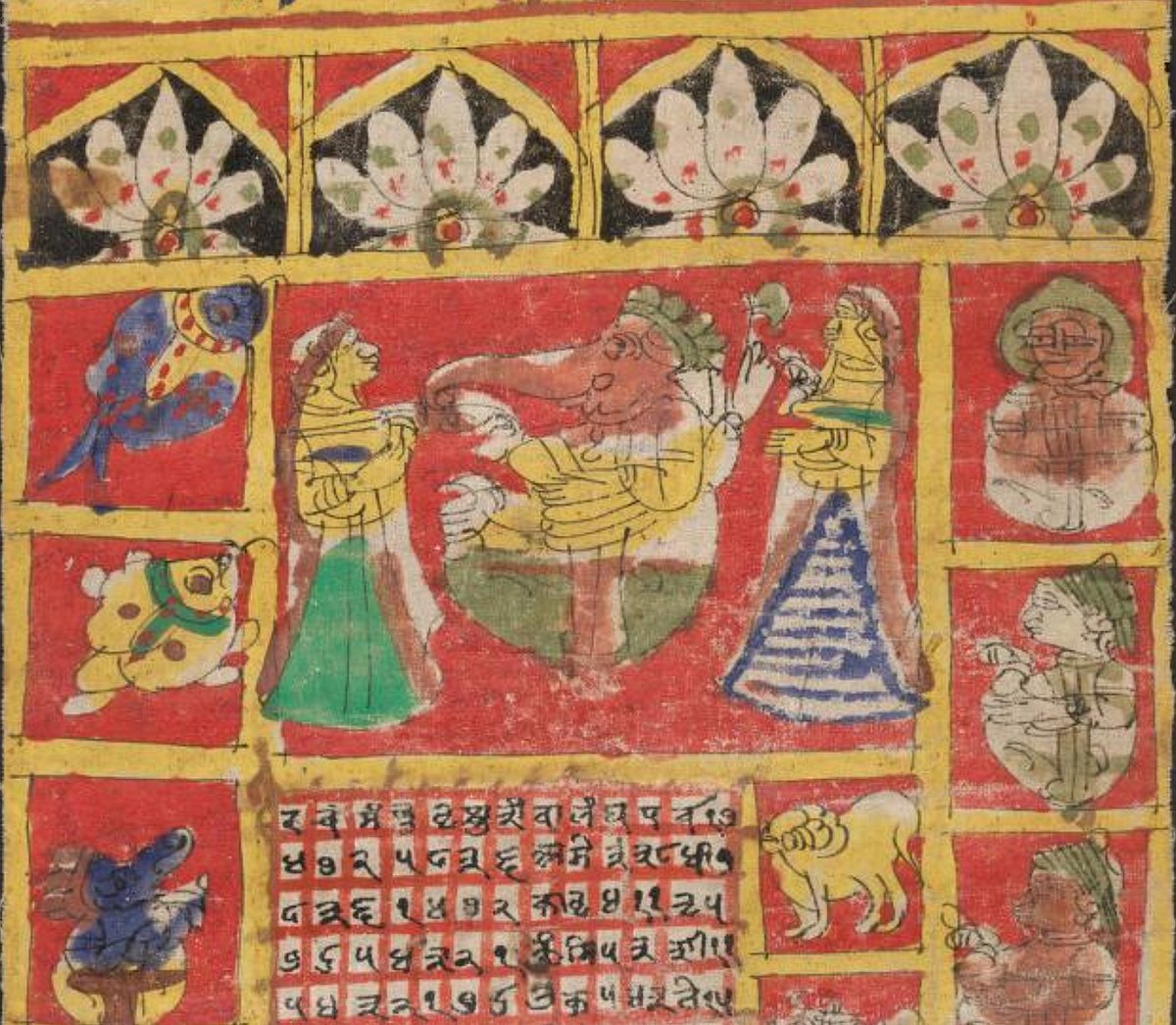
While the Western world celebrates the New Year on the first of January, in Bangladesh, Burma, India and Nepal it falls in mid-April. Struck by the near coincidence of these New Years dates in the traditional calendars in the region, an observer inevitably begins to wonder why this has come about. In fact, if we look at Southasian calendars from centuries ago, we find that they have become increasingly out-of-sync with both the Gregorian calendar and the local seasons, by nearly a day every 60 years. In this way, the region's calendars seem to be going forward in time, like a clock ticking slightly more quickly than it should.
A clue to this mystery can be found if we look slightly beyond our borders. For millennia, Iran has celebrated the New Year, or navroz, on 21 March, because the Zoroastrians have a fixed calendar. The Parsi community in India also observes Navroz on the same day. This date should ring a bell in the mind of any schoolchild: it is one of the four most significant days of the year. As the Earth goes around the sun, every year we get two days with equal night and day – the equinoxes. Likewise, there are two 'extreme' days, one with the longest and another with the shortest days – the solstices. These four days are spaced roughly three months apart, and they mark the beginnings of the four seasons. The equinoxes appear in spring and autumn, and 21 March has long been marked as the beginning of spring. Traditionally, many cultures have also used the spring equinox to mark the New Year. Like the Persians, the Romans also used March as their first month. This is the reason why there is a series of English-language months with telltale, though incongruous, numerical names: for instance, the sept- in September means seventh, despite the fact that it is now the ninth month. Such a discrepancy is cleared up if the year begins with March, however.
If, since about 500 BC, it has been customary to celebrate the New Year in the spring, then could it be that Southasian calendars also used this equinox as the beginning of a year, at some point in the distant past? Careful readers would have already calculated that the difference between mid-April and 21 March is approximately 25 days. And, if our previous understanding holds true – that Southasian calendars are moving faster than the Gregorian calendar by a day every sixty years – then we can quickly estimate the era when our calendars began to go more quickly. We simply have to multiply 25 by 60, which gives us approximately 1500 years. That takes us back to sometime around 500 AD. What could have happened at that time, to push the region's calendars into such a slide?
Marking time
Before we dig into our history, it would do well first to understand why there should be a slide of this nature at all. Let us begin by looking at the problems that any calendar-maker faces. The first problem is the undeniable fact that a year, which we define by the length of time our Earth takes to orbit the sun, does not comprise of a whole number of days. A year is 365 days plus some extra hours, minutes and seconds. But a calendar, on the other hand, is supposed to mark our days, which we define by sunrise and sunsets.