
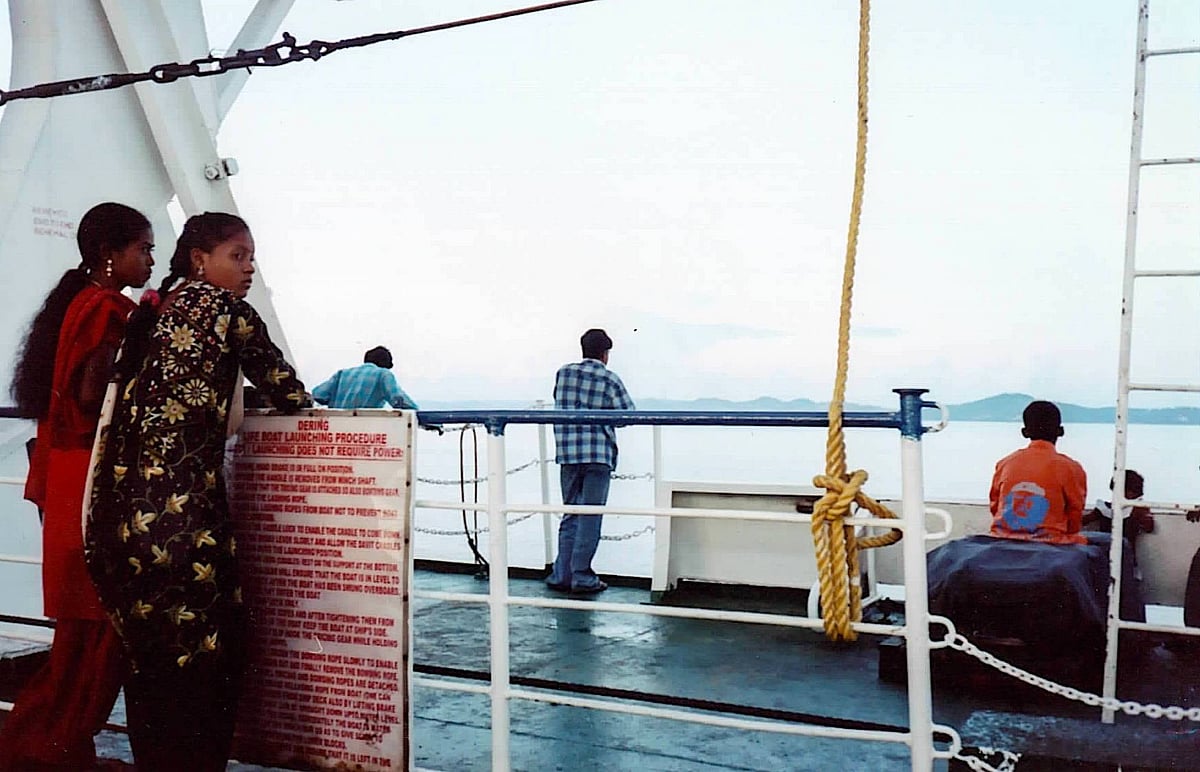
The Andaman and Nicobar Islands, jointly administered as a Union Territory of India, form two lush green archipelagos in the Indian Ocean, south of Myanmar and west of Thailand and Malaysia. The NITI Aayog, the Indian government's top public-policy think tank, has since 2019 promoted a pair of development mega-projects here which promise to transform – or devastate – the southernmost islands in each chain, Little Andaman and Great Nicobar.
Little Andaman was first in the NITI Aayog's sights, but the think tank's mega-project for that island appears to have been suspended since 2021, with news updates on the project trickling out and without any formal announcement or explanation. Instead, the project on Great Nicobar Island – with an international container vessel transshipment port, and a new city and airport – has been "fast-tracked", with construction bids underway as of April 2023 (although construction has been temporarily halted due to a case before the National Green Tribunal). The NITI Aayog and the Andaman and Nicobar Islands Integrated Development Corporation, a body formed to execute the projects, have shunned transparency on the funding sources for the work, but the Great Nicobar scheme has been estimated to cost 720 billion Indian rupees, or nearly USD 9 billion.
These mega-projects have already challenged the land rights of the Onge, Shompen and Nicobarese indigenous people, seen a major sea turtle sanctuary denotified and set in motion a "compensatory" bait-and-switch involving a jungle safari park 2400 kilometres away. Despite urgent warnings of further environmental damage, seismic risks and dire human-rights implications, the NITI Aayog is plunging ahead with its plans to commercialise, industrialise and militarise the islands' coastlines, reefs and forests.
Big "development" on Little Andaman