
Insein Township, a northern suburb of Myanmar's commercial capital, Yangon, has always been famous for the wrong reasons. It hosts the country's largest prison, a red-brick colonial edifice where several of Myanmar's most famous political prisoners wrote harrowing memoirs of their time behind bars. In January 1949, a year after independence from the British, it was a battle ground. Soldiers from the Karen ethnic group, seeking autonomy from the Bamar majority, tried to seize the city, then called Rangoon. They were repelled after a fierce battle at Insein.
More recently, the township, which has a population of around 300,000, became the epicentre of Myanmar's COVID-19 epidemic. This was thanks to a cluster of infections linked to sermons in early April 2020 led by a Christian pastor, David Lah, who was visiting from Canada. This cluster from Myanmar's only 'super-spreader' events included one of the country's biggest rock stars, Myo Gyi of the band Iron Cross, as well as David Lah himself, who had told congregants that faith in Christianity would protect them from the virus. It took until 1 July for the government to lift stay-at-home orders that were imposed on Insein in mid-April.
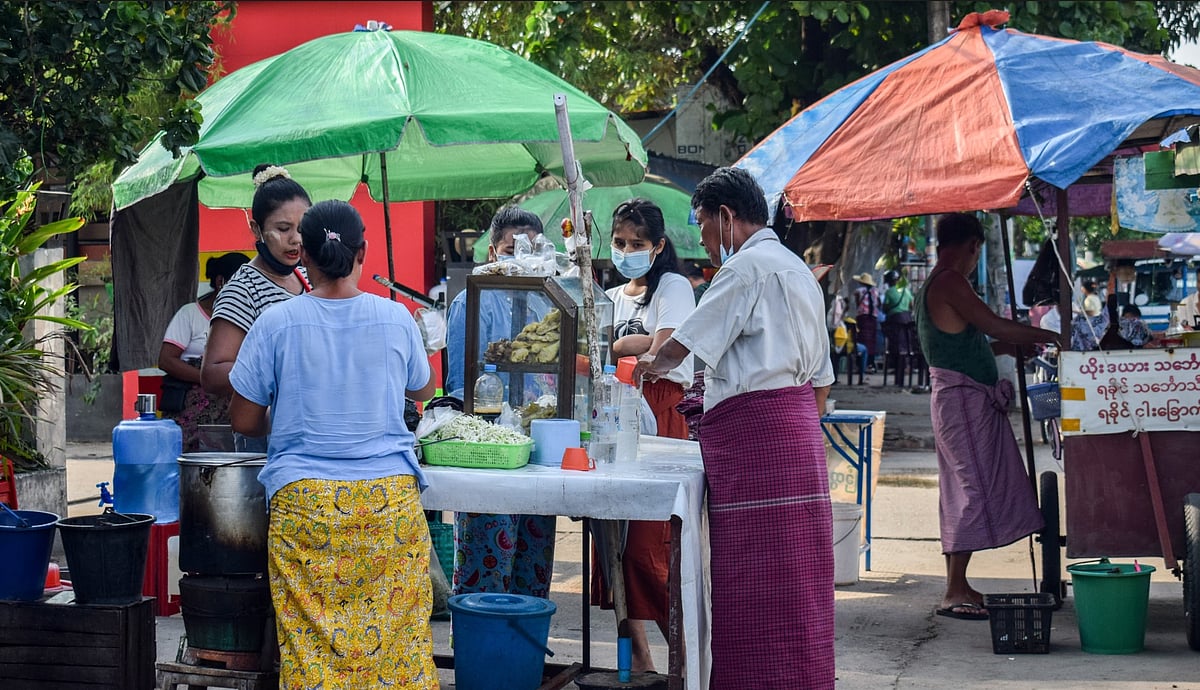
On visiting Insein more than two months after Myanmar announced its first confirmed case of COVID-19 on 23 March 2020, it looked little different to any other neighbourhood in the city of more than five million people. In the intense sunshine and heat that precedes the annual rainy season, people gathered around pavement stalls selling mohinga, a ubiquitous meal of noodles in pungent fish broth. They stood shoulder-to-shoulder with their mandatory face masks lowered to their chins, chatting loudly over the revving and honking of buses taking commuters on the traffic-choked journey to central Yangon.
It was not quite the pandemonium of rush-hour Yangon before the pandemic, but it wasn't far from it. While much of the world was locked down for months, Yangon only truly shut down for ten days over the traditional new-year festival of Thingyan in mid-April, when businesses normally shutter anyway for the biggest holiday of the year. This year, people had to observe the festival in silence in their homes, instead of dousing their neighbours with water to the sound of deafening pop music on the streets.