
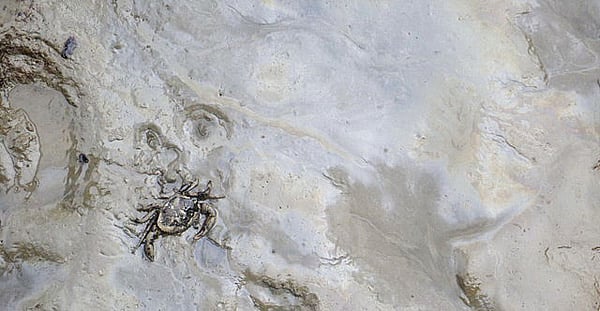
The Southern Star VII left port early in the morning, riding the low tide towards the sea. It was still dark when the tanker, laden with 357,000 litres of furnace oil, turned off onto the Shela River, which winds into the depths of the Sundarban, the world's largest mangrove forest. The tanker was leaving from Mongla, Bangladesh's second-most important port, whose only connection to the rest of the country, then, was through the vulnerable ecosystem of the forest.
As they pushed on into the forest, the fog thickened. The Southern Star VII had barely been on the move for two hours when the captain ordered the anchor to be lowered: it was impossible to navigate the milky brew among the mangroves.
The morning of 9 December 2014 was cold, remembers Showkat, one of the tanker's lascars. The captain wore a heavy jacket and boots as he stood on deck with two other crew members, peering into the fog, listening to the sound of an approaching motor grow louder. "There's a ship coming," Showkat recalls the captain saying. "Are they going to run into us?"
Around dawn, a cargo vessel named Total rammed into the Southern Star, puncturing the hull and sliding across its deck, ripping open its six oil tanks. The captain and the crew members on deck fell into the water, while the others clambered onto the bridge – the only part of the tanker still out of the water. "By the grace of god we were saved from death," Showkat says.