
The cover of Dirty, Sacred Rivers shows buffaloes breasting through muddy water, an arresting overhead view that takes a familiar sight and makes one appreciate it anew. The cover image and handsome production of the book lead one to expect that the contents will also bring fresh insight to the muddied, turbulent waterscapes of Southasia. Travelling the entire length of the Ganga, studying the river from a variety of angles, would Cheryl Colopy live up to the promise of providing an acutely analysed and eloquently written account of the Subcontinent's water problems?
When writing this review, I remembered one of my own encounters with a dirty, sacred river in the city where I live: the Yamuna. At the Jamna Bazar ghat in Delhi, I watched as a man stood in a boat midstream, flinging grainy pellets of food into the water with thousands of birds swooping down to pick them up and fly away. As he moored the boat, the man told me that these black-headed gulls had come from Siberia. He fed them every morning and evening in winter, spending three thousand rupees a day. For him, the Yamuna provided a place for fulfilling the religious obligation to feed itinerants and for expressing a love for lesser creatures.
The river is the site of generous impulses as well as wanton indifference with dumping of untreated sewage and industrial pollutants in Delhi and upstream. As the monsoon season draws to an end, the Yamuna's true condition is revealed: dark and filthy, with floating plastics and refuse, and a pervasive stench. On the auspicious day of Kartik Purnima in October, I watched in disbelief as worshippers bathed in what appeared to be raw sewage.
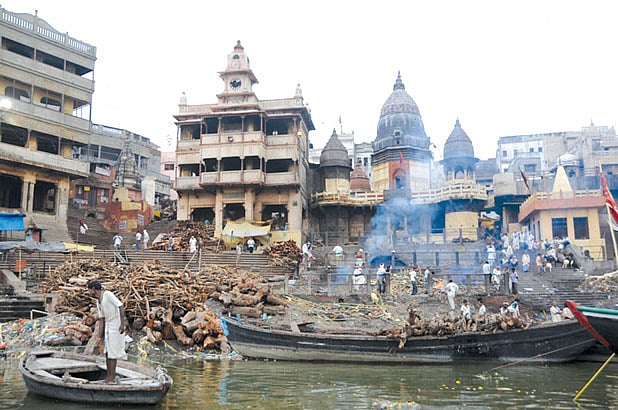
This is the paradox of sacred rivers in Southasia that has long puzzled visitors to the Subcontinent. How can reverence be reconciled with systematic abuse? Kelly Alley wrestled with this in her 2002 book set in Varanasi, On the Banks of the Ganga: When Wastewater Meets a Sacred River, but failed to grasp the nub of the matter: that the contradiction between the material and the metaphysical worlds is precisely what sustains faith. Mundane events and practices that seem to defy comprehension can be tidily explained by cosmological beliefs, be they about the power of gods or markets or revolutionary parties. So, while from a strictly rational point of view it doesn't make sense that people pollute the river they worship, by invoking a 'higher reason' – the power of the Goddess to shrug off this-worldly irritants and obstacles – they can cheerfully carry on putting faeces, corpses and carcasses, cadmium and lead into the water.