
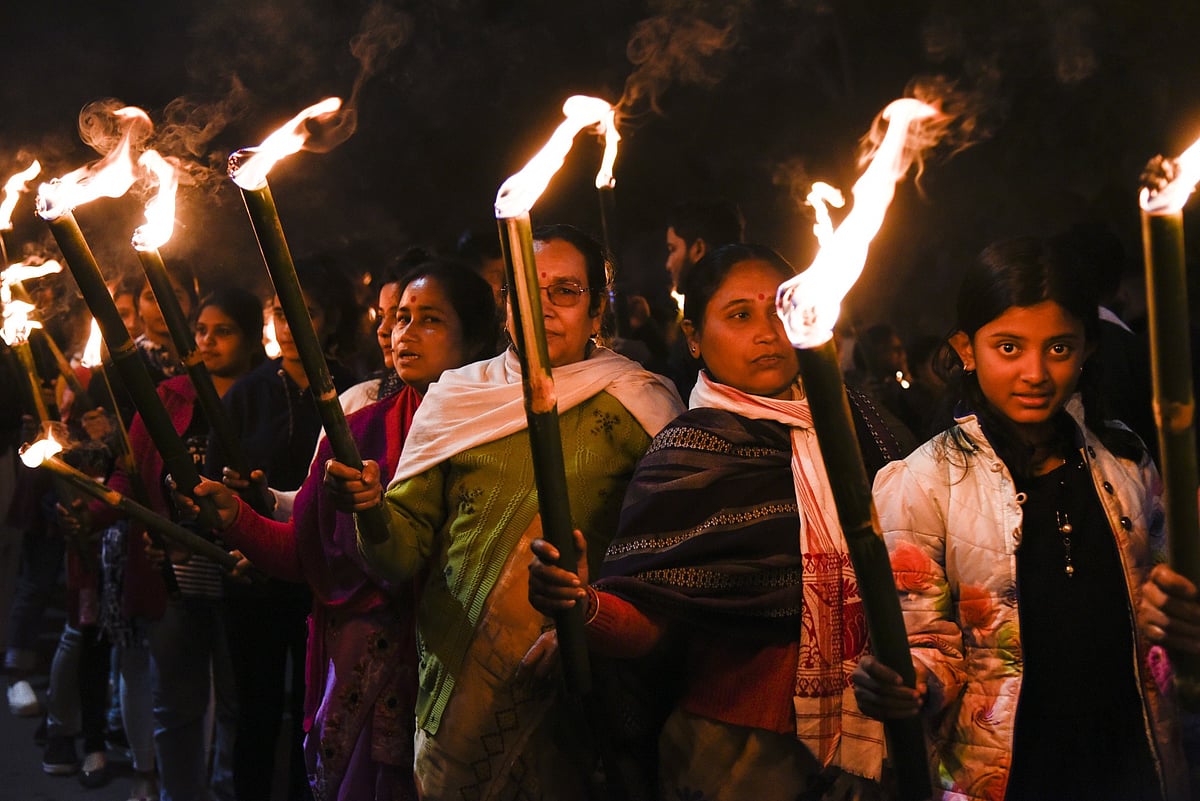
Civil society is the "true source and theatre of all history", as Karl Marx and Frederick Engels wrote in The German Ideology. In Assam, the role of civil society is particularly crucial given the implementation of the National Register of Citizens (NRC), which has made the state a focal point for questions around citizenship and statelessness. The long history of Assamese nationalism goes back to the early 19th century, while in the 20th century, civil-society groups played a significant role in shaping the question of Assamese nationality (and nationalism). This story is best told through the activities of two distinct institutions which achieved organisational influence, legitimacy and authority in the mid-19th century in colonial Assam. They are the Asom Sahitya Sabha (Assam Literary Association or ALA), formed in 1917 and the All Assam Students' Union (AASU), formed in 1967. How does civil society animate the theatre of politics in contemporary Assam? Who does civil society defend and speak for in the region?
The ALA held yearly sessions, its primary aim being to promote and legitimise Assamese as an official language in schools and courts (its motto read: "my mother language – my eternal love"). Over time, the ALA established itself as central to defining Assamese nationalism and worked for the development of Assamese literature. Similarly, the AASU began as a volunteer-led organisation in schools and colleges. Although the Asom Chatra Sanmilan, formed mostly by Assamese students studying in Calcutta in 1916, was one of the first students' platforms with a sole focus on Assam and Assamese, it disintegrated over time. (Some consider it the first national organisation of Assam.) In its first meeting, president Lakshminath Bezbaruah in his speech noted: "Our youth must work relentlessly for the development of our mother tongue and our literature so that the deficiencies of the Assamese literature and language could be removed." Even in the constitution of the meeting, it was declared that the group "shall have nothing to do with any political propaganda or political movement." Although members of the group were involved in the freedom struggle at an individual level, nonetheless at an organisational level, the Asom Chatra Sanmilan stressed on staying away from politics. Its primary focus was to develop Assamese language as the mother tongue of Assam, and it was also made clear that all proceedings of the Sanmilan would be allowed only in Assamese and English. It was not until students regrouped around the 1960s language movement (in which the ALA played a crucial role) calling for recognition of Assamese as an official language and medium of instruction, that the constitution of a new students' led union was outlined in a student conference held in Tezpur on 8 August, 1967.
One of the peculiar dimensions of AASU, which had a large organisational base, was its choice of members, drawn particularly from Assamese-speaking schools and colleges. Hindi and Bengali schools were not included.
The duo of ALA and AASU are integral to Assamese nationalism and have influenced the social and political landscape of Assam since the 20th century. They were set up by regional elites who were not necessarily anti-colonial in their outlook. In fact, many early ALA presidents, including historian Surya Kumar Bhuyan, were in awe of colonial sahibs, and expressed their admiration and gratitude to them for extending Assamese concerns. In Assam, the colonial state and missionaries were very much part of "print capitalism" and "bilingual elites" who helped in the development of Assamese language (some knew two to four languages with some authority, namely Assamese, Bangla, Sanskrit and English). This was unlike in the case of Bengal, as political scientist Partha Chatterjee writes, where bilingual elites in the colonial period came together to give their mother tongue sufficient linguistic quality so that it could become a language of "modern culture". Various printing presses, publishing houses, newspapers, magazines and literary societies were formed "outside the preview of the state and the European missionaries", adds Chatterjee. However, in Assam, the colonial state and American and European missionaries were also inside the vernacular and provincial rituals of writing, publishing and thought, and were intimately involved in the process of modernising and standardising the Assamese language. This emergence of the public sphere in Assam and its civil society is intimately connected to such relations and associational public life, where Bengalis were the more hated intruders compared to colonisers. These specificities linked to the colonial period are crucial clues to understand the varied consequences in post-colonial Assam and Bengal.