
(This is an essay from our April 2013 print quarterly 'Farms, Feasts, Famines'. See more from the issue here.)
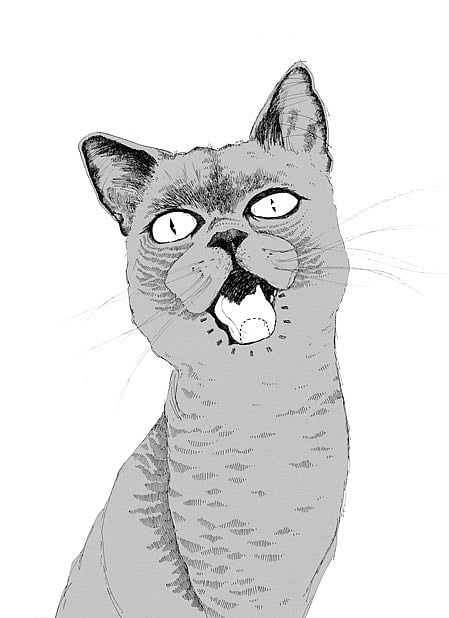
"Did you know," I asked my ten-year-old son the other day, "that cats can't taste sweetness?" Acquiring and sharing random bits of scientific trivia is one of the occupational hazards of working for a 'general knowledge' magazine. "Cats," I went on, keen to display my newfound insights on the feline tongue, "have no sweet receptors". This was met with a thoughtful silence, after which my son asked, "Then what do they taste if they eat a jalebi?" This excellent question quickly led to an existential discussion. If you can't taste sweet, then sweetness simply does not exist, or does it? Do our senses act as translators, receiving information about the external world and putting it into a language that we can understand? Or is the external world created by the receptors we are equipped with? If it is the latter, what about all the tastes for which we don't have the right taste buds?
Etymologically, the root of 'taste' goes back to the word tasten from Middle English, which means to examine by touch, to test or to sample. You can see or hear something from a distance, smell it when you are closer, and touch it with your skin. But in order to taste something, you have to bite it, lick it, chew it – basically invite it into your body. According to the author, naturalist and free-ranging polymath Diane Ackerman, taste is our most intimate sense.
The word taste not only refers to one of our five, or more, senses. To taste something is also to test it or to check it out, as 'taster menus' suggest. It also means preference. As a child, I had always assumed that the 'add sugar to taste' instructions on cereal packets meant that you had to add sugar if you wanted to taste the cereals at all, and not – as I now realise – add just enough to suit your personal preference. What is sweet for one is not necessarily sweet enough for another. 'Chacun à son goût, to each his own taste,' one might shrug, watching a visitor ladle three heaped teaspoons of sugar into his tea. Or if the situation demands something less laissez-faire and a bit more dismissive, one could say, 'de gustibus non est disputandum, there's no accounting for taste'.