
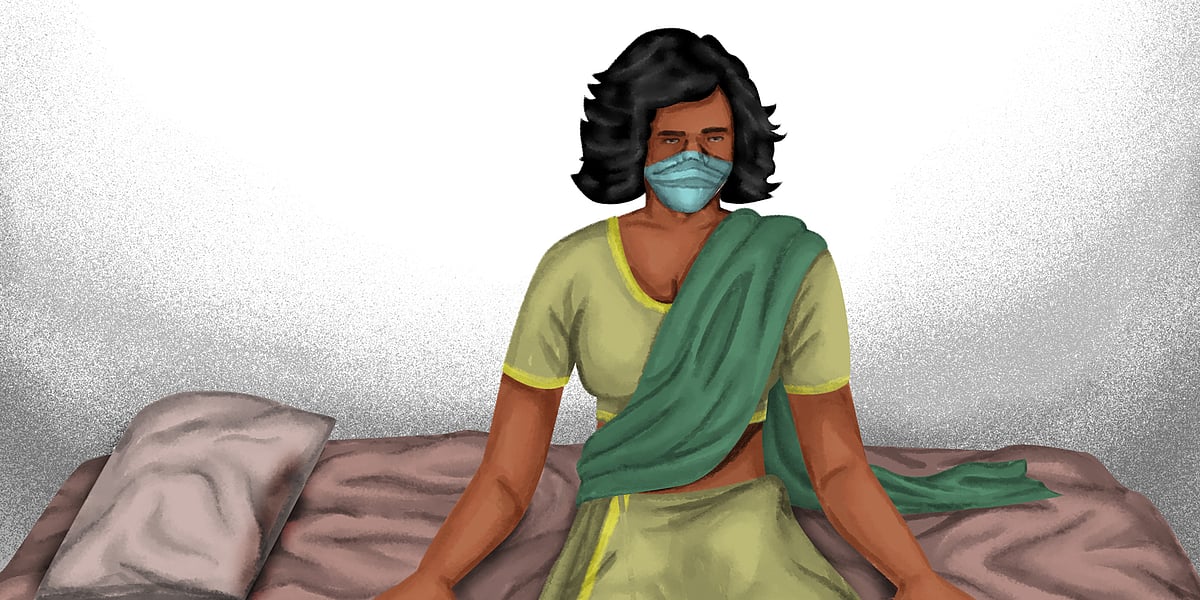
(This article is part of our special series Unmasking Southasia: The pandemic issue. You can read the editorial note to the series here.)
By ten in the morning the shops are open but in Sangli, 376 kilometres from Mumbai, goods on shelves gather dust. Kiran Deshmukh woke in no great haste. The empty roads meant she had little to do.
Deshmukh has been a sex worker in Sangli for 27 years. She was only 16 years old when she ran away from Pune, and found herself in town by accident – having never been on a train, she got off at Sangli, believing it was Kolkata. She enjoys the freedom sex work provides her, particularly the ability to work her own hours on her own terms. This has allowed her to buy a home, and raise and educate three children. Deshmukh has also worked for Sangram, an organisation that focuses on the prevention of gender-based violence and HIV/AIDS, for over a decade. She is now in charge of the Sangli branch. Lately, with work becoming scarce and people fighting over clients, she has been charged with keeping the peace between members of her community as well.
In the evening, Deshmukh begins her rounds. It is 3am the next morning when she retires to bed – exhausted, hungry, with no earnings to show for the night. Even her regular clients hesitate to visit due to fear of COVID-19 transmission.