
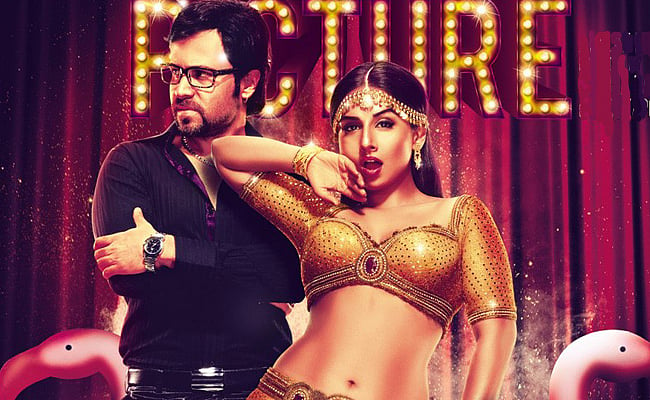
In the film The Dirty Picture, director Milan Luthria recreates 1980s India by borrowing the look of films made during that period. As the blockbusterOnce Upon a Time in Mumbai (2010) suggested, such a play with nostalgia is the director's forte. This time around, the immensely popular song 'Ooh la la' ensured that the promise of such nostalgic teleportation to the eighties would be there in The Dirty Picture. Loosely based on the life of the sensational South Indian starlet Vijayalakshmi, popularly known as Silk Smitha (1960-96), the film traces a village girl's journey to the city, to stardom, to freedom and, eventually, to a tragic suicide. Among the film's strengths are not only its rendering of nostalgia and the choice of a story to tell, but also its portrayal of desire.
Much has already been said about the film's depiction of excess – the sexually charged gyrations, matkas and jhatkas, intonations and gestures – and of the central character's sheer boldness, as played by Vidya Balan. What have frequently been overlooked, though, are The Dirty Picture's understated references to cinema itself, as a medium that evokes desire and fantasy. Consider a scene in which Silk walks through the dark interiors of a cinema theatre while wearing her sunglasses, hoping to watch her own first performance in a song-and-dance number. If the darkness inside the cinema hall helps in suspending disbelief and embracing the 'copy' more than, or as if it were, the 'real', the sunglasses further suggest that Silk, by already considering herself a star, wants to retain the dream of stardom – she does not want to leave it, or perhaps she wants to have a dream within a dream. The film's establishing shot shows a small girl, Reshma (yet to become Silk), being rebuked for climbing up a ladder, thus foreshadowing the dreamscape of heightened ambitions about to unfold.
Indeed, instances in which cinema becomes a producer of desire are everywhere in The Dirty Picture. The film posters with which Silk decorates her walls, her infatuation with the old iconic actor Suryakant (played by Naseeruddin Shah), and her courageous entry into the male-dominated cinema hall to watch a movie at the risk of being eve-teased by lustful men – each of these tell the poignant, multifaceted story of desire. Tied intricately with this association of desire to films is the social construction of the image of a vamp, collectively created by directors, cinematographers, choreographers, costume designers, expert reviewers, senior actors, Silk herself and the spectators. The film shows how, by selectively capturing particular movements or parts of a dancing body, the camera renders a human body a mere spectacle. As a fictionalised biopic of a real actor, then, The Dirty Picture invites the audience to reflect on the politics of desire operating within mainstream Indian cinema.
The film also questions whether a genre consisting of song-and-dance routines, featuring lifted saris and deep cleavages, can be dismissed as 'low brow' or crassly popular. It asks whether such purportedly 'cheap' movies deserve to be seen only by an audience from the urban slums and provincial towns when, in fact, Indian middle-class youths, while publicly castigating cinematic seductresses, privately fantasise about them. In this context, the phrase dirty picture of the title can be seen as not only referring to such movies relegated to the status of semi-porn, but also to the hypocrisy – the 'dirty secret', as Silk puts it in the flim – of the censurers.