
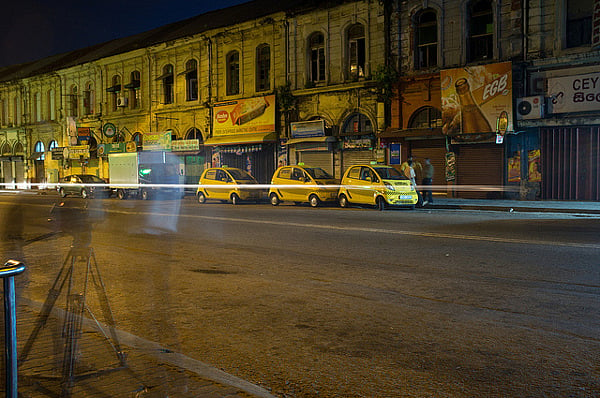
As dawn breaks over the horizon, Colombo rises from its slumber to the rude sound of traffic. Devika wakes up from another night spent in front of a shop in Sri Jayawardenepura Kotte, a busy suburban area in the capital Colombo. Her day's work starts at 6 am at the outer boundary of a public school in the area, from where she starts sweeping down the deserted streets in this early hour, passing shops that are lazily opening up for business. Dressed in a pair of three-quarter shorts and an oversized bright orange T-shirt, she cleans the gutters and collects garbage from the roads and sidewalks. Soon, the traffic starts to gather in the streets with Colombo's well-heeled citizens and expatriates driving their cars to work. Buses honk above the blaring music coming from cars.
Delving into the cracks and crevices between the garden walls and the paving stones where seeds sprout, damp leaves congeal, and crumpled paper clings, Devika sweeps the streets and pavements, pausing occasionally to shovel up the deposits of a society becoming addicted to fast food and binge drinking.
In a world driven by consumerism, Devika is a foot soldier among the small army deployed by a big conglomerate to clean up after more than 600,000 Sri Lankan citizens. She is part of a group of individuals who work night and day, in the merciless heat and the unforgiving monsoon, keeping the streets and neighbourhoods clean. In Sri Lanka, the total Municipal Solid Waste generation is estimated to be around 6400 tonnes per day, out of which about 60 percent is collected from the Western Province. However, less than half of this is collected by the municipal authorities. Illegal dumping of waste is common practice in Sri Lanka, and the streets serve as a dumping ground. Improper management of waste is a major cause of environmental degradation in the country and it impacts the health of citizens. It also causes odour, pestilence and leads to declining property values.
Colombo's street cleaners are everywhere for everyone to see: you encounter them on your morning walk to work, and they greet you again on the pavements on your way back from work. Yet, they remain invisible. They remain on the margins of society, largely excluded and unaccepted, entangled in a complex web of social, economic and political structures that is suffocating. The bright orange T-shirts they wear on the job symbolise in many ways the vulnerability of those who inhabit the underbelly of our city.