
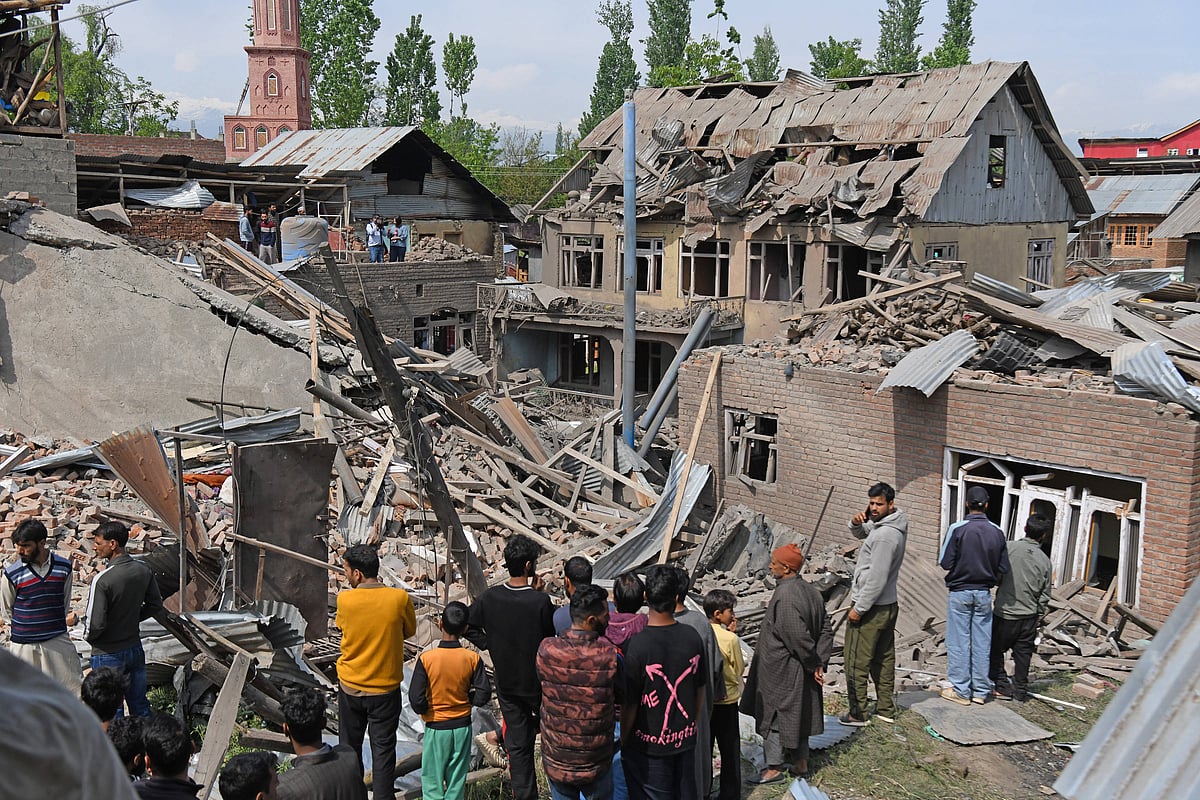
Shortly after the terror attack in Pahalgam on 22 April, a large number of residents of India-administered Kashmir took to the streets in a protest march – an unprecedented move in over three decades of conflict in the territory.
The next day, the whole of Kashmir observed a complete shutdown, jointly called by the local business fraternity, private school associations, religious bodies and political parties. All shops, business establishments and schools remained closed, while public transport services were suspended. The shutdown was observed as a collective act of protest and mourning for the 26 people – 25 of them tourists – who lost their lives in the attack.
There were also spontaneous candle-light protests that strongly denounced the attack, among the deadliest attacks targeting civilians in India-administered Kashmir in recent years. “People felt that this is something that can’t be done in their name,” said Danish Ali, a resident of Srinagar. The Resistance Front, a little-known armed group and offshoot of the Islamist outfit Lashkar-e-Taiba, initially claimed responsibility for the attack but denied involvement days later, likely due to the pushback from Kashmir residents.
Baisaran meadow, where the massacre took place, is only accessible on foot or by horseback, with no motorable road connecting it directly to the town of Pahalgam, located about 5 kilometres away. This made it difficult for authorities and security forces to reach the site promptly for rescue operations. It was the local residents – horse riders, tourist guides and traders – who stepped in heroically to rescue and evacuate stranded tourists.