
In September 2022, a complaint was filed before the Islamabad High Court by Imtiaz Bibi. She charged that her son had suffered severe torture at the hands of prison officials at the Central Jail in Rawalpindi. Shortly afterwards, a doctor examined Bibi's son and told the court that his injuries were likely caused by torture. On 21 September, the superintendent of Rawalpindi Central Jail denied the charges. However, the story didn't end there. The next day, the National Commission for Human Rights (NCHR) said in a report that officials at the Rawalpindi prison appeared to have committed gross abuses of power, and that further investigations were warranted. The Chief Justice of the Islamabad High Court then visited the jail, along with several fellow judges as well as representatives from the NCHR, the ministry of human rights and the home department of Punjab province, where Rawalpindi is located. In a final NCHR report filed in October, 26 out of the 35 inmates interviewed said they had experienced torture and other inhuman and degrading treatment in prison. In the pursuit of justice for her son, Imtiaz Bibi had brought attention to the larger pattern of inmates' mistreatment within Rawalpindi's Central Jail.
Soon after the Rawalpindi case, in November 2022, the Torture and Custodial Death (Prevention and Punishment) Act was passed into law, making torture, custodial death and custodial rape criminal offences. The new law introduced a maximum penalty of death for anyone causing custodial death and fines of up to PKR 100,000 for using evidence obtained through torture, yet there have been no convictions under it so far. The promulgation of the act signalled Pakistan's attempts at progressive reform of its carceral system, yet while there is official willingness to change the pace of progress has been slow, and many obstacles persist.
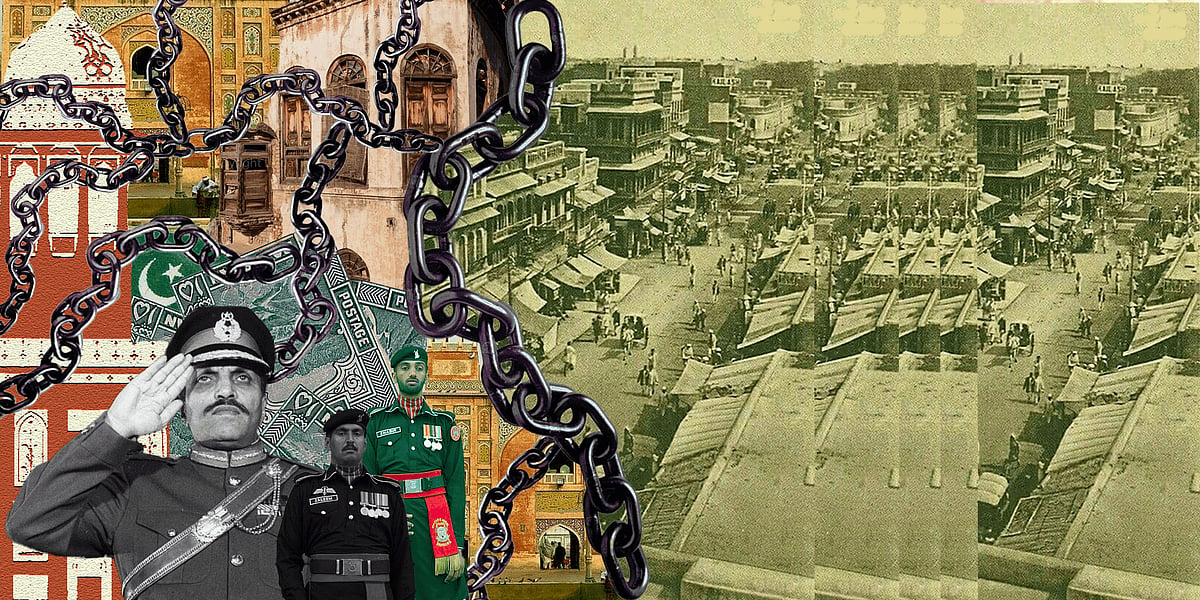
Pakistan's criminal justice system continues to bear the imprint of British colonial rule. The 1894 Prisons Act and the 1900 Prisoners Act are the main laws which govern prisons in the country, alongside the Penal Code, introduced in 1860, and the Code of Criminal Procedure introduced in 1898. A significant post-independence turn came in the late 1970s and the 1980s, when the dictatorship of Muhammad Zia ul-Haq began to intertwine religion with the law in a bid to transform Pakistan into an "Islamic state". This included the establishment of Sharia courts with the power to review and annul almost all legislation they found to be un-Islamic. The widely criticised Hudood Ordinances, which criminalised extramarital sex and alcohol consumption and were deemed discriminatory towards women and religious minorities, were also introduced. Pakistan's legal system shares many common elements with India's, a result of their shared colonial histories, although India maintains a comparatively more secular legal framework. In Pakistan, the Islamisation of the legal framework is ongoing, while reforms that could materially improve the lives of prisoners move at a glacial pace.
There has yet been no attempt to address one of the most urgent issues facing Pakistan's prisons, which is overcrowding. As of October 2023, Pakistan held around 100,366 prisoners in its 127 jails, according to primary data obtained by the Justice Project Pakistan. (These figures exclude the administrative territory of Gilgit-Baltistan.) As much as 73 percent of prisoners were being held while awaiting verdicts in their cases. Almost everywhere, the number of such under-trial prisoners exceeded the number of convicted inmates, highlighting Pakistan's over-reliance on pre-trial detention even for relatively minor offences. The occupation rate across Pakistan's prisons stands at 152.2 percent of intended capacity, with some jails operating with occupancy of over 200 percent of their capacity.