I’m writing with exciting news this week. Himal Southasian is up for an award at the Global Investigative Journalism Conference taking place in Kuala Lumpur. Our magazine has been nominated for a Global Shining Light Award for M Rajshekhar’s reporting on Reliance Industries’ large wildlife centre, raising questions around sourcing of its animals and broader questions on India’s wildlife management. We’re the only Southasian media outlet to be nominated in the Small and Medium Outlets category.
This is huge news, especially given the constraints that we operate under as an independent magazine, but also because of the blowbacks in the form of legal threats and other attempts to suppress the story online that we had to withstand. This is one of the reasons investigative stories are rare in the region, given dwindling funding, censorship and other threats. But we plan on being a space for stories that won’t easily find a home elsewhere. That’s only possible when readers like you support our work, so that we can keep bringing you more investigative stories that hold power to account.
Due to regulatory restrictions on processing recurring payments for Indian credit and debit cards, we are unable to offer monthly Patron plans to subscribers in India. You may instead opt for one of our one-time payment plans listed here
This week in Himal
Salman Rafi Sheikh writes about Pakistan’s 27th constitutional amendment, which expands the military’s authority and allows for control of the judiciary, even as the country grapples with political instability.
On the Saffron Siege podcast series in collaboration with Karwan-e-Mohabbat, anthropologist Thomas Blom Hansen and journalist Qurban Ali join Harsh Mander to unpack how the RSS has enabled and executed communal violence over the years.
Coming up on the State of Southasia podcast hosted by Nayantara Narayanan, a conversation with Indian transparency activist Anjali Bhardwaj on the big questions around recent elections in India including electoral revisions, and over the credibility of India’s Election Commission.
Also read: Navigating new scales of queer Southasia
Also read: Podcast: Thomas Blom Hansen, Qurban Ali & Harsh Mander on the RSS’s role in communal violence
Also read: In Pakistan, a mightier military and a judiciary undone
This week in Southasia
Sheikh Hasina’s death sentence and Bangladesh’s fragile 2026 election
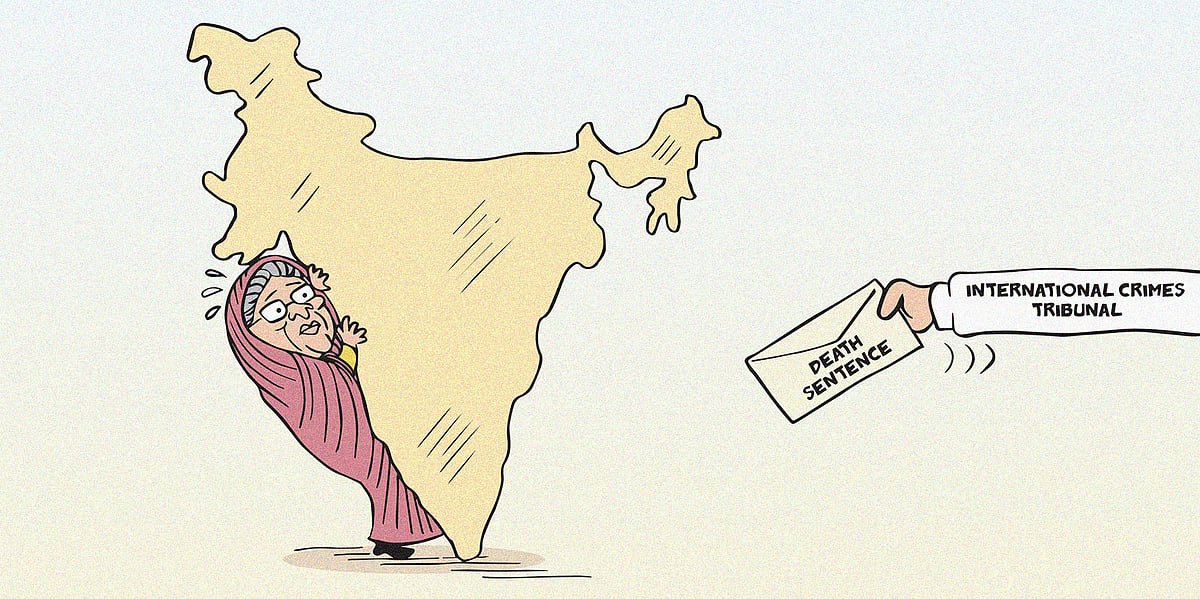
On 17 November, Bangladesh’s former prime minister Sheikh Hasina was sentenced to death in absentia by the domestic International Crimes Tribunal she established to investigate crimes committed during the 1971 Liberation War. Hasina received the sentence for her role in the violent suppression of student protesters during the 2024 uprising. Watchdogs estimate that around 1400 people were killed between 15 July and 5 August, many of them at the hands of security forces. Leaked audio recordings appeared to show Hasina authorising the use of lethal weapons; she later denied ordering security forces to shoot at protesters.
The verdict places India in a diplomatic quandary, given that Hasina remains in Delhi despite repeated requests from Bangladesh to extradite her. Her presence underscores the close relationship India maintained with the Awami League regime. This tension can be seen in mainstream media coverage; while India’s mainstream media questioned the credibility of the verdict, their Bangladeshi counterparts struck a hopeful note. Increasingly, watchdogs have levelled criticism at the interim government for its authoritarian measures, including a ban on the Awami League’s activities and a crackdown on supporters and senior party members – giving Hasina’s statements on the “farce” of the trial added weight despite the enforced disappearances, extrajudicial killings, torture and suppression of political opposition that marked her regime, and adding to volatility in the lead up to Bangladesh’s 2026 election.
In light of this, Cyrus Naji’s article from September 2024 on why India continued to back Hasina’s regime remains relevant - scroll below to the archive section to read it.
Elsewhere in Southasia:
- Three key judicial bodies reconstituted, opposition alliance Tehreek-i-Tahafuz-i-Ayin-i-Pakistan marches to Supreme Court over Pakistan’s controversial 27th amendment
- Myanmar’s military files charges against non-profit Assistance Association for Myanmar-based Independent Journalists under junta’s ‘election protecgtion law’, raising concerns of censorship
- Maldivian Democratic Party asks Prosecutor General to investigate allocation of over 200 projects worth over MVR 2 billion without a bidding process
- Sri Lankan influencer made USD 300,000 through AI-generated anti-migrant and Islamophobic content targeting UK audience on Facebook, investigation finds
- Afghanistan’s Taliban trade minister in New Delhi on five-day-visit, discusses boosting trade expansion, sea connectivity as Pakistan-Afghanistan tensions continue
- India calls for reform, adaptability during SCO summit in Moscow while Pakistan calls to set up SCO development bank; Afghanistan excluded from talks
- 50 youth protesters detained in Nepal on 15 November for protesting ‘without permission’ from local administration, interim government claims detentions were to prevent clashes with other youth protesters
- Kashmir Times office raided for ‘promoting anti-national activities’, editors say raids intended to intimidate, stifle independent journalism
- India to purchase 10 percent of LPG needs from US, as trade deal talks continue between the two countries
Revisit the below archival stories from Himal adding more context to this week's news updates from India and Pakistan
Also read: Why New Delhi backed Sheikh Hasina – and botched its Bangladesh policy
Also read: Pakistan’s 26th constitutional amendment is curtailing judicial independence – Southasia Weekly #40
Snap Southasia
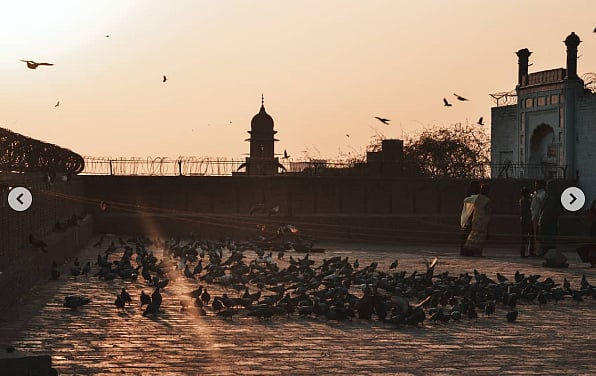
Where in Southasia was this photo taken? Click on your guess below (and check in next week to see if you guessed right!)