
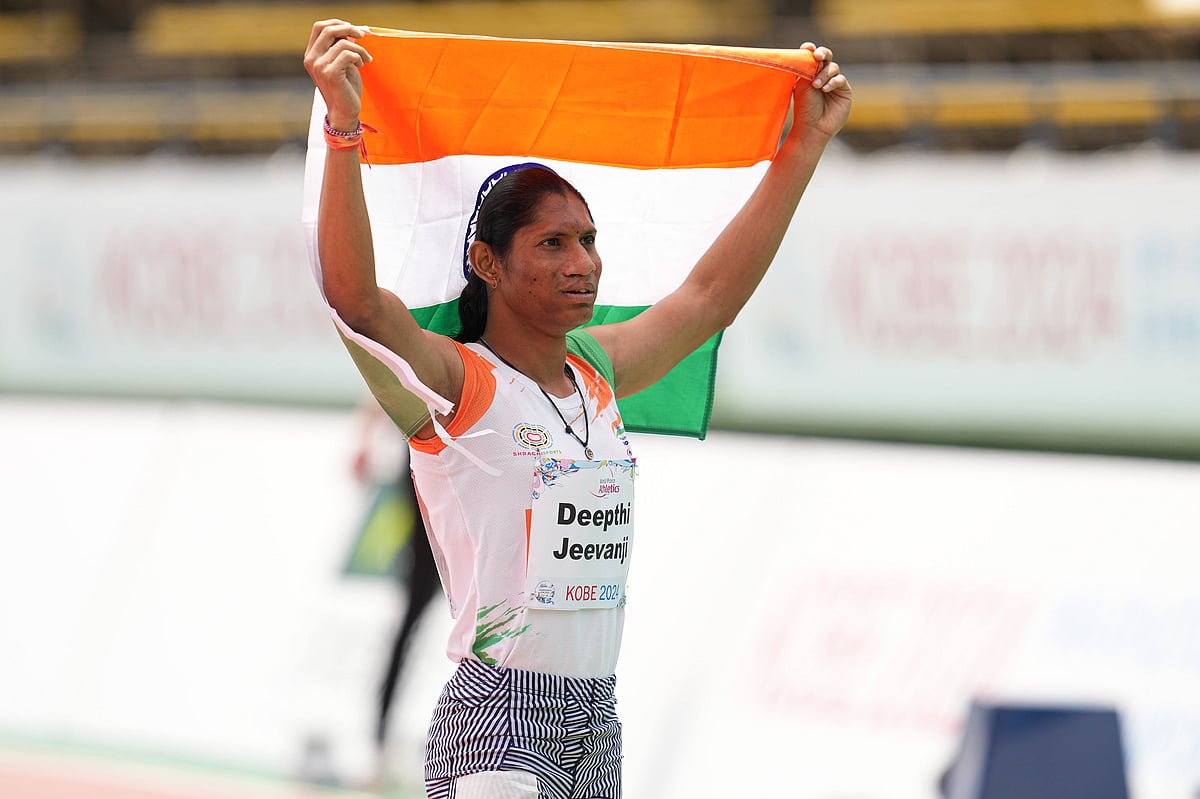
ON 3 SEPTEMBER, Deepthi Jeevanji, India’s first athlete with an intellectual disability to compete in the Paralympic Games, won the bronze medal in the women’s 400-metre race. Indian news publications tracking the games ran headlines about her win and quick takes about how she overcame her disability to attain sporting success. Jeevanji’s qualification for this year’s Paralympics, being held in Paris between 28 August and 8 September, received minimal coverage in the Indian media despite her already significant achievements. Before she got to the games, Jeevanji had won gold at the World Para Athletics Championship in Japan this May, where she broke a world record, and another gold at the Asian Games in China in 2023.
Earlier this year, The Documentary Podcast by the BBC World Service had picked her story up. In an episode that aired in August, it explored several events in her life: her achievements as an athlete, the stigma because of her disability and her family’s financial challenges. It described how her parents’ faith in her abilities, and finding supportive mentors and coaches, enabled her to pursue her dream of becoming an international athlete – even when the world around her was calling her a “monkey” and still wondering how she would ever get through school. The podcast was a rare example of in-depth coverage of her life as an athlete.
Jeevanji’s story exemplifies the Paralympics, an elite competition that is also part of a movement to advance disability representation and inclusion. The International Paralympic Committee states on its website that the games “ are more than just a sporting event – they offer a unique opportunity to shine a spotlight on sport and disability, inspire individuals, bring about social change, and promote inclusive professional and sports opportunities for people with disabilities.” Cities that have hosted Paralympic Games have become more accessible and disability inclusion-aware for residents, tourists and athletes alike, and public perceptions of people with disabilities have improved among those who follow the event.
In recent years, media coverage of the Paralympics has generally seen some improvement, driven by advocacy for greater inclusion. But reporting in India often remains stereotypical and insufficient. Many stories depict disabled athletes as “superhumans” who have “overcome” their disabilities to succeed. This narrative reinforces the misconception that anyone can overcome a disability through sheer effort and misrepresents the realities of Paralympians and other people living with disabilities. Praising Paralympians for overcoming disabilities to simply participate in sports diminishes their athletic achievements and fails to recognise them as what they are: high-performance athletes competing at the top level.