
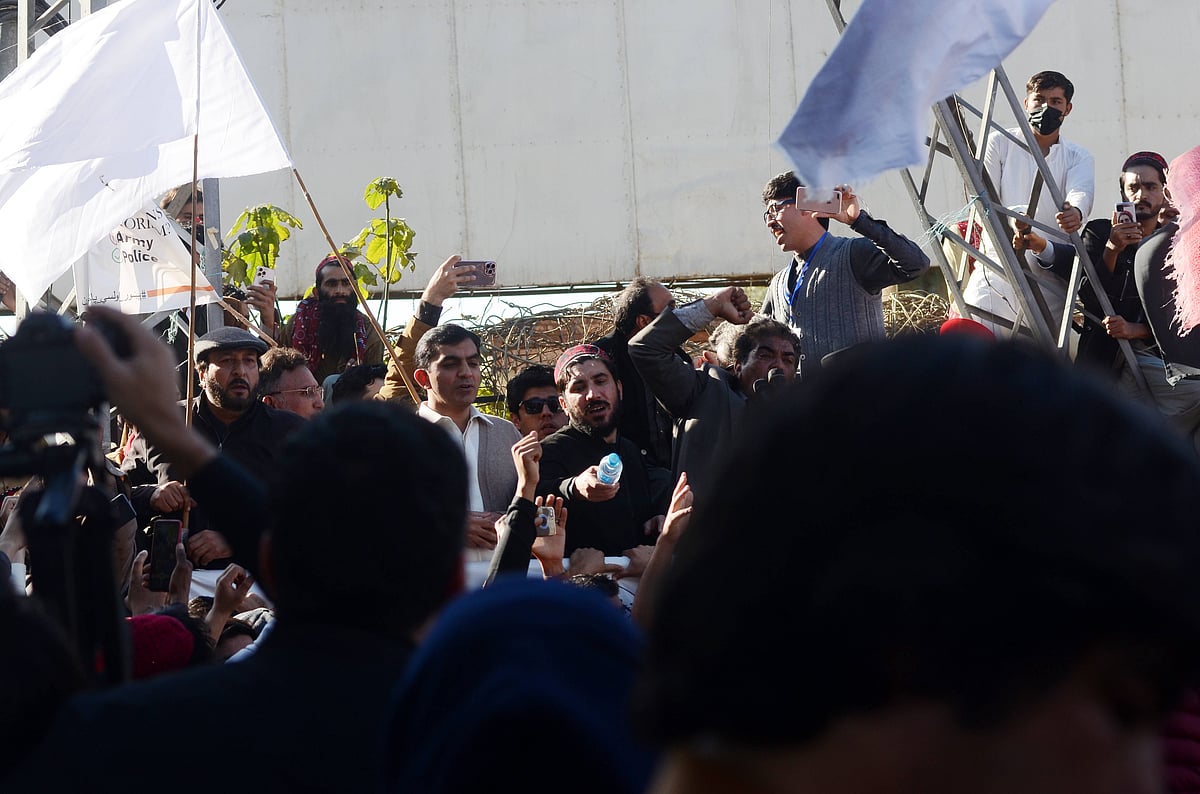
On 30 January, at least 101 people, most of them police officers, were massacred by a suicide bomber in a mosque in Peshawar during Friday prayers. The area where the blast occurred is supposedly a highly fortified part of the city, as it houses government buildings, intelligence and counterterrorism bureaus and the residence of the chief minister of Khyber Pakhtunkhwa province. There has been public outrage in response. Local police demanded a full and transparent investigation, adding that they were compelled to take to the streets in protest given the deteriorating law-and-order situation in the province. While the provincial police – which includes many Pashtuns in its ranks – has been targeted in the past, this marked one of the first times that police officers joined protests.
The Peshawar mosque blast is only the most recent instance of a wave of attacks in Khyber Pakhtunkhwa and across Pakistan, highlighting the impact of increased militancy in the region. In 2022, the Tehreek-i-Taliban Pakistan carried out more than 260 attacks in the country – a 27-percent increase compared to the previous year – killing 419 people. This happened even as peace negotiations between the TTP and the Pakistan government were ongoing, with the Afghan Taliban acting as intermediaries.
The resurgence of violence at the hands of the TTP follows a pattern all too familiar to Pashtuns in general and the people of Swat and Waziristan in particular. Historically, after every truce or ceasefire negotiation, the TTP captures more control or the state cedes some more power to it. Before Pakistan began a major operation against the TTP in Swat in 2009, at least two ceasefire agreements had been signed, each of which saw subsequent regrouping and expansion of the group. The last truce, in 2009, resulted in the TTP expanding beyond Swat into the neighbouring districts of Dir, Shangla and Buner. The recent peace talks after the Taliban's capture of Kabul also unfolded in a similar fashion, where bomb blasts and militant activity continued unabated despite a ceasefire.
Provincial politicians have long been raising this issue. Mohsin Dawar, the leader of the National Democratic Movement and a member of Pakistan's National Assembly from North Waziristan, spoke about the re-grouping of the TTP in Waziristan, charging that they were consolidating with the acquiescence of the powers that be. The general consensus is that the state is playing a long-term game to deal with the TTP, at the cost of more Pashtun lives.