
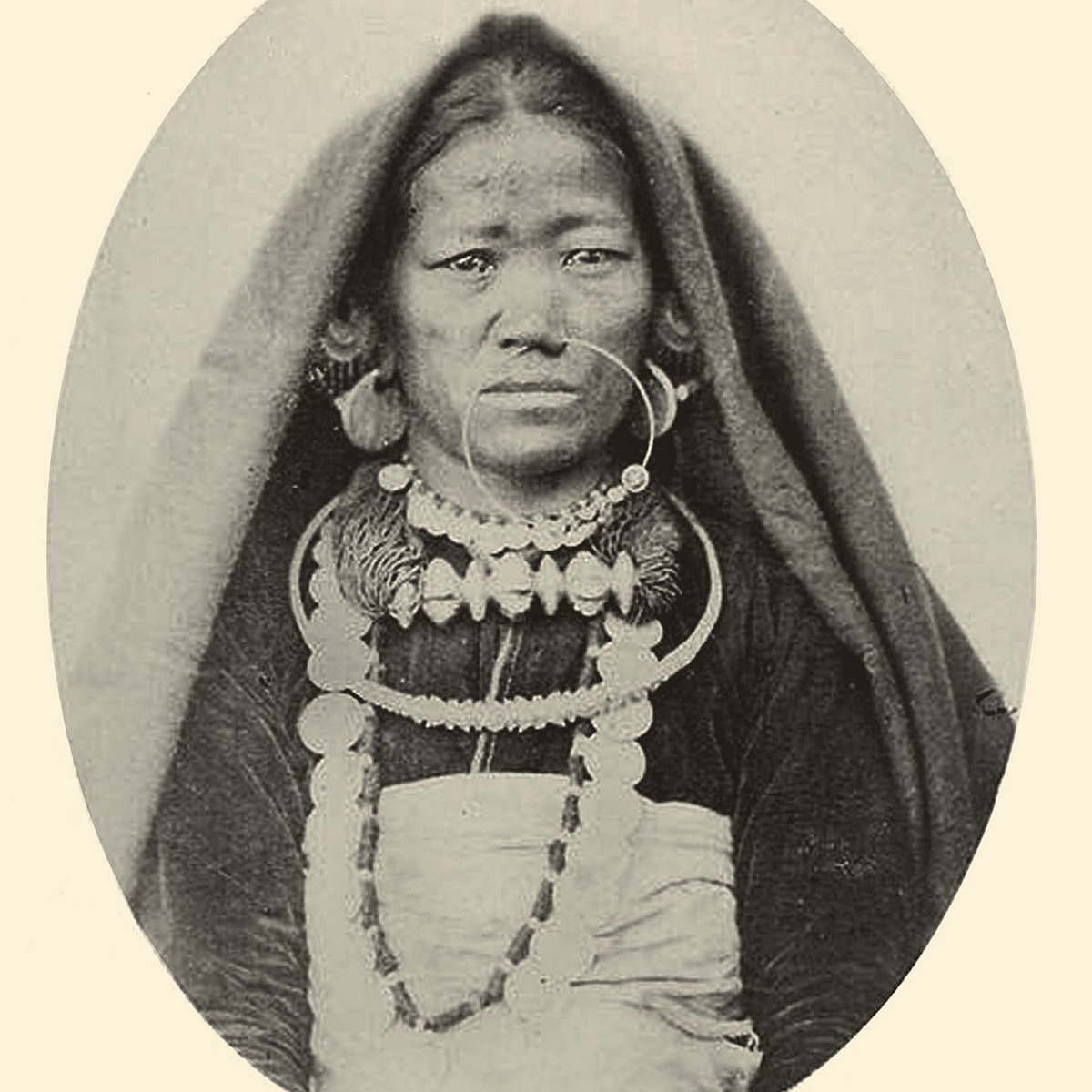
(This is an essay from our December 2013 print quarterly, 'Are we sure about India?'. See more from the issue here.)
It is 1863, barely a decade after albumen photography is invented in Europe. In Kathmandu, capital of a country far removed from the technological advances of the West and the colonies, a young man stares intently into the lens of an alien box-like instrument. He is a Gurung, whose community has origins in central Nepal, and is probably part of the national army of the day. We know much more about the photographer, Clarence Comyn Taylor (1830-1879), a colonial administrator wounded in the siege of Lucknow in 1857. Taylor perfected his photography skills in Rajputana and arrived in Kathmandu Valley as the Assistant Resident at the very moment that Viceroy Lord Canning had put out the call for a collection of photographs of the people of the Subcontinent.
The result was a pioneering photographic and ethnographic project, tremendous in scale, that utilised more than a dozen amateur sahib photographers all over the colonised region and even – as in Nepal – beyond. It seems the original intent was simply to create a photographic album as memorabilia for Lord and Lady Canning to take back home, but the project expanded in scale to be printed in eight volumes between 1868 and 1875 as The People of India: The Races and Tribes of Hindustan. The leather-bound volumes were published in London on behalf of the Government of India, edited by John Forbes Watson and John William Kaye. They contain 468 pasted photographs on the left-hand pages, and accompanying descriptive text in letterpress print on the right.
Coming soon after the 'sepoy mutiny', the project became part of the East India Company's attempt to better understand – and hence control – its farflung subjects. Most of the photographs have the natives in formal pose, and the pictures at times give a sense of an ethnographic specimen on display, much in the way colonial-era zoologists, botanists and geologists exhibited samples of flora, fauna and rocks. It was not possible for the photographs to exhaustively catalogue the tens of thousands of communities and sub-communities of Southasia, so the photographs seem to have been sourced from wherever British administrators and enthusiasts with grasp of the new technology happened to be located. For their part, these photographers of the Raj gravitated towards out-of-the-way, marginalised or 'exotic' communities. Expectedly, the accompanying text reflects the colonial biases of the time, including references to entire communities as engaging in sex work, banditry or knavery.