
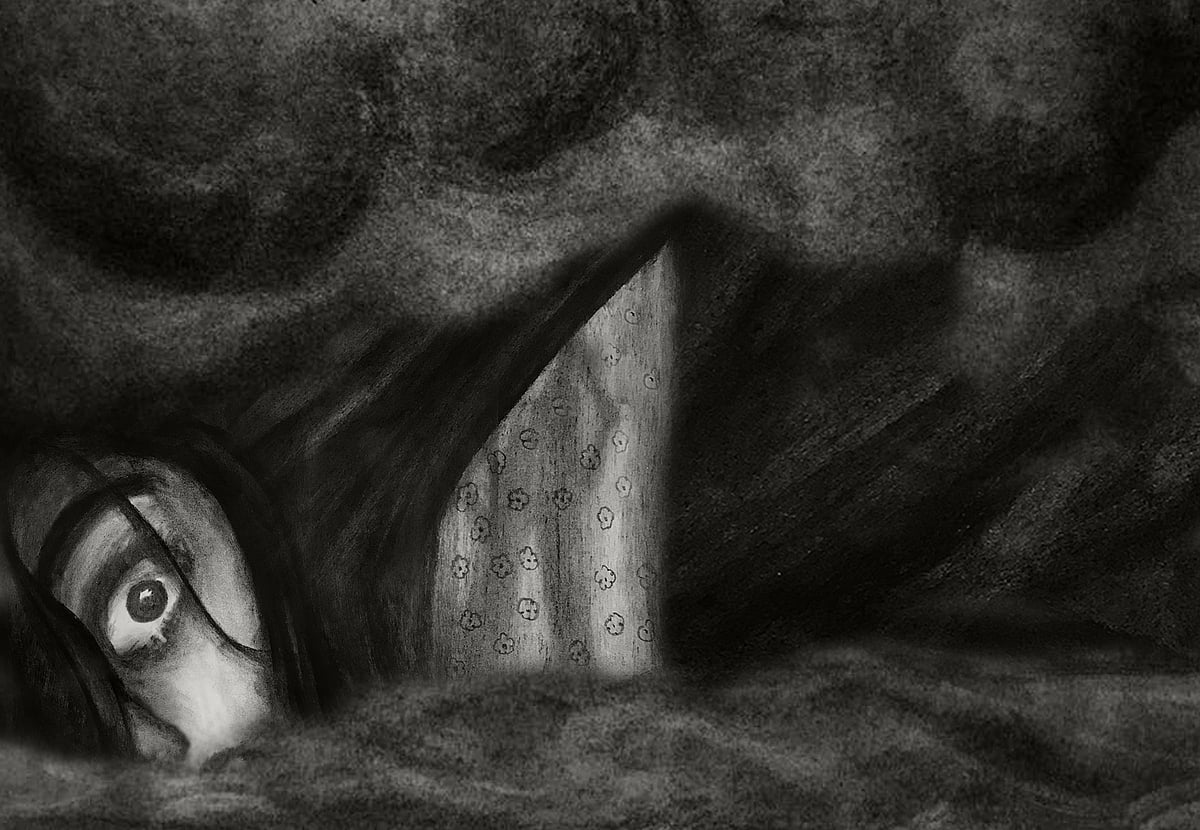
Philopotamus, they called her, the boys in the trees, following her slow progress down the main street of Teresa Colony, Orlem. "Phi-lo-Phi-lo-po-tah-mus," they would shriek, one ragged chorus picking up where the other left off. She, unsmiling, would walk the gauntlet, her shoulders swinging and double chins bobbing, eyes locked straight ahead. If she looked like she had a purpose, she reasoned, they would pipe down and go away. They never did.
When Philomena was little – a sweet child among the motley bunch perennially outside Obrigado Mansion, where she was born and raised – the elderly ladies of the neighbourhood would walk up to her and tug her cheeks. "So cute men, she is," they would say to each other, before stumbling into shared memories of former friends and relatives who were once as cute, in better times long behind them. Philomena would endure their caresses and accept their adulation without question. She would then wriggle out of their grasp and waddle back to her games with the other children.
One of their favourite pastimes involved cutting a notch into a paper plane, hooking it to a rubber band, then lighting the tip on fire before sending it whizzing into the air. No one was ever hurt by this potentially catastrophic idea except for Zuleikha Furtado, who once had the misfortune of standing beneath a plane that was half on fire. She survived the incident, but her bald spot took years to disappear and the children of Obrigado never let her forget it.
Then there was the game that involved creating a little noose from the vein of a coconut palm leaf. Carefully knotted, it would be lowered into one of the gutters on either side of the street. While some of the children held their nooses in a row, others a few feet away would swirl the muddy waters, prompting the frogs living in the murky water to move. The trick was to get a noose in front of a swimming frog. The minute one moved its head into a dangling loop, the noose would be pulled, yanking the frog cleanly out of the water and leaving it to struggle. It called for patience and an immense amount of concentration. It also explained why cricket bats and footballs were often found abandoned during the monsoons, with their owners all huddled in groups around a gutter.