
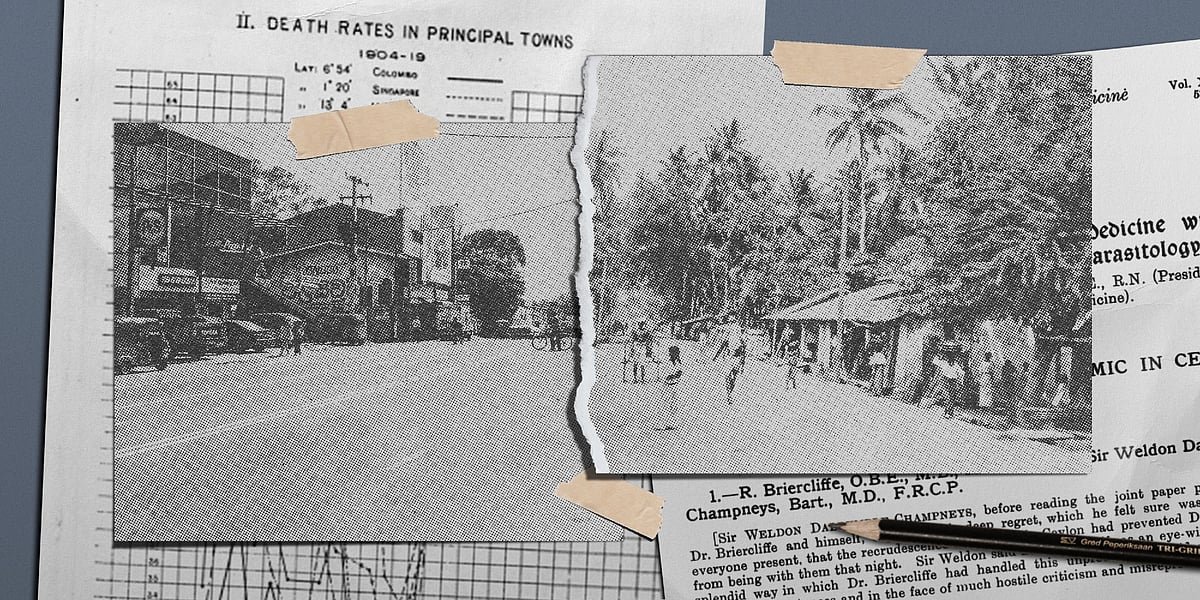
By 1918, H1N1 influenza A, more commonly known as the Spanish flu, had claimed the lives of between 20 to 50 million people globally, many of them between the ages of 20 and 40 years old. Ceylon was no exception. The virus entered the island through two of the busiest ports handling high volumes of international passenger traffic – Colombo in the southwest and Talaimannar in the northwest. Colombo linked Ceylon to ports around the world, and Talaimannar was a hub for maritime traffic from southern India.
Disease control (or the lack of it) during the 1918–1919 pandemic in Ceylon was similar to global patterns epidemiologically, in that the disease spread in distinct waves. In Ceylon, cases surged in the latter half of 1918. The Registrar-General for Ceylon recorded that the Spanish flu claimed 41,916 lives from 1918-1919 – the highest ever number of deaths recorded in the island in a single year. Approximately 6.7 percent of Ceylon's population was lost.
In the 1920s, the suburbs of Colombo were experiencing a surge of cases of malaria (along with Bengal) and the effects of flooding. A deadly spike of malarial fever followed in the mid-1930s, affecting 1.5 million lives. In the 1930s, research by the Colombo Municipal Council pegged the spread of plague to plague fleas and shore rats as carriers, rather than to humans. Disease control in the city was a priority. Ceylon was also experiencing malnutrition due to drought, resultant food shortages, particularly of rice, and falling incomes which left more people vulnerable to disease and malaria. Groups such as the anti-imperialist and anti-war Suriya Mal movement too conducted voluntary malaria relief work in the 1930s.
A century later, questions of epidemic, contagion and urbanism have reemerged with COVID-19. The connections and paradoxes of development and improvement in a city (much like the City Improvement Trusts, which were set up in Bombay, Calcutta and Madras in the late 19th to mid-20th century to manage the task of urban development, housing and disease control) compel us to reckon with the histories, successes and failures of planning urban spaces in times of disease. The vision of Colombo as a garden city, with its streets lined with avenue trees; a city dotted with aquariums, paths and parks promoting garden spaces, horizontal living, health, wellness and house pride is an idea that lingers, and one that is rooted in history.