
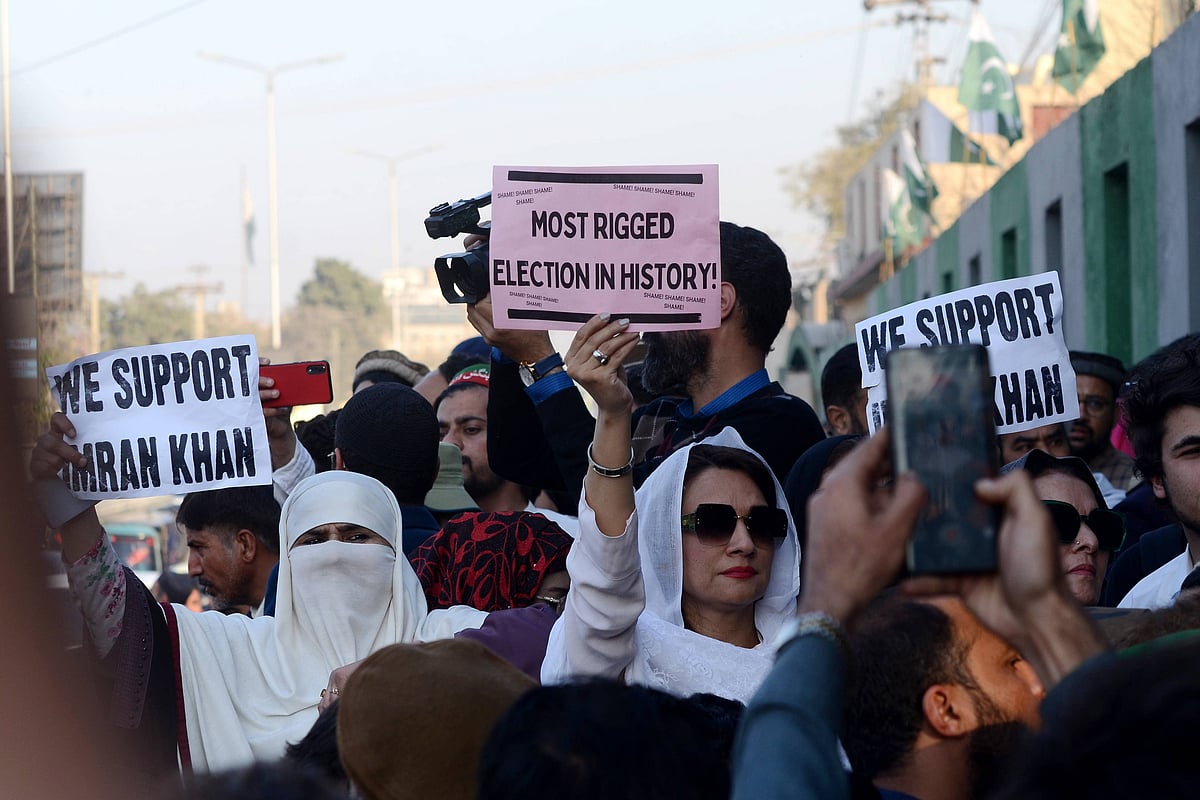
On 9 March, Asif Ali Zardari of the Pakistan’s People’s Party (PPP) was elected as Pakistan’s 14th president – the only person ever to be elected as the country’s head of state for a second time. Earlier in the week, Shebaz Sharif of the Pakistan Muslim League-Nawaz (PML-N) took oath as prime minister, also for the second time. An eight-party coalition headed by the PML-N with support from the PPP formed the new government, despite candidates from Imran Khan’s Pakistan Tehreek-e-Insaf winning the most number of seats in the 8 February election. The new government has been dubbed as “coalition of losers” by supporters of the PTI, who have alleged large-scale manipulation cutting into the party’s electoral gains.
As always in Pakistan, the military had a big role to play in the election, throwing its weight behind the PML-N and its head, Nawaz Sharif, a former prime minister and brother of the current prime minister. Imran Khan’s chances were also hobbled by the fact that he was charged and convicted in a number of corruption cases, and by the election commission withdrawing the PTI’s electoral symbol. The tumultuous election, followed by a month of outrage and protest by Khan’s supporters, has thrown up questions about the military’s control over Pakistan’s politics and triggered widespread disaffection with the military, once seen as an arbiter between warring politicians.
In this episode of State of Southasia, Nayantara Narayanan speaks to Ayesha Siddiqa, a political and military analyst from Pakistan and currently a senior fellow at the department of war studies at King’s College in London. Siddiqa is also the author of Military Inc, a revelatory book about the Pakistan military’s economic activities and their fallout.
State of Southasia releases a new interview every four weeks.
This interview is now available on Spotify, Apple podcasts and Youtube.
Episode notes:
Further reading from Himal’s archives:
With an unfree and unfair election, Pakistan prepares to repeat its past
Pakistan embraces military rule without martial law
Balochistan’s deadly confluence of separatist insurgency and Islamist militancy
Pakistan’s IMF bailout is not without political consequences
Sign up for our newsletters here to get updates on our latest podcasts.