
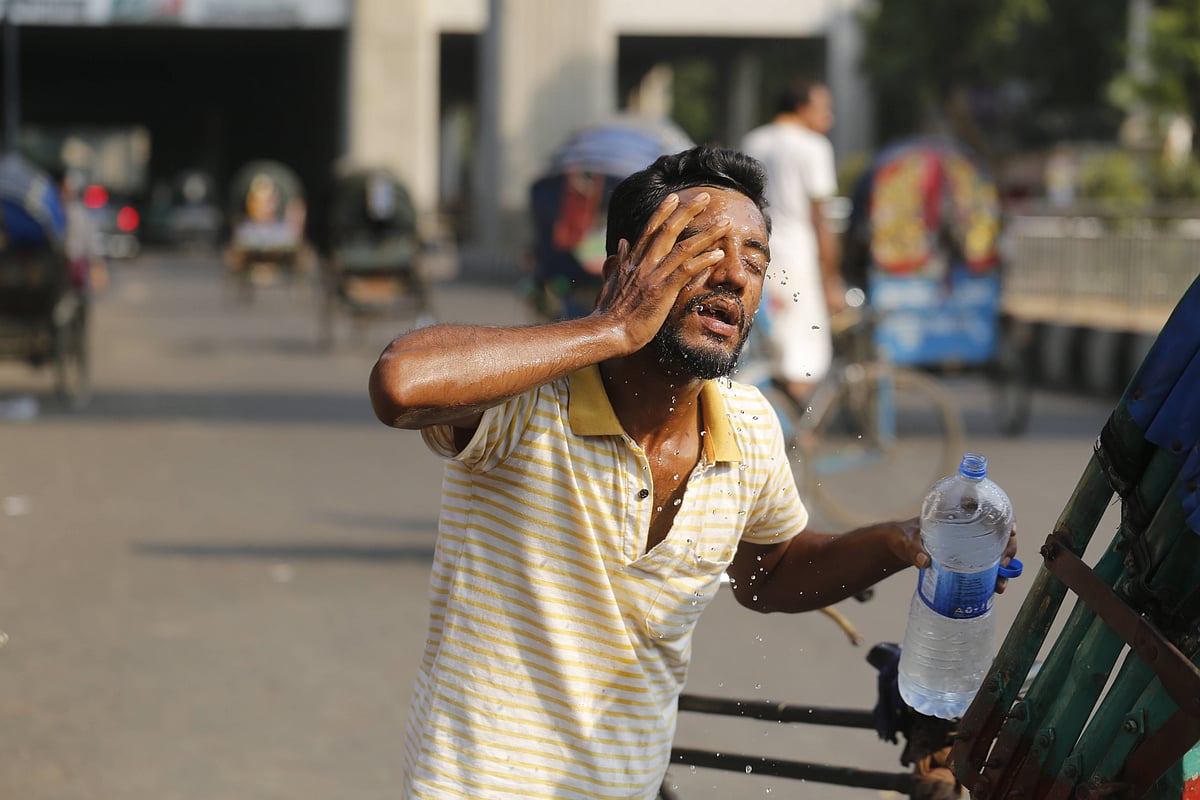
In fact, the whole of Southasia has been reeling under the effects of a severe heatwave very early this summer. According to one news report, at least 50 people died of heat-related ailments in Myanmar last month. April temperatures in Bangladesh have been the highest on record and heatwave conditions have caused massive wildfires to break out across Nepal, including some close to the capital Kathmandu.
Extreme heat has immense economic and social impacts in Southasia, an area that is most vulnerable to heat, that is densely populated, and that has a large numbers of people living in poverty. Research says that extreme heat is here to stay and will likely only get worse. An analysis of the 2022 heatwave across India and Pakistan showed that human-induced climate change makes Southasian heatwaves 30 times more likely.
Heat stress affects health and economic productivity. In Southasia, it especially affects people who work outdoors such as farm workers, construction labourers, street vendors and traffic policemen. It is compounded by lack of access to cool spaces or limited access to electricity. It impacts the livelihoods of large numbers of informal workers in the region who have no social security nets to fall back on. Therefore, heat stress in southasia is not just a meteorological phenomenon but has complex civic and social causes and fallouts.
In this episode of State of Southasia, Nayantara Narayanan speaks to Chandni Singh, a senior researcher at the Indian Institute for Human Settlements who works on climate change adaptation across Southasia. Singh talks about how the current Southasian experience of heat is unlike anything the region has seen in the past.
State of Southasia releases a new interview every four weeks.
This podcast is now available on Spotify, Apple podcasts and Youtube.
Episode notes:
Further reading from Himal’s archives:
Nepal’s unescapable trap of migration, farming and climate change
INTERVIEW: COP28, the transition from fossil fuels and the Loss and Damage fund
Climate change in Bangladesh is driving a dengue outbreak in winter
Primacy and absence of climate change
Sign up for our newsletters here to get updates on our latest podcasts.