
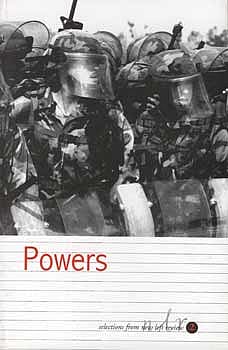
Selections from New Left Review:
I: The Global Stage
II: Powers
III: Front Lines
IV: Other Worlds
edited by Susan Watkins
Seagull Books, 2006
Since its inception in 1960, the London-based New Left Review has been a record of the intellectual journey of the global left. From Jean-Paul Sartre to Edward Said, Achin Vanaik and Radhika Desai, leading left intellectuals from around the world have used the pages of New Left Review to theorise on various subjects, from blockbuster films to the UN's bureaucratic intricacies. Despite the contributions of Southasian intellectuals, however, finding a copy of the journal has long been difficult in the Subcontinent.
Editors from Calcutta-based Seagull Books have now brought out a four-volume series of selections from New Left Review, offering a solid introduction for regional readers to this bastion of left thought and debate. From the 1960s, when a third of the planet had politically turned away from capitalism, to the 1990s, which may be called the decade of neo-liberalism, the agenda of the NLR has remained to respond to and explore changing conjunctures, or the meeting of events, in political discourse.
If the present situation is characterised by the primacy of American capitalism, with Europe aspiring to replicate the American model with doses of placatory anti-American rhetoric, then editor Perry Anderson delineates in the introduction to the first volume what have been the left's two principal responses. The first is accommodation, the attitude summed up by the idea that capitalism has come to stay, and that we must subsequently make our peace with it. The second is consolation, which is understood best as an attempt to find the silver linings in what seems an overwhelmingly gloomy environment. As such, caught in a world where there is a terrifying irrevocability to what is happening both outside and within ourselves, Anderson suggests that readers continue to read NLR for its "uncompromising realism" – its capacity to shock us into seeing the world as a "planet of slums" (to use Mike Davis's words), or into recognising that the UN may "be slotted into the framework of American hegemony as an auxiliary machine" (Peter Gowan).