
(This article is part of our special series 'Rethinking Bangladesh'. You can read the editorial note to the series here.)
Climate change in Bangladesh is everywhere and nowhere. This paradox plays out in newspaper headlines, foreign embassies, the offices of the prime minister and the Planning Commission, NGOs, the World Bank, and UN agencies; at environmental protests; and in the villages on the coast of the Bay of Bengal, whose vulnerability is a source of constant speculation and intervention by those concerned with the country's development. Bangladesh is frequently referred to as the world's most vulnerable country in regard to climate change, and the World Bank calls it "the emerging 'hot spot' where climate threats and action meet." Climate change has become the terrain on which Bangladesh engages with the world. It is increasingly the lens through which the nation represents itself abroad; and, in turn, it is the primary means through which the world recognizes Bangladesh. This terrain of engagement was endorsed in 2015 when the United Nations awarded Prime Minister Sheikh Hasina the United Nations Champions of the Earth award for Bangladesh's initiatives to address climate change. Conversations in the country about climate change are ubiquitous. They wind their way into topics as diverse as rice agriculture, garment manufacturing, microcredit, and child marriage. Addressing climate change is said to be necessary for the country's economic growth and a means to make Bangladesh more democratic and more "cosmopolitan".
Bangladeshis also play a major role in international climate diplomacy, having organized and led the Least Developed Countries negotiating bloc in the United Nations Framework Convention on Climate Change (UNFCCC) negotiations since the bloc's inception. Claims about climate justice and climate action are ubiquitous throughout the country's massive NGO sector. These narratives focus on the responsibility for developed countries to pay for climate action in less developed countries as reparation for their historical greenhouse gas emissions.
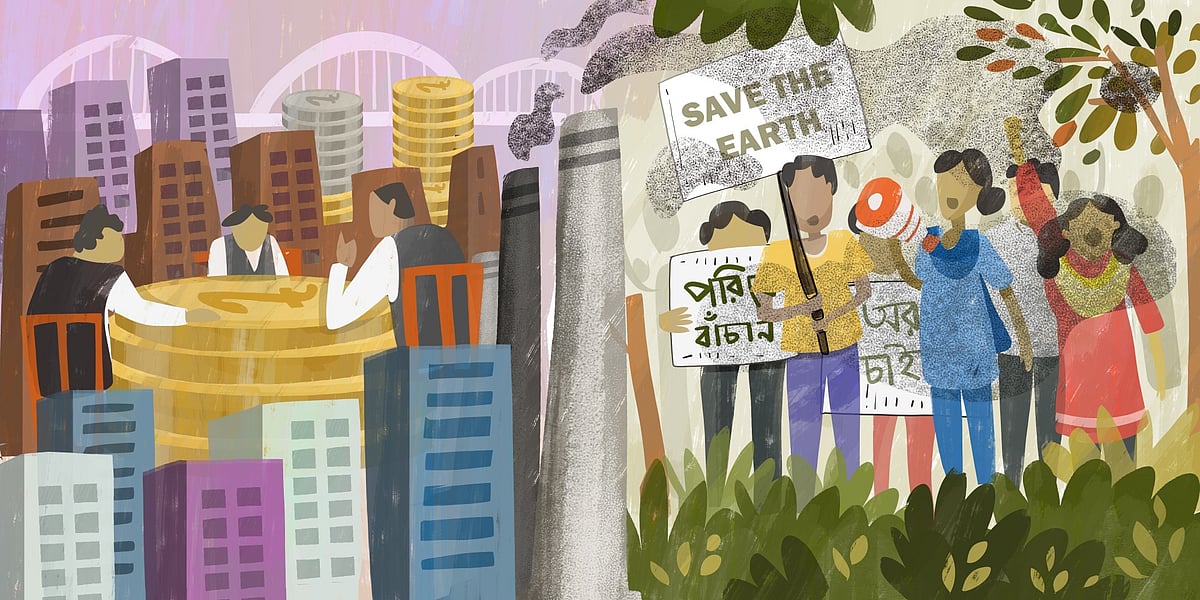
Yet when it comes to local political imaginaries, climate change rarely plays a role. Relative to this constant production of climate-related ideas, discourses, and interventions, climate change is surprisingly absent in local politics. It is rarely if ever invoked in local electoral campaigns, and politicians tend not to speak about it except in relation to the climate finance obligations of the developed world to Bangladesh. Activists concerned with civil and human rights rarely engage with questions of climate change and climate justice, and neither are they a significant political concern for the peasant social movements in coastal Khulna, a region that is the object of many climate change adaptation interventions (as well as the geographic center of this book). While the environmental movement within the country is quite robust, local activists remain largely unconcerned with climate change, instead devoting their energies to specifically local ecological concerns, such as open-pit coal mining, pollution from power plants and garment factories, and the impacts of shrimp aquaculture.