
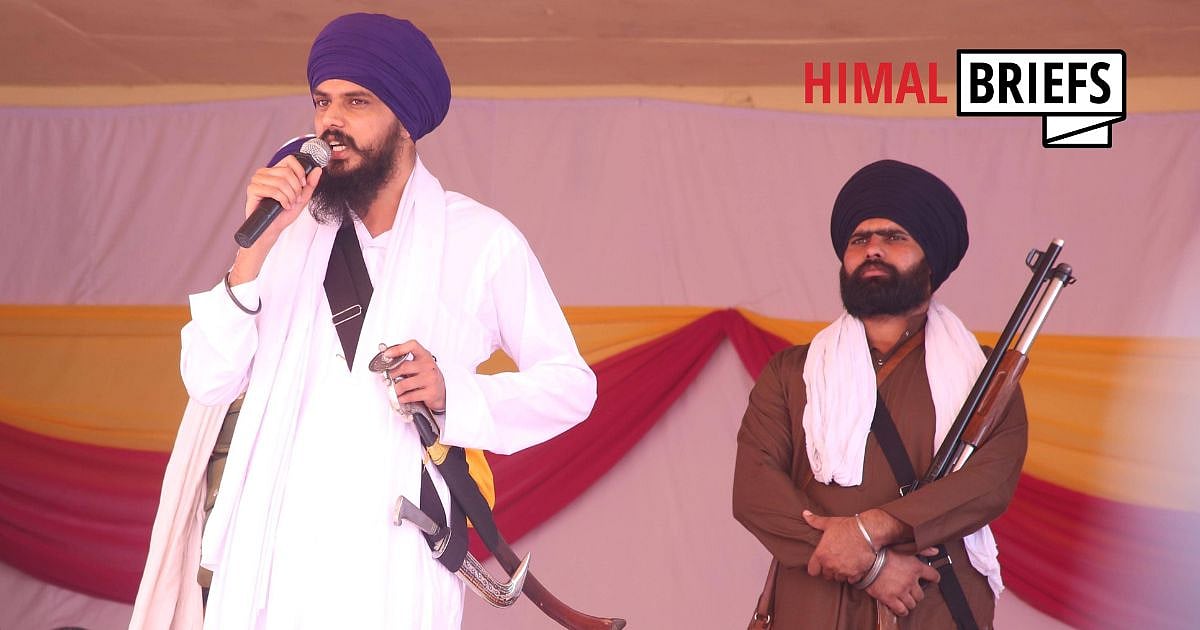
On 20 March 2023, Sandeep Singh was typing on his phone, "The blocking of accounts of Punjabi journalists Kamaldeep Brar and Gagandeep is highly regrettable." Before the Punjab-based journalist could complete his tweet, his phone rang. "Your account has been withheld in India," the caller told Sandeep. In response to legal requests from the Indian government, the microblogging site Twitter blocked over 120 accounts belonging to journalists, authors and politicians from Punjab – including Sandeep. This came amid a major crackdown against the Khalistan ideologue Amritpal Singh Sandhu, who gained popularity during the farmers' protest movement that swept Punjab in 2020 and 2021.
On 18 March, the police launched a massive manhunt to arrest Amritpal. Earlier, Amritpal had taken over Waris Punjab De, a Sikh separatist outfit founded by the actor turned activist Deep Sidhu, who died in early 2022. He also underwent a baptism ceremony upon returning to India from Dubai, where he earlier lived and worked, which garnered him attention. During the manhunt, Punjab's 27 million residents were hit by a suspension of internet and SMS services. While the suspension was lifted in many districts after a few days, in areas such as Tarn Taran, Moga, Sangrur, Ferozepur and Ajnala division in Amritsar, and a few areas in Mohali, it continued till 24 March. Meanwhile, though Amritpal evaded arrest, several of his associates were picked up.
Amritpal was finally arrested on 23 April. During the manhunt, and even after he was caught, Punjab's media also faced a crackdown. Numerous journalists had their social media accounts suspended, as did many Sikh activists. Often, like with Sandeep, they had no connection to Amritpal or his ideology. Some journalists also had their homes raised by the police. The effects of this suppression continue to ripple through Punjab's media, raising doubts over the state of press freedom here and the Indian government's willingness to violate the fundamental right to freedom of expression.
On the ground