
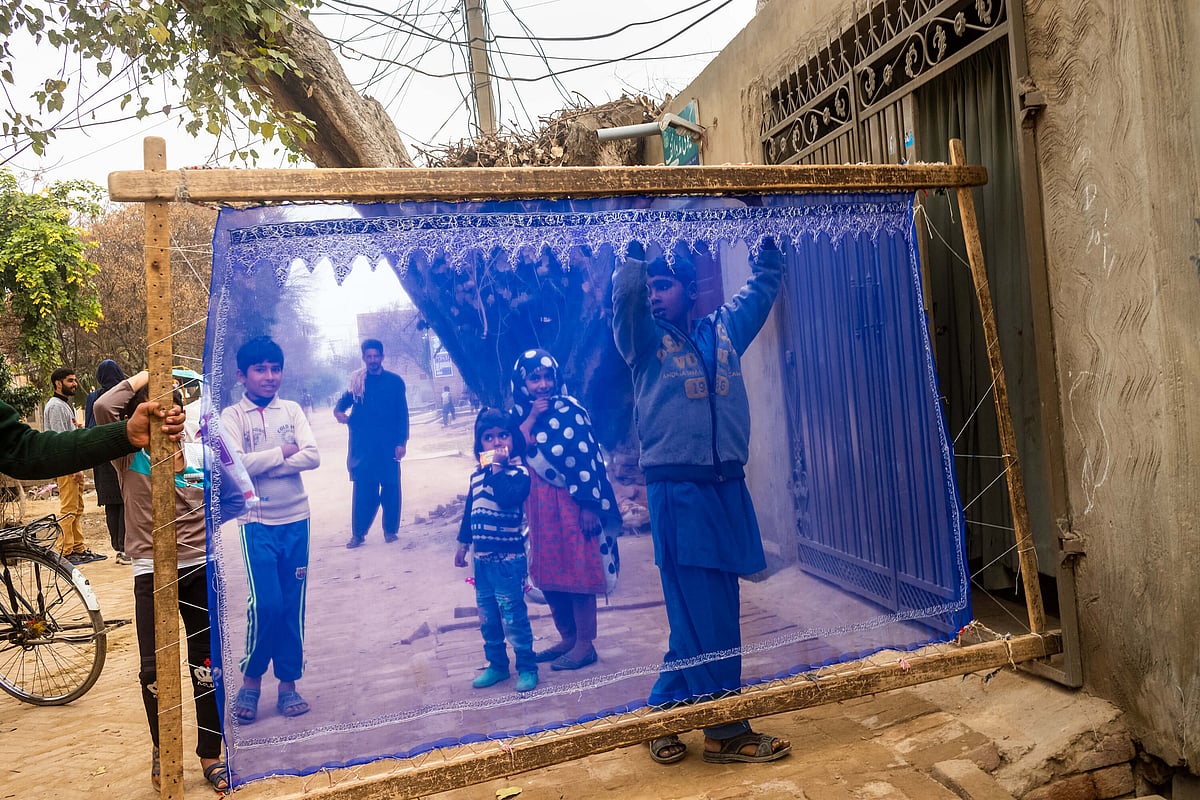
In 2011, my mother-in-law passed away. I accompanied my sister-in-law and my husband to immerse her ashes in a holy river in Punjab, in India. It was my first trip there. My second trip to Punjab was in 2014, to immerse the ashes of my father-in-law in the very same river.
In 1947, the Punjab was divided between the newly independent states of India and Pakistan. An estimated million people were killed and more than fifteen million were displaced.
Countless Muslims in the eastern part of the Punjab crossed into Pakistan, and countless Sikhs and Hindus in the western part crossed into India. In most cases, those who left and those who stayed were separated forever. Before Partition, the Punjab was a religiously syncretic place, with a Muslim majority and significant Hindu and Sikh populations living side by side for hundreds of years. Now it was torn in two: the state of Punjab in India and the province of Punjab in Pakistan, with a militarised border like a gash between them.
I got pulled into the story of the Punjab, of the drastic separation of people who had lived together, of the idea of a homeland – or "watan" – broken apart. Slowly, I started to feel that photographs could tell this story in a candid, simple way.