
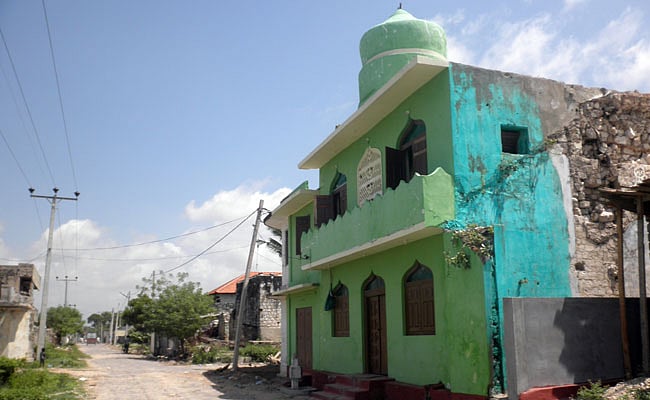
Before Sri Lanka's war, there was a noteworthy Muslim presence in Chavakachcheri, a well-known town in the Jaffna peninsula that was completely destroyed in a major battle in 2000. The town's name comes from the expression chaavaka cheari, meaning the camp of the Javanese, the people known today as Malay Muslims. Both at Chavakachcheri and Jaffna town, the Muslims lived for generations, working primarily as traders. In the Vanni region, the Muslims were also landowners, extensively involved in agriculture and fishing.
On the main street in Jaffna town there stood, among others, the famous tailor shop of Meeralabhai & Sons, renowned for its service and patronised by Jaffna families for decades. These businessmen and their ancestors were long-time residents of Jaffna town. The Northern Tamils and Muslims related to one another, individually and collectively, without hostility or animosity. Throughout Jaffna's history there was no Tamil-Muslim rioting or violence.
Yet as the war progressed, the Liberation Tigers of Tamil Eelam started sending subtle message that Muslims were not welcome to live in LTTE-controlled territories. The LTTE came into existence in the 1970s, rejecting the non-violent forms of mass struggle favoured by Tamil political leaders since 1948. Initially an armed youth organisation committed to liberating the Tamils from discrimination by Lanka's Sinhalese majority, the LTTE gained the support of many Tamils but degenerated into a narrowly nationalist and fascist outfit, liquidating all other Tamil political organisations and the Tamil democratic leadership. Having gained control of large chunks of territory in the northeast of the island, the LTTE continued fighting until total military defeat and the deaths of its supreme leader Prabhakaran and other leaders in May 2009.
The expulsion of the Northern Muslims, when it came, was a major shock. A recently published document, titled the Final Report of the Citizens' Commission on the Expulsion of Muslims from the Northern Province by the LTTE in 1990, finally brings the full story of Lanka's Northern Muslims to the public's attention. In a chapter entitled 'Expulsion Stories', the report states: