
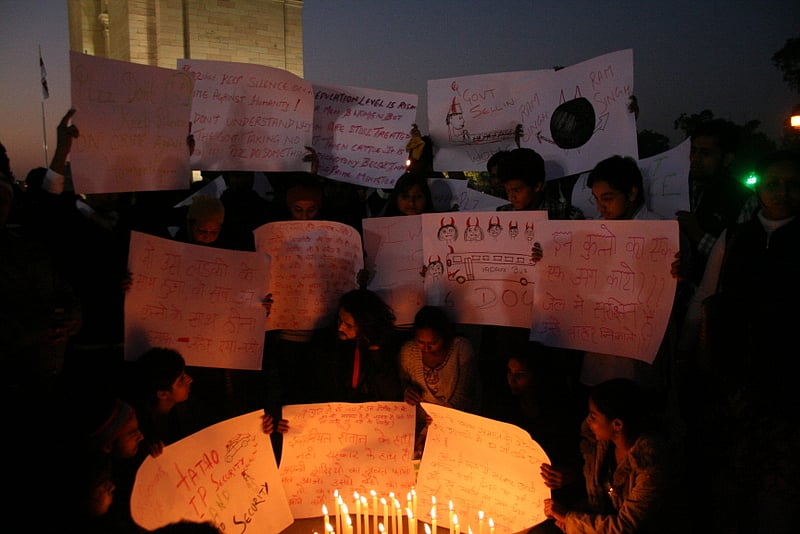
On 14 September 2020, a Dalit woman was gang-raped in Hathras district, India. While the victim named four alleged perpetrators, her brother claimed that no arrests were made in the first ten days after the incident took place. Fifteen days after the incident, the victim succumbed to her injuries in a Delhi hospital. While sexual violence against women (and, in particular, Dalits) is not unusual, justice for survivors often is.
In this interview we speak to Pratiksha Baxi, Associate Professor at the Centre for the Study of Law and Governance, Jawaharlal Nehru University. Her book Public Secrets of Law is an sociological account of how the criminal-justice system responds to rape. An ethnography of rape trials in Gujarat, it provides multiple incident descriptions, accompanied by transcripts of rape trials in courtrooms. Public Secrets of Law is a testament to the widespread tolerance of sexual violence and provides shocking insight into trial-court mechanisms and attitudes. In this interview, we ask Pratiksha Baxi about the law enforcement attitudes and judicial norms that enable such sexual violence, the influence of colonial medical jurisprudence, the construct of consent, and the impact of practices like compromise in rape trials.
Himal Southasian: In your book Public Secrets of Law, you note that the Scheduled Castes and the Scheduled Tribes (Prevention of Atrocities) Act, 1989 (PoA Act) was enacted to infuse criminal law with constitutional ideals of substantive equality. Some argue that this special law increases access to courts. Has that been the case? What is the impact on the Dalit community when statutory rape trials are staged as special atrocity trials?
Pratiksha Baxi: In the book, I have attempted to demonstrate that the naming of rape as atrocity is met with institutionalised backlash at every stage of the criminal trial. The law was enacted to abolish the intolerable toleration of rape of Dalit women and children that are founded in practices of untouchability. However, I found during my fieldwork in Gujarat that there were a number of strategies used to avoid naming rape as a caste atrocity.