
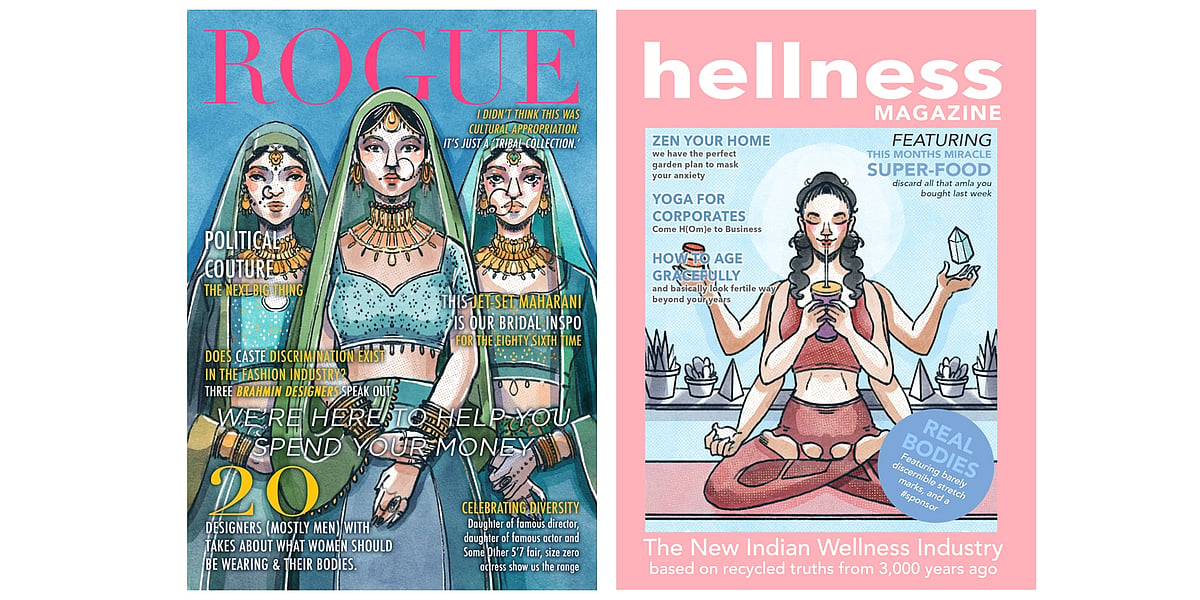
When I was a teenager in India, buying fashion magazines was not just a luxury, it was an almost unjustifiable act of decadence. In the early 1990s, before international publications like Elle and Harper's Bazaar came to India, fashion magazines were imported: a single issue of British or American Vogue would set you back at least INR 500, or the amount a distant aunt may have spent on your birthday present. Often caked in a patina of import-duty dust, the pleasure of wiping the cover clean to see the bright orange tags with exorbitant prices – in both pounds and rupees – would result in inexplicable, albeit fleeting, delight. Khan Market magazine shops would often keep these publications sealed in plastic covers, ensuring that the distance between you and Kate Moss in an all-white bikini somewhere in St Tropez was as far as that between first world and third.
I eventually took to renting these magazines overnight, from a little video rental shop called 3L. That wasn't cheap either (about 70 rupees daily) but my mother would give in from time to time, especially if I had just had a painful orthodontic treatment. The pleasure of renting foreign Elle was satisfactory but subdued, much like the experience of opening the Giorgio Armani ad perfume strip to discover that the scent had already dissipated: too many noses and too many wrists had diluted the sandy, sexy beach smell in their own private seventy rupee per night fantasies.
But the real decadence of these magazines went beyond their limited availability and price. Their luxuriousness had to do with their emptiness, their ability to enrapture young women – their primary audiences – without offering much beyond simulacra in return. They fueled fantasies by keeping us thirsty for shiny, Western capitalist goods, and for assuring us that we were subsumed in their dreamy, profit-making systems. As Naomi Wolf reminds us, the power of the fashion magazine lies in its split personality. The endless, shallow ads, which sit next to, at times, intelligent, feminist content mirrors the schizophrenia many women feel inside. The good magazines play on likely consumer insecurities (stretch marks, darker skin, saggy chins, wrinkles) while also providing an escape.
Although cut-price fantasies were now available everywhere from your local market-stall to the vendor at the traffic light, the decadence of actually paying for this publication remained.