
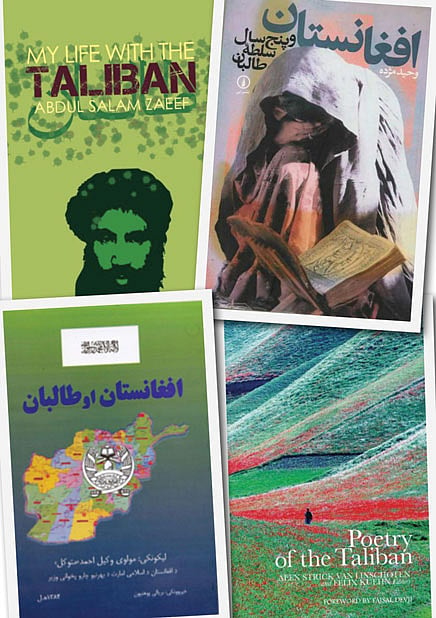
(This is an essay from our March 2014 print quarterly 'Reclaiming Afghanistan'. See more from the issue here.)
For a long time, those seeking to understand and research the Afghan Taliban movement had to rely on texts written by outsiders for most of their information. The standard accounts were widely read, but anyone seeking a more nuanced understanding was left wanting.
William Maley's Fundamentalism Reborn (1998) was the first of these, offering insight and an initial glimpse of the Taliban as rulers. Its conclusions have proved remarkably resilient, and the synoptic introduction by Maley is still frequently quoted. Ahmed Rashid's Taliban (2001) was similarly well-received and has been read by everyone from soldiers in Afghanistan to the politicians whose orders they follow.
These accounts had their limitations. The Taliban were simply too broad a topic to cover, even when research included trips inside Afghanistan pre-2001. The mixture of religious, political, historical and economic factors required better data, and above all the topic was crying out to be heard from the standpoint of the protagonists themselves. We learnt about a movement that was supposed to be 'Deobandi' in religious outlook, but we weren't told very much about what that meant. We learnt about the leadership who had all attended madrassas and studied Islam to some degree, but were told nothing of what they studied. We read of the 'informal' nature of the Taliban's government structures and processes, but were told very little of the specifics beyond one or two anecdotes.