
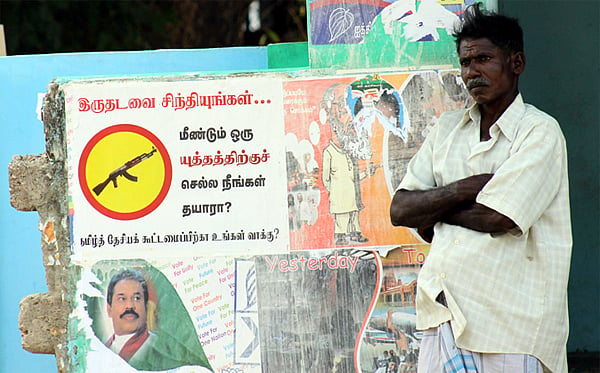
Almost five years after the end of the war in Sri Lanka, the country's North cannot be engaged without considering the broader politics in the country. Democratisation in the rest of the country will shape democracy in these areas. The issue of reconstructing the North is inextricably linked with the need for democratisation in Sri Lanka.
Before getting into the main thrust of my argument, I want to be clear about the lost opportunity in post-war Sri Lanka. I am echoing here the words of the insightful Tamil intellectual Kethesh Loganathan, who critiqued the attempts to resolve the ethnic conflict during the first five decades after Independence, in his book Sri Lanka: Lost Opportunities. Tragically, the great opening that came with the end of the war has been squandered by the ruling Rajapaksa regime in the interest of consolidating power.
In the current situation, authoritarianism with centralised state power and militarisation characterises the state of affairs in the country. Militarisation is doubly oppressive in the war-torn North and East. There has been no serious movement towards a political solution. The reconstruction process has failed, particularly in relation to livelihoods, and a food security crisis is looming over the North.
Amidst this depressing situation, there is now a small opening created by the Northern Provincial Council elections. While the future of both this opening and devolution more broadly depends on the regime and government at the Centre, there also needs to be rethinking in the realm of Tamil politics.