
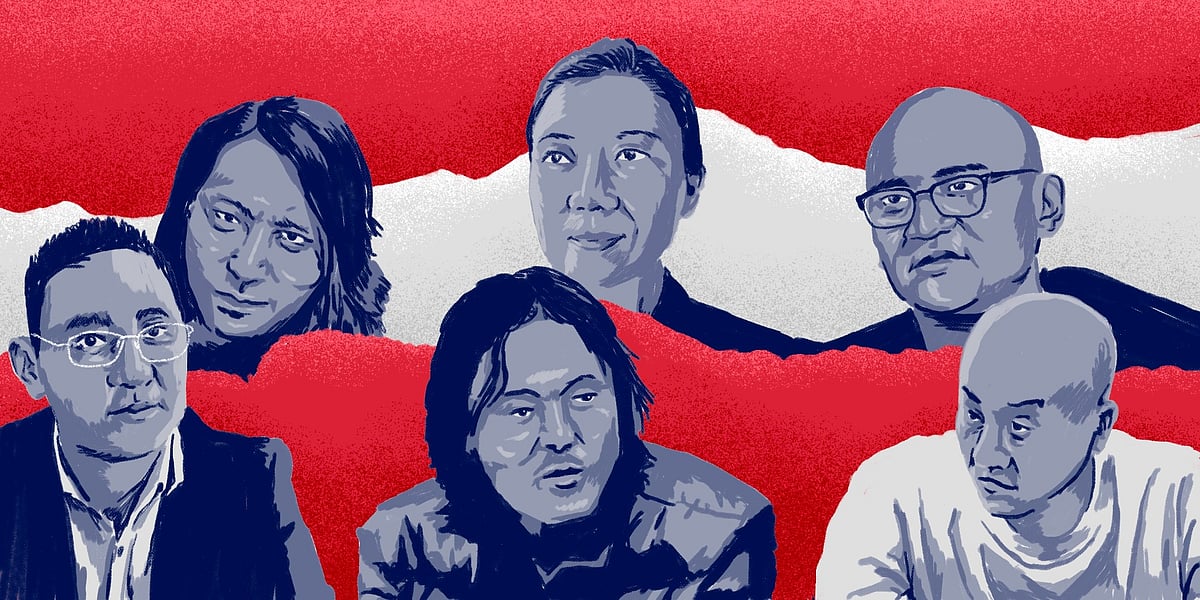
According to Michel Foucault "the intellectual was rejected and persecuted …when it was forbidden to say that the emperor had no clothes." The thick mist of the pandemic has shrouded the intensified crackdown on intellectuals in China. Tibetan and Uyghur intellectuals have undergone targeted repression with increasing severity in recent years. Recently, influential Tibetan intellectuals like Go Sherab Gyatso (Gosher) have been arrested with no evidence of crime or criticism against the Chinese state, apart from their intellectual writing and teaching. The likes of Gosher or the Tibetan author Shokdung are primarily known for their cultural criticism and social commentary that have caused a considerable stir in the Tibetan intellectual world. They are proponents of multicultural pluralism and secular values in an environment of increasing repression of freedom of speech and religious dogmatism (eg. aggressive campaigns such as "the new ten virtues movement" at Larung Gar). Thus, ironically, intellectuals like Gosher and Shokdung are also condemned to ostracism and internal exile by Tibetans – a price they must pay on top of persecution and criminalisation by the state. This essay reflects on the predicament of Tibetan intellectuals in China and the debates on responsibility, and refusal to be part of the state machinery.
Society and intellectuals
The Tibetan term she yon chen, which means "intellectual" or more broadly "learned", is a neologism. More importantly, its reference to a social group is a relatively new signification and social phenomenon. It is the translation of the Chinese term zhishi fenzi which is also a novel term and social category. Zhishi fenzi originates from the Japanese term chiteki. Since the early decades of the 20th century, Chinese communists have had a complicated relationship with its intellectuals or zhishi fenzi as a social group whose existence as an independent class was denied, yet came to be defined as "a group of qualified but politically unreliable people".
Interestingly, she yon chen does not seem to carry over cultural prejudices, and unlike zhishi fenzi in the Chinese context, Tibetans employ the term she yon chen for intellectuals as a broader and inclusive category. The she yon chen on one level includes school teachers, writers, poets, translators, journalists and so forth without any stipulation. It could be any person of erudition, lay or clerical. On another level, the idea of the intellectual demands a sense of duty and courage to speak for the collective, especially from those who have a greater presence in the public sphere. This hints at how Tibetans conceptualise a distinction between what Antonio Gramsci calls "traditional" and "organic" intellectuals, or more generally between "men of letters" and "public intellectuals." The influence of public intellectuals as "idea workers" is not unchecked or unencumbered by social expectations. It begets varying degrees of responsibility for society, and public intellectuals are expected to be on the side of the public and in constructive opposition to the state. This sense of responsibility has created a discourse around refusal as moral responsibility amongst Tibetan writers and intellectuals in the People's Republic of China (PRC) today. While it is difficult to assume that there is a collective identity or (self)consciousness amongst Tibetan intellectuals as a social group, recent critical public debates and discourse have attempted to define and delineate who public intellectuals are or what their social responsibilities are.