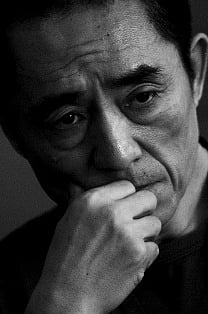
A pivotal scene in Ju Dou, Zhang Yimou's celebrated film examining the burden of tradition in China, features a procession full of pomp and extravagance. The main feature is an ornately fashioned coffin that bears the body of man who, during his life, had battered his wife, the titular protagonist, and cruelly exploited his adopted son. Under his tyranny, the pair became secret lovers. Yet the death resulted in no emancipation, with social strictures forcing them apart to avoid the appearance of impropriety. The procession stops near the pair prostrating before the carriage, both ready to properly and publicly convey the extent of their grief 49 times, as instructed. This is not a mere turn of phrase. As the procession stops, the pair rushes the carriage, crying and begging that the deceased remain before the carriage moves forward, literally passing over them as they lie on the floor. Once it passes, a gong rings and a man declares, "One!" They must repeat the act 48 more times. An artful montage communicates the exhausting burden of propriety and tradition, as well as the emptiness of that ritualistic gesture.
Keeping Ju Dou in mind, it is puzzling that a director who is manifestly sensitive to the tyranny of ritual has become so vulnerable in terms of promoting similar sentiments. The context, of course, was the opening and closing ceremonies of the Beijing Olympics in August 2008 – an extravagant pageantry that was China's golden opportunity for uninterrupted and uncritical transmission to the world. That his work in films have been both critically and commercially successful in the West make Zhang an apt choice for ambassador for what some commentators have labelled as an endeavour of 'public diplomacy'. It has also earned Zhang the moniker of China's Leni Riefenstahl, the gifted cinematographer and Nazi propagandist.
The Olympic ceremonies, as one North American telecast dramatically and ridiculously proclaimed, was "Mysterious China opening her doors to the world, showing a new face." An important audience was certainly the West, and particularly the 69.9 million American viewers who eventually tuned in. The excessive and expensive pageantry provided a Technicolor reissue and refresher course of Chinese history and culture, skipping the less-attractive episodes. It also asserted China as technologically modern, innovative and robust. In various stages of the 'Artistic' section – the middle portion, with grand performances that followed the welcoming ceremony – Zhang hit upon the great inventions of ancient China: paper, printing, gunpowder and the compass. The four inventions are really a list devised by the West; a more Sino-centric and historically rigorous list might have chose others candidates. But Zhang was happy to oblige, with a show replete with fireworks (representing the friendlier manifestation of gunpowder), thousands of dancers, gymnasts and impressive multimedia productions.