
"[T]ime never seemed to be heading anywhere but was always circling, returning, and repeating, bringing the self back to itself."
This line from Anuk Arudpragasam's second novel, A Passage North (2021), hauntingly encapsulates our ongoing, living crisis – one that is marked by recurring lockdowns, waves of disease, and worst of all, the fear of death. As I made my way through the novel in July this year, the Subcontinent was still reeling from the ravaging second wave of the COVID-19 pandemic. In Sri Lanka, cases and desperate pleas for help continued. Burial grounds – such as the one in Oddamavadi in the island nation's Eastern Province – saw a sudden surge in the number of bodies, also as a consequence of the revocation of the government's controversial mandate of cremating the deceased. Meanwhile, escalating clashes between Afghan security forces and the Taliban was a portent of yet another distressing picture for the country's civilians.
One of the questions A Passage North asks is – can one emerge unscathed despite being unharmed by conflict? The novel quietly reflects upon the discordance with the self, the emotional cost of displacement, and the survivors' guilt that continues to gnaw at those spared by violence and tragedy. A certain wistfulness drifts over the narrative, protracting time and slowing down the suddenness of occurrence.
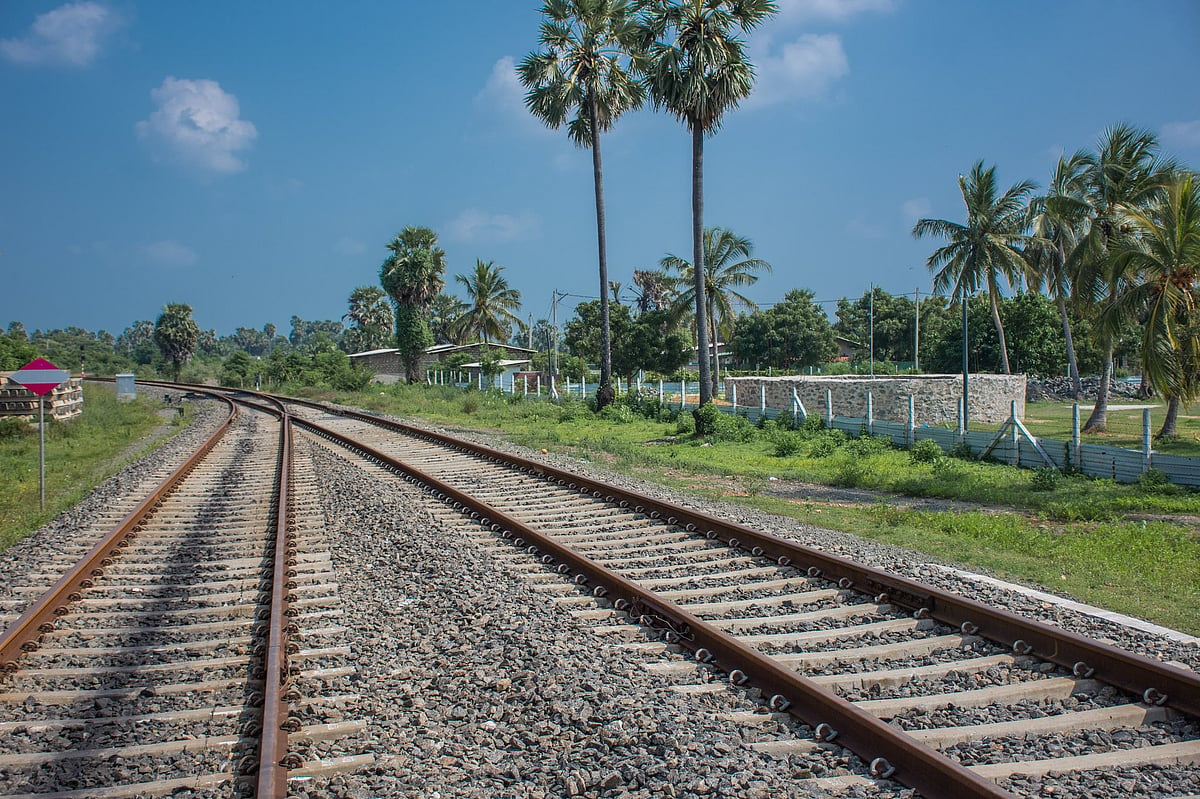
Set in the aftermath of Sri Lanka's 26-year-long civil war, the book is narrated by its protagonist Krishan – a young, middle-class man working for an NGO in Colombo. An unexpected phone call informing him of the death of his ailing Appamma's former caretaker Rani makes him undertake the titular train journey from Colombo in the southwest to Kilinochchi in the Northern Province – the erstwhile administrative centre of the Liberation Tigers of Tamil Eelam (LTTE) until 2009, still recovering from the horrors of the war – to attend Rani's funeral. Rani, we are told, died under mysterious circumstances (possibly by suicide, Krishan suspects), found at the bottom of a well. Her irreparable trauma, induced by the deaths of her sons – one killed by shelling on the penultimate day of the war, and the other who lost his life fighting as a recruit of the Tigers – is an incontestable trigger for her death.