
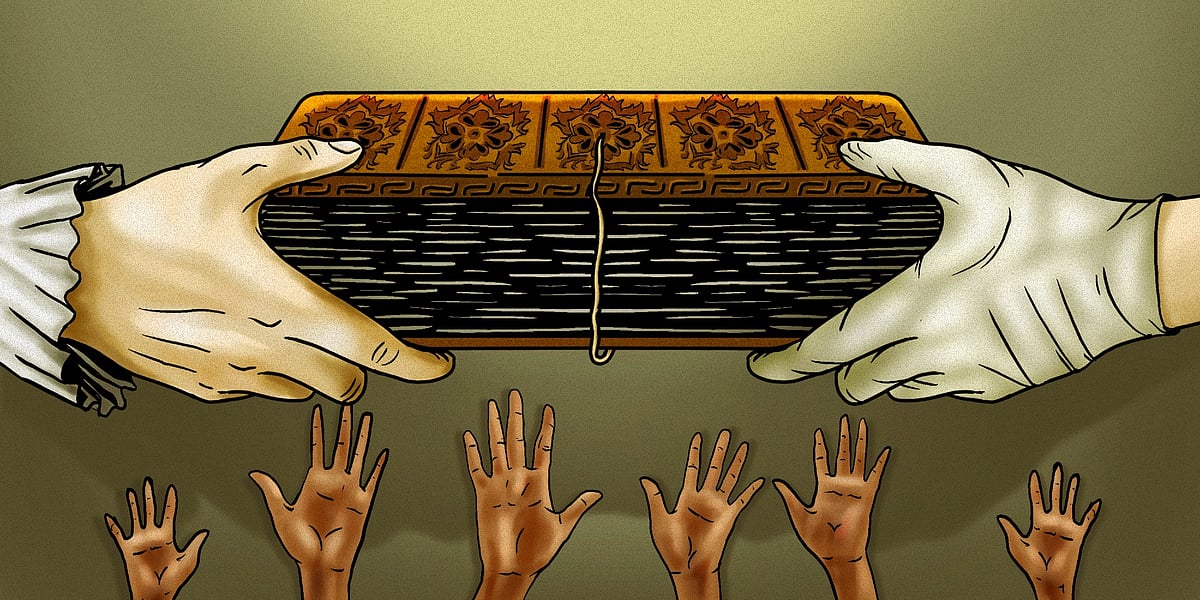
From 2017 to 2019, I was on a mission to trace the manuscripts known in Manipur and among the Meeteis as 'puyas', now scattered across Europe. Based on my research, I was certain that some of them would have landed in the British Museum or the British Library. In 2019, after going through thick handwritten catalogues listing manuscripts from Southasia in the British Library (acting on a tip-off from a colleague) I was able to trace a rare and exquisite puya manuscript in excellent condition. I entered the following in my research journal:
When the manuscript was brought to my table in the restricted section of the reading room, I was excited to read it and appreciate its material beauty. As I started to hand copy from its folios, I contacted the curator, who had earlier denied the manuscript's existence, to seek permission for taking photographs. Soon, the curator rushed to my table and confiscated the manuscript, claiming that it was fragile and unsafe in my hands. In the following months, several attempts to regain access were unsuccessful. The curator later asserted that the manuscript would only be available to researchers when it was properly examined and restored to good condition. This brief encounter made me think about the journeys of similar objects now in colonial museums, libraries and private collections, their accessibility for the societies which produced them, and the possibility of restitution or repatriation.
Colonial conquest
The expansion of European empires resulted in the flow of various objects – sacral, regal and mundane – from subjugated societies to a large number of public museums and private collections across Europe. This included a number of items from Northeastern India, particularly from the Naga communities inhabiting the region. How these objects travelled thousands of miles from the societies which produced them is still debated among historians, who see them either as gifts or stolen objects.