

This week in Himal

This week, Vihanga Perera writes about a new film Rani, which absolves the Ranasinghe Premadasa government of the murder of Richard de Zoysa, whose ghost still haunts Sri Lankan arts and society – and tarnishes the legacy of his mother, Manorani Saravanamuttu.
For this month’s edition of Screen Southasia, our monthly online documentary screening in collaboration with Film Southasia, we’ll be screening Tashi’s Turbine, directed by Amitabh Joshi. Tashi’s Turbine follows the story of two friends, Tashi Bista and Jeevan, who want to bring electricity to the village of Namdok, a village nestled in Upper Mustang, Nepal, which has long lived by candlelight. Sign up here to receive the screening link in your inbox!

This week in Southasia
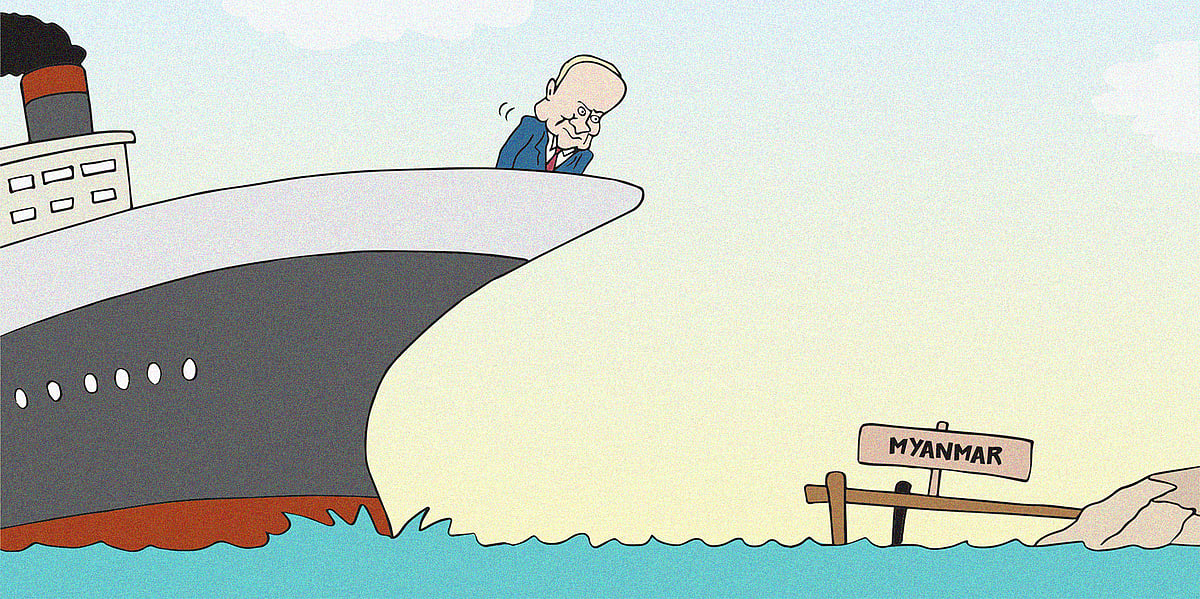
Myanmar signs deal for port and oil refinery with Russia, despite international condemnation
This week, Myanmar signed a memorandum with Russia to build a port, coal-fired thermal power plant and oil refinery, part of a raft of agreements in a number of sectors including banking, education, telecommunications, technology and humanitarian assistance. Cooperation between the two countries has increased since the military coup in 2021, despite international condemnation. At the same time, the UN General Assembly adopted two resolutions on the war in Ukraine reflecting growing cracks in the transatlantic alliance, with India, Sri Lanka and Pakistan abstaining from a European-backed resolution calling for a just peace in Ukraine to avoid a diplomatic upset with the US, which voted against the resolution, reflecting its shifting stance.
News of Myanmar’s deal with Russia has led to discussions on the effectiveness of imposing sanctions. Targeted sanctions on Myanmar’s military have had limited impact, as Asian countries including India have continued trade in a variety of sectors. (At least two Indian entities were added to a sanctions list for aiding Russia on 24 February.) Members of the junta regime noted that trade between Myanmar and Russia has only increased post-coup. Despite China’s intervention leading to a negotiated ceasefire in northern Shan state, armed groups continue to make advances across Myanmar, with the junta only controlling less than a quarter of Myanmar’s territory, raising questions about the feasibility of the new deal. Civilians, particularly Rohingya, continue to be vulnerable to airstrikes and forced conscription - on 26 February, at least 14 civilians were killed and dozens more injured by a junta airstrike on a wedding reception in Magwe Region.
Elsewhere in Southasia
- India launches scathing critique of Pakistan at the United Nations Human Rights Council meeting describing the country as reliant on international aid for survival after Pakistani law minister Azam Nazeer Tarar’s allegations of human rights violations in Jammu and Kashmir
- The Maldives suspends three Supreme Court judges citing an ongoing criminal investigation by the Anti-Corruption Commission, ahead of a key hearing challenging constitutional amendments that strengthen government control over judiciary
- Bangladesh Army Chief General Waker-Uz-Zaman hints at larger role for the military in running the country if the interim government fails to control the law-and-order situation, describing the failures of the police force to fulfill their duties due to fear of repercussion
- Rebels in Myanmar’s Bago region assassinated two local administrators who were forcibly recruiting civilians for military service as insurgents have captured seven military camps in central Myanmar, the latest setback for the junta
- Bangladesh and Pakistan resume direct trade for the first time since the 1971 Bangladesh Liberation War a step towards economic cooperation opening trade channels that have remained dormant for decades
- Nepal, China signs deal to boost ethnic ties, with plans to expand cultural exchanges between the two countries, including opportunities for Nepali students in China’s higher education sector
- USAID funding cuts impact around 200 exiled journalists from Myanmar, heightening stress for journalists covering ongoing fighting between junta and armed groups
- A 22-member Bangladesh delegation of political leaders, academics, journalists and activists from the student movement that ousted Sheikh Hasina, have begun a 10-day visit to China to meet Chinese government officials while diplomatic tensions have risen between Bangladesh and India
- Sri Lanka backs global nuclear disarmament and raises concerns over the use of artificial intelligence in weaponry, Foreign Minister Vijitha Herath says at United Nations conference
- An earthquake of 5.0 magnitude hits Assam, causing negligible impacts and no reported damage or casualties, with tremors felt in Bangladesh, Myanmar, Bhutan and China
- World Bank and other international development institutions criticise Pakistan’s army-led renegotiation of wind and solar power contracts, highlighting continued military intervention in political affairs
Only in Southasia!
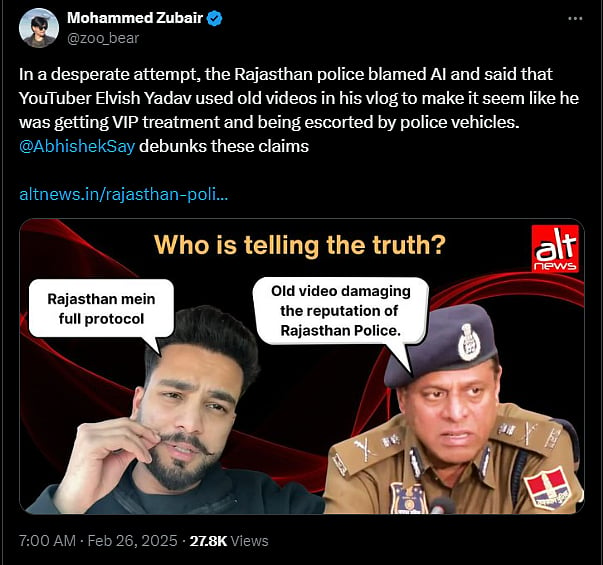
When controversial YouTuber Elvish Yadav made a visit to Rajasthan to shoot a music video, traveling with the son of former Rajasthan minister Pratap Singh Khachariyawas no less, he was given a red-carpet welcome. A video Yadav uploaded to his YouTube channel showed he was being given an escort by state police. His vehicle was allowed to breeze through without paying the toll and at one point, even drove on the wrong side of the road. When people began questioning why Rajasthan police had been deployed, the police had a most unusual defence - they claimed that the video had been AI-generated. They went on to file an FIR against the YouTuber. Unfortunately, it didn’t take long for the video to be debunked.
From the archive
In a small, dark corner of Gujarat (October 2007)
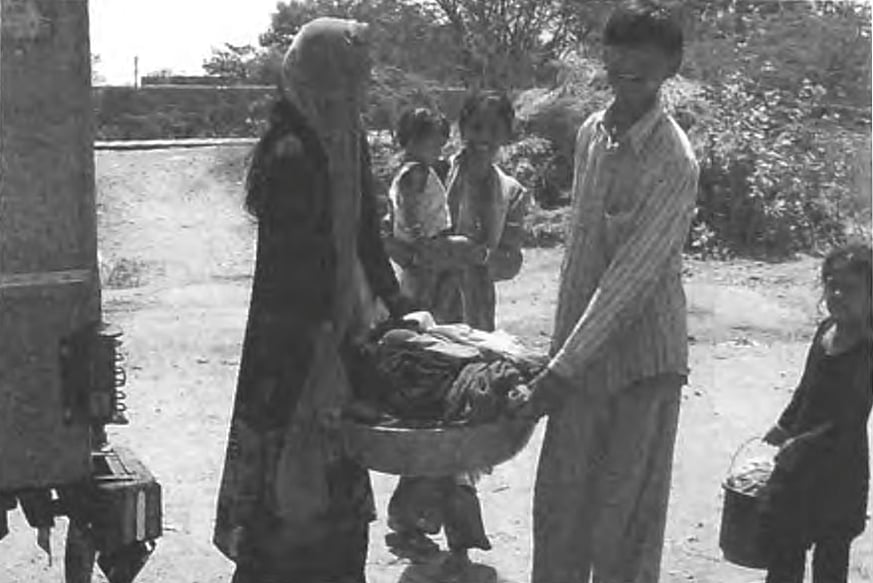
This week marks 23 years since the 2002 Gujarat riots. In this article, journalist Deepa A visits the victims of the riots at a relief colony in Rajgadh five years later, revealing that they had been resolutely ignored by the Ahmedabad government, living in unfinished houses and receiving little by way of state compensation, while fearing to return to their hometowns due to threats from their Hindu neighbours.