
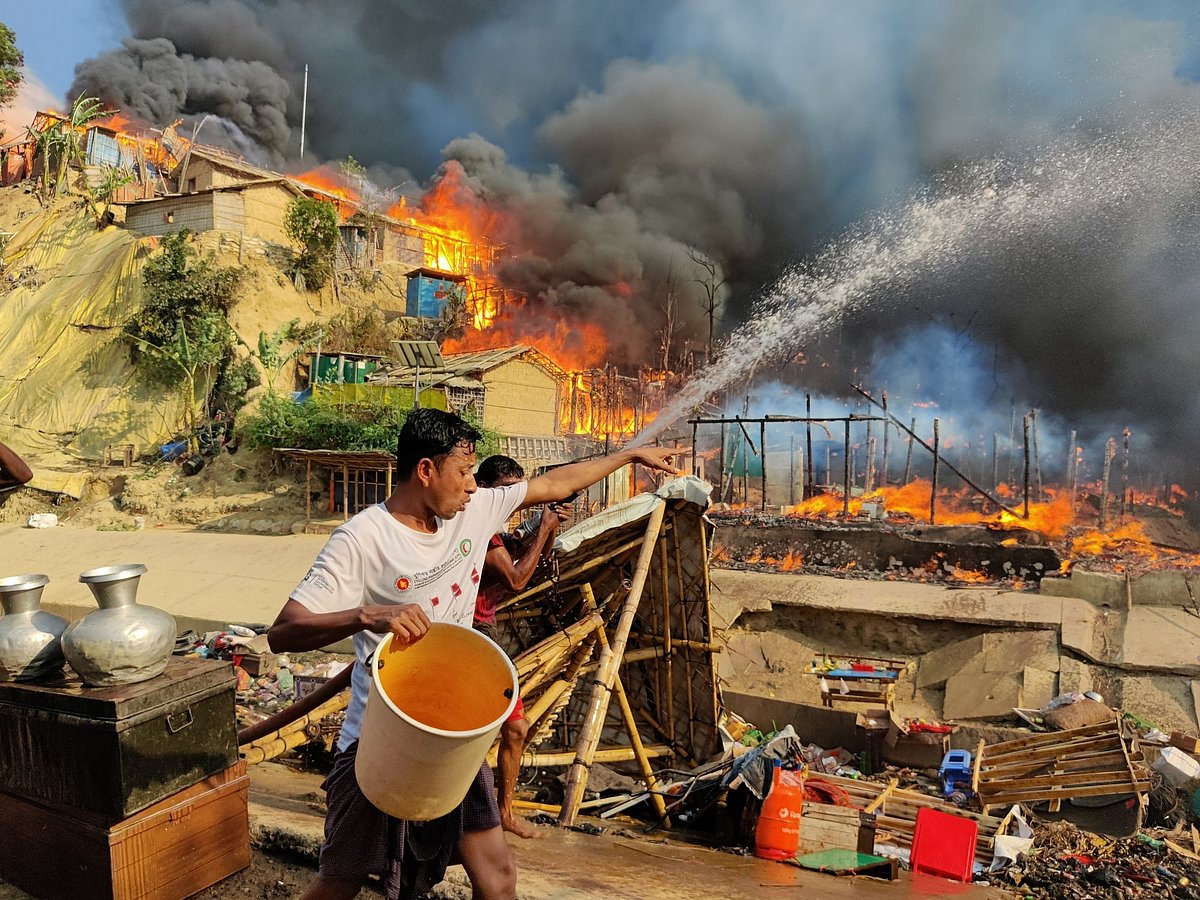
"I have no more rice to cook for my children," Nasima, a mother of three, said. "The last remaining rice I had was burnt in the fire."
The great fire that occurred on 5 March 2023 in the Rohingya refugee camps at Cox's Bazar, near the Bangladesh–Myanmar border, left nearly 16,000 refugees homeless. It also destroyed already limited food rations, as well as vital facilities for water, health and education. The fire started at 2:45 pm and burned till 5 pm on a windy day – it was impossible to salvage the bamboo-and-tarp shelters of the settlements. Thousands of families were unable to recover anything of their household assets, left with little choice but to flee the fire and save their lives.
The Rohingya people have been oppressed and persecuted in Myanmar for decades. In 2017, atrocities at the hands of the Myanmar military forced hundreds of thousands to leave their homes in Rakhine state. Many were killed as they fled to neighbouring areas, including across the Myanmar–Bangladesh border. Over the past six years, the Rohingya have continued their perilous journeys from Myanmar to escape persecution. Cox's Bazar district in Bangladesh is now home to almost one million Rohingya, living in the world's largest refugee settlement. They live in precarious, make-shift camps without adequate food, shelter, health care or education. Especially in the aftermath of the military coup in Myanmar in 2021, creating a volatile political environment across the country, there is no prospect for safe repatriation.
Nearly half the Rohingya refugees in Bangladesh are children. Since December 2021, almost 30 community-led learning facilities in the camps have been closed down. Without consistent support from the Bangladesh state and the international community, school-age children – particularly girls, who face greater barriers to learning – are deprived of access to education, weakening the long-term prospects of the community.