
(This article is an adaptation of a talk given by the writer on 'Social Resistance and the Militarized State: The Radical Love of Sabeen Mahmud', organised by the Department of Media, Culture and Communication at New York University on 23 October 2015.)
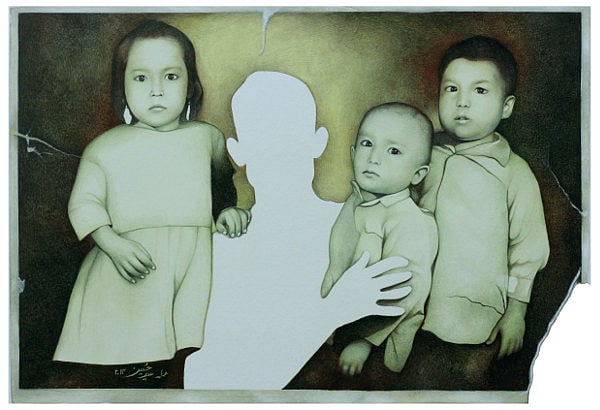
It's a powerful coincidence that today is the ninth day of Muharram, a time of mourning and remembering in the Islamic tradition, a time for the transcendental contemplation of injustice. I want to begin by discussing a core injustice in contemporary Pakistan: enforced disappearances and extra-judicial killings. These have a prominent history in many countries around the world, including the US. In Pakistan, the disappearances have an imperial, regional and sectarian dimension. But that's not what I wish to talk about today. I wish to talk about how these disappearances cannot be talked about in today's Pakistan.
In November 2007, barely two weeks after General Pervez Musharraf imposed his emergency, a few of us gathered at Sabeen Mahmud's non-profit cafe in Karachi, The Second Floor (T2F), to watch Missing in Pakistan, an incredible documentary that captured the rise of disappearances under the 'Mush-and-Bush' war on terror. The Inter-Services Intelligence (ISI)-led abductions were taking place all over Pakistan – but especially in the province of Balochistan – and formed the key point of tension between the Supreme Court and Musharraf's regime, eventually leading to the imposition of emergency. Indeed, there had been a media blackout on this "missing people" issue, this even before the imposition of emergency when the media itself was blacked out.
In this atmosphere of martial law and country-wide arrests, hosting the first screening of the first extensive documentary on the missing-people issue was a radical act of courage. T2F was barely six months old, an emerging space for 'everything-consciousness' where art, music, literature, film, politics, science and technology came together the way they came together in Sabeen's being. Sabeen was very nervous, but she was charged by her nervousness. "We can't sit around and do nothing, bhai!" I imagine her as having said. Sabeen could have played the game of avoidance, of silence, of merely claiming critique. But she chose to play a game of action, of moving beyond critique – of living, instead of fearing. She was not an impractical idealist as she is sometimes incorrectly portrayed. She was the most practical person I knew; practical in the true sense of being committed to action. The lights were dimmed before the screening began. We pretended that the cafe was closed, that nothing was going on inside. Given the over thousand arrests that had already taken place in the country, we were expecting the intelligence to show up and cancel the event any second. And Sabeen prepared her audience in advance for this possibility, asking people to leave if they were scared. I was scared. But now that I was there, I really couldn't leave. I had published an analytical piece a day earlier on the emergency and the missing-people issue, but I hadn't had the guts to do it under my own name. I remember that once the fantastic screening was over with a poignant Q&A, I had left with more courage than I had arrived with.