
This week, host of the Southasia Review of Books podcast, Shwetha Srikanthan talks to Sadaf Wani on her new book 'City as Memory: A Short Biography of Srinagar'. The conversation covers the rich history of Srinagar, long the centre of political and cultural activity in Kashmir, and which has been overshadowed by its turbulent political past and present.
For our next Podcast of the Week, host of the State of Southasia podcast Nayantara Narayanan interviews Susan Banki, a senior lecturer at the University of Sydney, on the decades-long exile of thousands of Nepali-speaking Bhutanese and the precarity of their lives as refugees.
You have three more days to catch ‘The Unreserved’ by Samarth Mahanjan, our feature for Screen Southasia, our monthly online documentary screening. Sign up to receive the screening links here.
This week in Southasia
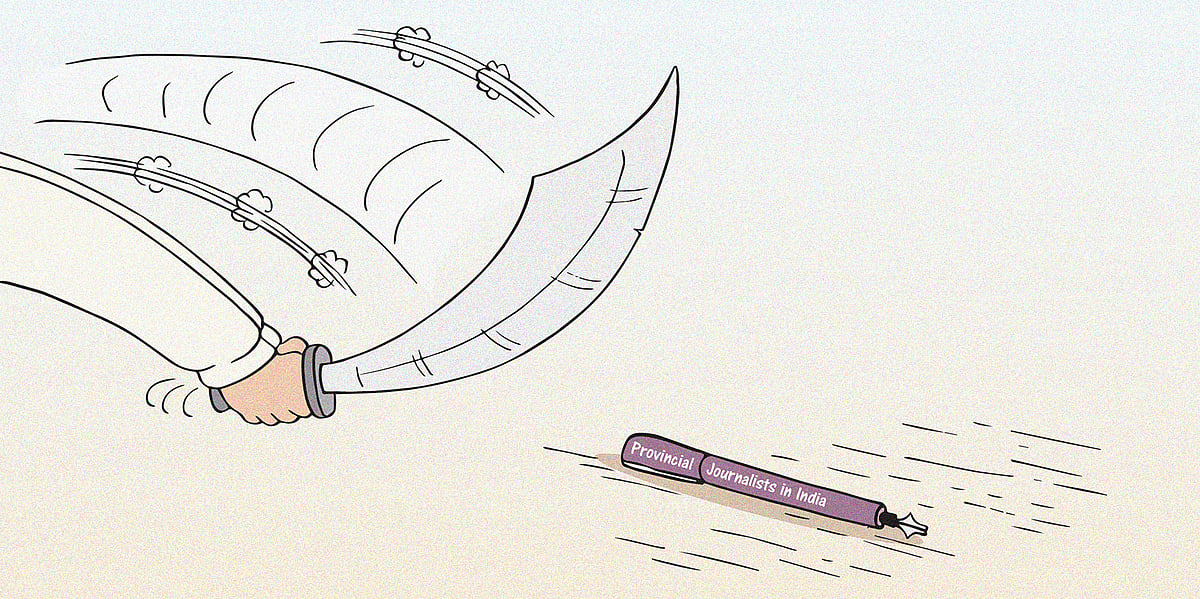
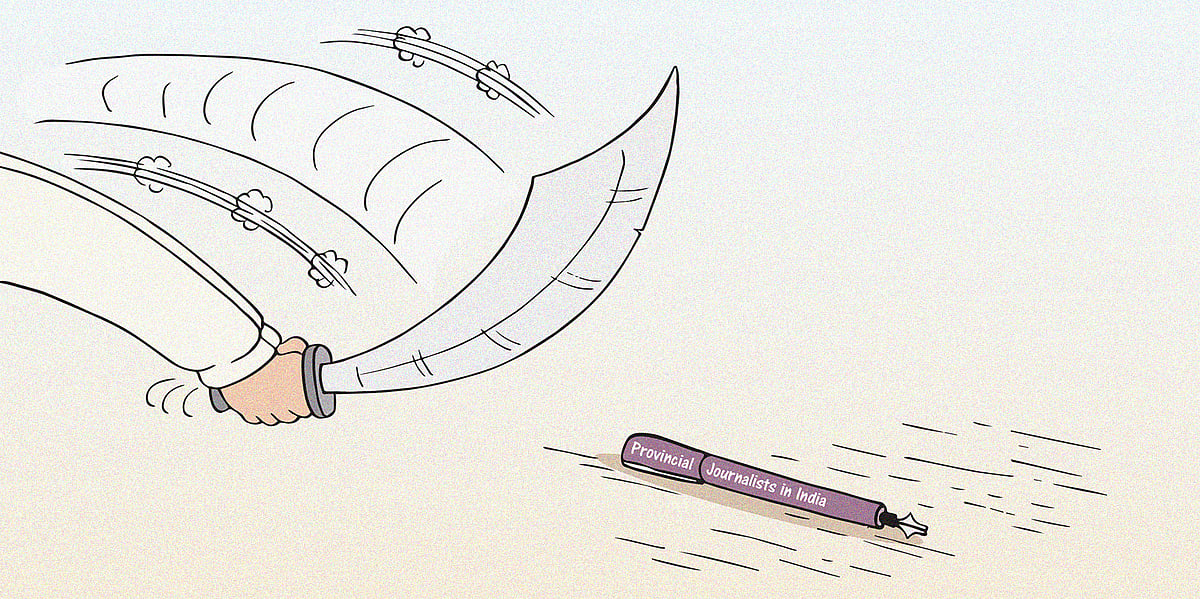
Indian journalist’s killing reveals precarity of freelance journalists outside Delhi
Indian media groups have called for an investigation into the killing of missing journalist Mukesh Chandrakar after his body was discovered floating in a septic tank on 3 January. Chandrakar was reported missing on New Year’s Day by his family. He was widely known in his home state of Chhattisgarh as a freelance journalist who often reported on corruption on his popular YouTube channel. In December 2024, Chandrakar was traveling with a colleague from NDTV when the two noticed a badly constructed road. His colleague Nilesh Tripathi filed a spur of the moment media report, discovering later that the contractor of the road was one of Chandrakar’s own relatives. While the story was initially well-received, Chandrakar’s relatives were angry that he had jeopardised their business, leading to his killing.
The story of Mukesh Chandrakar’s killing is a window into the precarity of freelance journalists working in Chhattisgarh, who often work without pay and in volatile conditions, facing threats from both police and Maoists. Attacks on journalists reporting on corruption or environmental degradation are not uncommon in India - in May 2022, Indian journalist Subhash Kumar Mahto was killed in Bihar after his reporting on local alcohol smuggling groups. According to Reporters Without Borders, India remains one of the most dangerous countries for journalists, with an average of three or four journalists killed in relation to their work every year.
Elsewhere in Southasia
- UK Treasury economic secretary Tulip Siddiq refers herself to ethics watchdog over alleged links to embezzlement and corruption related to her family, including her aunt Sheikh Hasina, Bangladesh’s ousted prime minister, after reports of a London apartment gifted to her by an associate of the Awami League
- A 7.1 magnitude earthquake struck Tibet in the city of Shigatse, killing at least 126 people with over a thousand homes destroyed. Tremors were also felt in Nepal, Bhutan and India.
- Myanmar’s junta walks back plans for political dialogue with the Arakan Army in Rakhine state with a week of deadly airstrikes killing 10 civilians, despite frequent calls to end the crisis
- Nearly 200 UK MPs call on English and Wales Cricket Board to refuse to play Afghanistan in the Champions Trophy over the Taliban regime’s restrictions on Afghan women
- India scales back visa operations in Bangladesh amid tensions between the two countries, hurting thousands of patients who visit hospitals in India for critical care and treatment
- Pakistan’s armed forces claim 19 militants and three soldiers were killed during counter-terrorism operations in its northwestern province bordering Afghanistan
- The new Sri Lankan Cabinet of Ministers reaffirms commitment to the ‘One China Policy’, claiming Taiwan is only a province of China ahead of president Anura Kumara Dissanayake’s visit to China next week
- India and the Maldives held high-level defence talks to increase ties in defence cooperation and enhance the capabilities of the Maldives National Defence Forces
- Myanmar passes cybersecurity law that restricts use of VPNs, further limiting people’s access to independent and foreign media as the junta cracked down on the internet and media after the military coup in 2021
- A Bangladeshi courts issues a second arrest warrant for Sheikh Hasina, this time for her alleged role in enforced disappearances, and revoked her passport
- Former aide to Nepal’s Public Accounts Committee chair Anil Kumar Pokharel arrested on fraud charges for promising admission to an MBBS programme in exchange for NPR 3.88 million
- Bombay High Court grants bail to researcher Rona Wilson, activist Sudhir Dhawale in Bhima Khoregaon case after over 6 years of incarceration
- Pakistan Tehreek-e-Insaaf requests 'unfettered' access to party leader Imran Khan ahead of third round of talks with Pakistan's government to resolve Pakistan's political crisis, claiming surveillance during rare meeting with Khan after three months
- General Secretary of Sinhala Buddhist organisation Bodu Bala Sena, Galagodaththa Gnanasara sentenced to 9 months imprisonment for Islamophobic comments during a press conference in 2016
Only in Southasia!
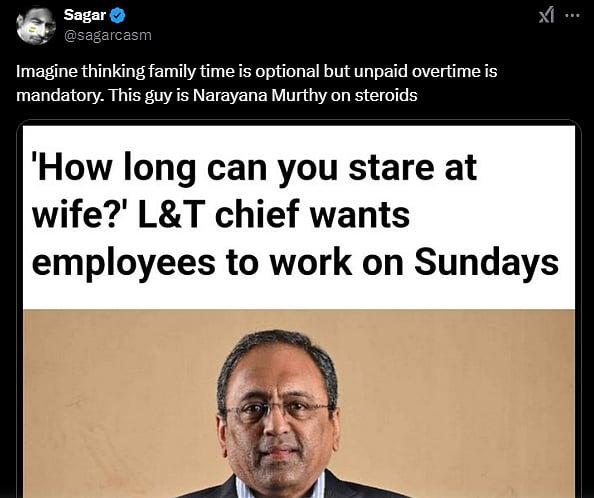
This week, the chairman of Larsen and Toubro drew criticism after a video of him speaking to employees was shared online. In the address, S N Subrahmanyan advocated for a 90 hour workweek, and expressed regret that he could not make his employees work on Sundays, as he did. "What do you do sitting at home? How long can you stare at your wife?" he asked, giving employees (and the Internet) an unwelcome glimpse into his personal life and implying that women employees at Larsen and Toubro were an afterthought for good measure. This led to spirited discussions about India's weak labour laws, misogyny in the private sector and more - who said that leisure time can't be spent productively?
From the archive
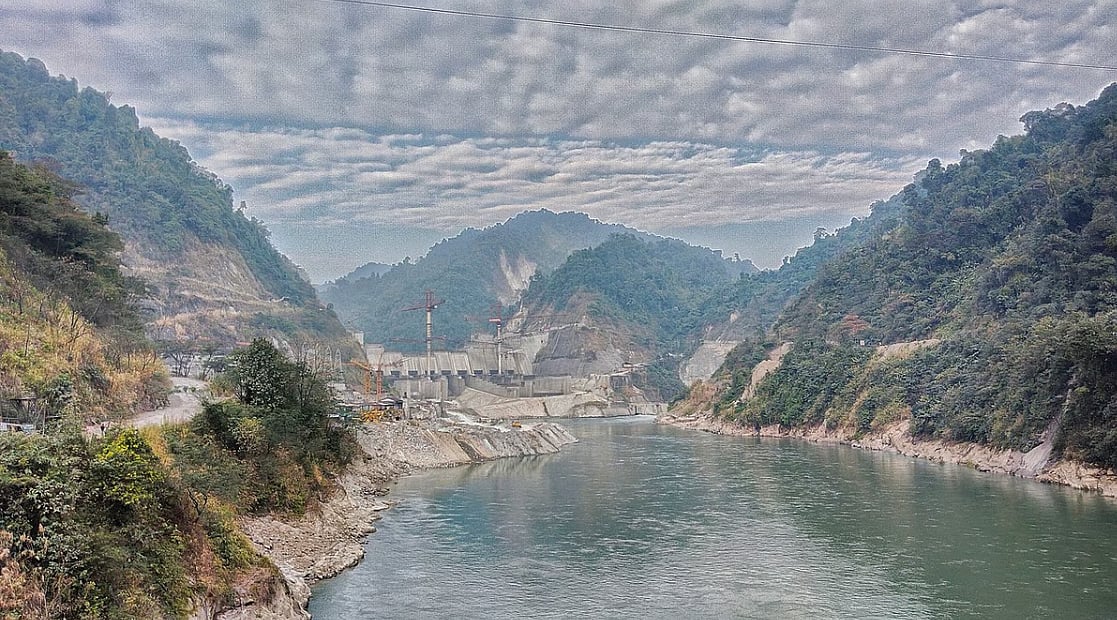
Liquid power (November 2019)
As protests continue in Pakistan’s Sindh province against the planned construction of 6 canals on the Indus river, as residents fear further water shortages in a drought-stricken area, Tamara Fernando’s review from November 2019 is worth re-reading. Fernando reviews Sunil Amrith’s book ‘Unruly Waters: How Mountain Rivers and Monsoons Have Shaped South Asia's History’, charting the history of Southasia’s attempts at regulating water, highlighting that the provision of water has long been linked to power, with the wheels of modernity and development concentrating it in fewer and fewer hands.