
(This article is part of our special series 'Rethinking Bangladesh'. You can read the editorial note to the series here.)
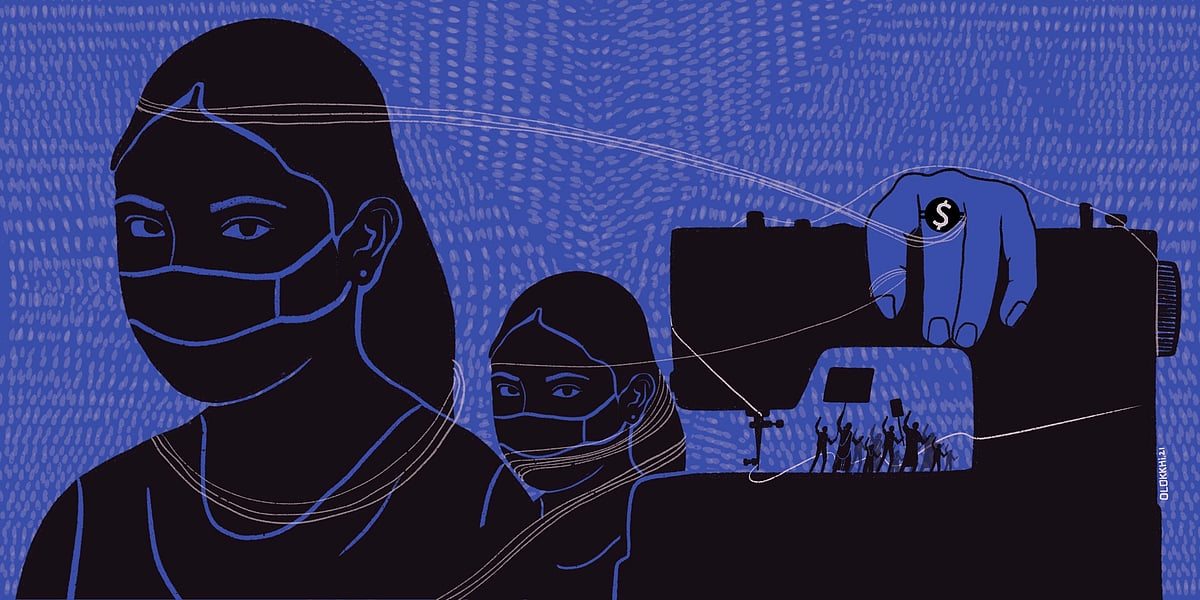
At the height of the COVID-19 pandemic in 2020, the women and men labouring in Bangladesh's garment factories – at least those still in operation – faced a stark choice: starve to death by sheltering in place or risk dying from the virus by returning to the shop floor. This compulsion to work that comes at the risk of exposure to death was not exceptional by any means. Pandemic conditions amplified and made more visible a structural feature built into certain kinds of employment under capitalism, as Sobhi Samour argues in the case of Palestinian labour in Israel. Indeed, over the past three decades, Bangladesh's apparel workers have routinely negotiated various iterations of this conundrum, at times with catastrophic consequences. So it was that on the morning of 24 April 2013, workers of five factories located in the Rana Plaza building, whose upper floors had been illegally constructed and which had developed serious cracks the day before, calculated the risks of entering – or not – the condemned premises. Under acute pressure from management to meet an international production deadline, fearing dismissal if they refused, and against their better judgment, most workers reluctantly complied. As is well known, over 1100 never made it back home.
Given this contradiction at the heart of global labour, how should we assess the state of Bangladesh's garment industry in this 50th year of independence? What are the common threads that bind the bodies of factory workers during the pandemic in 2020 to those who perished in the Rana Plaza building collapse in 2013?
That 'garments', as it is colloquially referred to, is a success by conventional measures is beyond doubt. As the second largest exporter of garments, the industry has put Bangladesh on the global economic stage. It is the site of national pride and promise, the bridge to the nation's attaining middle-income status. It is a key driver of the country's vaunted economic growth rate. Over the last four decades, a rich field of scholarship has emerged devoted to measuring the extent of female 'empowerment' (or degree of exploitation) afforded by employment in garment factories. More recently, a robust body of research has focused on the merits and drawbacks of the Bangladesh Accord on Fire and Building Safety (henceforth the Accord) introduced in the wake of the Rana Plaza collapse in 2013.