
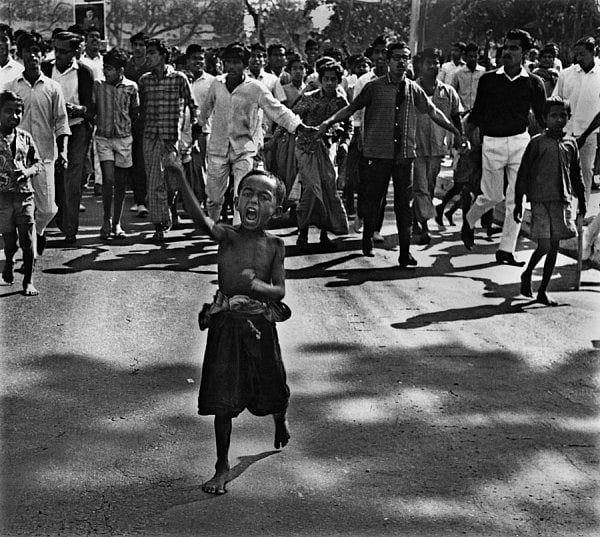
The trepidation was palpable on the opening day of Chobi Mela. There it was again, against all odds. One of the most important photo festivals in the world, Chobi Mela has been a remarkably regular feature since its opening edition in 2000, welcoming guests every other year to Dhaka in spite of Bangladesh's many political upheavals. Yet there was a worry that this year it might finally have to bow down and go quiet. Shahidul Alam, a photojournalist and the festival's founder, had been in jail for more than 100 days for his remarks on student protests in Dhaka, and was released on bail barely three months before the festival was due to open. What kind of a festival could possibly be scraped together within this short time frame?
Fast forward to 28 February 2019, and the opening rally of Chobi Mela was packed with guests. Alam's sharp introductory speech left no doubt about the organisers' intentions. "You are an artist, you have no business in politics," he recalled being told in detention. "And yet the role of photography is to show the truth to power," Alam said. The festival would serve precisely that purpose – there would be no going quiet.
Raw language
Still, the festival bore some of the brunt of the recent political storm. Whereas past editions of Chobi Mela had been held at the Bangladesh Shilpakala Academy, a gigantic exhibition space in the heart of Dhaka, the government-owned building was not available to the festival this year. Neither was the Ministry of Cultural Affairs a patron this time around, like it had been in the past. But the organisers were keen to see this as an opportunity. Shunning the usual polished 'white cube' mode of presentation would allow for greater experimentation this time around. Under an ethic of improvisation, Chobi Mela would be "a much more raw and community-oriented festival," Alam declared before the opening.