
The 2002 anti-Muslim pogrom in Gujarat was an essential marker of the ideology of Hindu supremacist Indian nationalism – celebratory for some, devastating for others. Now it serves additionally as a marker of the way the triumphantly neoliberal Indian state governs. A key protagonist of this new script for the Indian nation-state is Narendra Modi, as well as several other less flamboyant leaders in rival political parties. There is much in Modi that has turned him into an enigma of sorts: his continuing electoral successes since 2002, marred only by the BJP losing the general elections in 2004; his sophisticated packaging of Gujarat as India's most prosperous state; his hiring of superstar Amitabh Bachchan to promote Gujarat's tourism industry; his deification by super-rich industrialists such as the Ambani brothers; his rising popularity as a prime ministerial candidate; his embrace of communal politics; his regular appearances at universities, conclaves and summits to wax eloquent on his vision of economic growth; his habit of courting controversy with aplomb; and his detractors' efforts to keep alive the memories of the 2002 atrocity and his culpability in it.
Darshan Desai, who reported for a number of prominent English-language newspapers at the time of the Gujarat violence, noted in 2004 that Modi's strategy was simple: to remain in the news. Modi has adorned magazine covers, featured in articles, and, just as his prime ministerial ambitions reached an all-time high, has had two critical biographies on him published recently in English. Even those who dislike him can't help talking about him: this year, Firstpost.com carried an insensitive April Fool's joke saying Modi had apologised for the 2002 pogrom. All of this has served to prevent the urban middle classes forgetting that something happened in 2002. So, it is disingenuous to argue or fear (like many of us do) that Gujarat 2002 has faded from middle-class imagination in India, given that not a day passes without news and analyses on Gujarat's model of economic development, the perceived Modi vs. Gandhi binary, and Bollywood films making note of the pogrom. But most of what we remember is a blur, wrapped up in the vague temporal expression 'Gujarat 2002', sometimes (and incorrectly) referred to as the 'post-Godhra riots'.
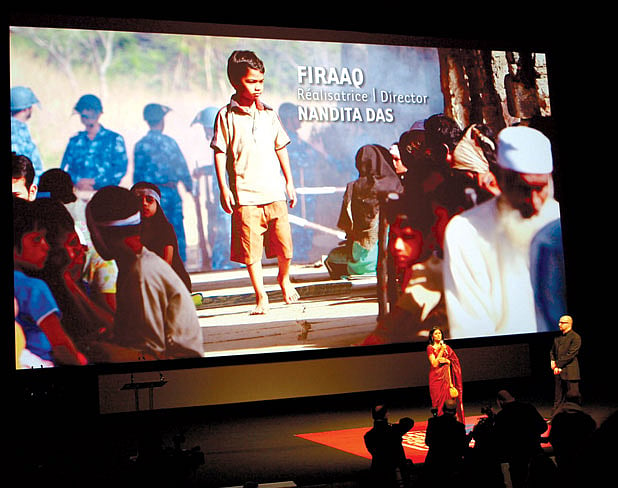
Bollywood films – perhaps more so than the mainstream news media – can offer a complicated and layered archive for understanding how collective secular middle-class memory works in neoliberal India. What we should be concerned about is not whether Modi's sophisticated PR tactics are making us forget the pogrom, but how the technology of law and the spectacle of neoliberal capital work together to keep the fictive idea of the Indian nation intact: a nation which is secular in appearance, neoliberal in conduct, and Hindu at its core. The films – particularly those discussed here – contribute to an understanding of such a construction of the nation even as they bear surrogate witness, in their different narrative styles, to an event of mass atrocity. Without a challenge to this 'fictive community' of the nation, our memories will continue to be manipulated by nationalist neoliberalism, even if Modi or other culpable individuals are legally convicted.
News media and memory