
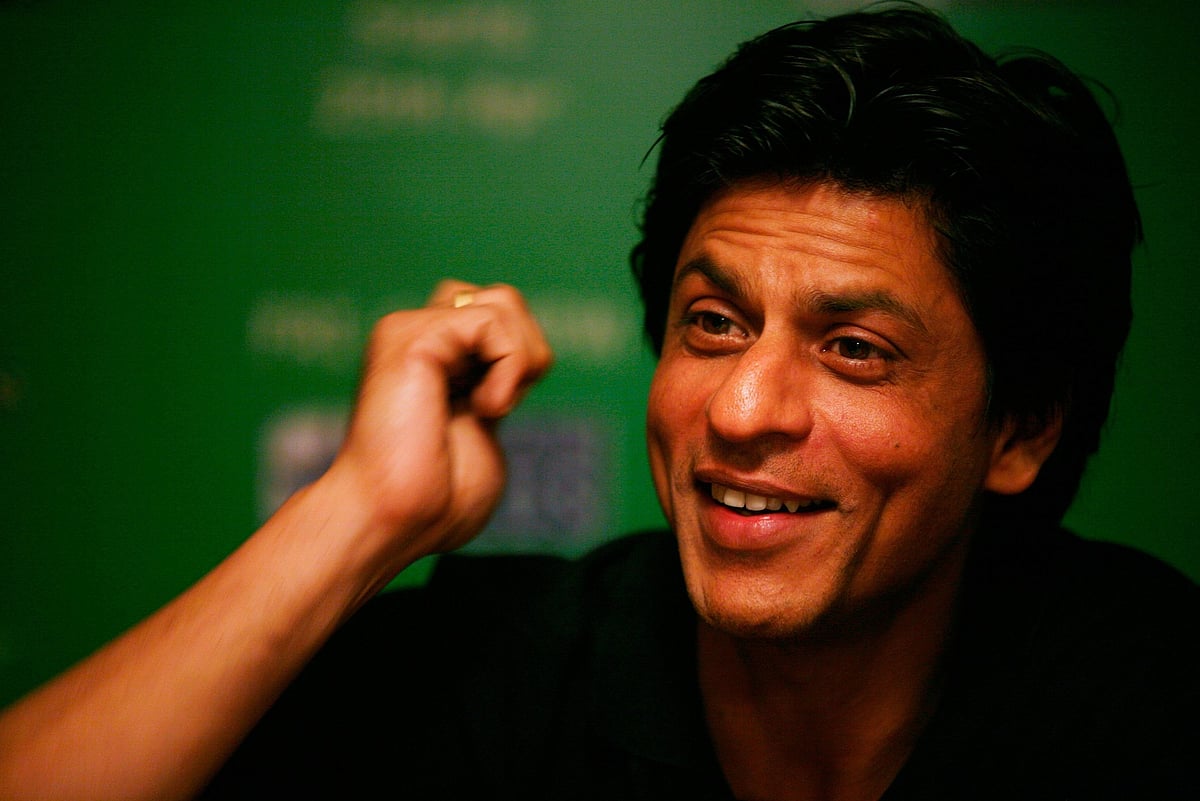
One evening in the winter of 2002, tired of the same Vin Diesel-starring action films playing at the movie club, three cadets sneaked a VCD player into the Cadet College at Mastung, in Balochistan. Unlike Walkmans, VCD players were not easy to hide in a dormitory. One could neither put them in a pocket of an item of clothing hanging in the cupboard, nor slide them under a pillow, and in a semi-military establishment like the Cadet College, everything was up for inspection, including long boots and underwear. If an instructor or non-commissioned officer discovered the player, the errant cadet would be awarded extra drills during rest time for weeks to come. Yet my two friends and I were willing to put our leisure on the line to watch Shah Rukh Khan.
Located just 55 kilometres from Quetta, the capital of Balochistan, Mastung district is a mere dot on the map, almost small enough that a Kumar Sanu alaap played at one end of it could be heard at the other. In the even smaller town of Mastung – as in small towns and big cities around the world – young people grappled with life and longing, searching for purpose and identity. As teenagers away from home, we were not concerned as much about parental judgment as we were with peer approval. As trainee cadets, the only chances we had to interact with women were on occasional visits to Pringabad – a rustic hub that, despite its Tolkien-esque name, resounded with classics from the singer duo Nadeem–Shravan. In these constrained circumstances, we watched Khan's Mohabbatein, a blend of rebellion and romance in which his portrayal of Raj Aryan Malhotra truly resonated with us.
Shah Rukh had beguiled women with classics such as Dilwale Dulhania Le Jayenge and Kuch Kuch Hota Hai, and endeared himself to families with films such as Kabhi Khushi Kabhie Gham. He was now talking directly to us men, with his character's defiance of traditions and norms that were antagonistic to young love. We had been living in a system where we were constantly told to "man up" in a very tribal sense and were conditioned to let no form of failing bruise our soldier-like honour. But here was Shah Rukh inspiring us to risk being tender, to be open to falling for someone or something that might not fit with a code. It did not hurt that we could see a resemblance between the rigid norms of Gurukul – the school that Mohabbatein was set in and against whose rules Aryan battled – and those that governed our lives at Cadet College.
Twenty-one years later, in 2023, I watched Shah Rukh again as he made one of the most remarkable comebacks ever in cinema. He scaled new heights of stardom, creating an extraordinary second career peak with three movies – Pathaan, Jawan and Dunki – that have already made more than INR 25 billion around the world. Few actors can hope to achieve such fan-powered success. But even as his global acclaim has soared in the last year, the impact of his dramatic return to the screen after a self-imposed break of four years has been notably muted in Pakistan.